Featured
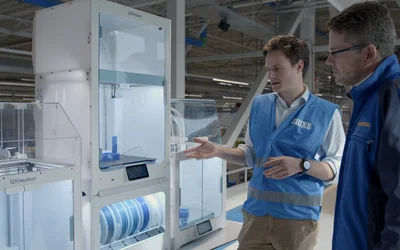
The majority of ERIKS 3D printers are dedicated to prototyping, customized jigs, fixtures, and tooling for production or maintenance purposes.
This Report shows how tools like artificial intelligence, digital twins, and on-demand manufacturing are no longer emerging concepts, but are already delivering measurable impact across the product lifecycle.
The majority of ERIKS 3D printers are dedicated to prototyping, customized jigs, fixtures, and tooling for production or maintenance purposes.
The vision for text-to-3D generative AI is not without its challenges.
An In-depth Exploration of CNC Milling's Precision, Repeatability, and Versatility
An engineer’s guide to understanding the state of the art in metal 3D Printing
15 minutes read.
22 minutes read.
11 minutes read.
18 minutes read.
12 minutes read.
16 minutes read.


Entertainment
The Next Byte Podcast is hosted by two young engineers - Daniel and Farbod - who select the most interesting tech/engineering cont...
165 Posts
ADDITIV Medical 2026 will bring together more than 500 medical professionals
Choosing between 3D printing and injection molding is one of the key decisions in product development—especially in case of prototyping.
The choice between 3D printing and CNC machining is the most common decision regarding manufacturing methods that must be made before placing the first order for prototypes. The correct answer depends on tolerance requirements, material specifications, component geometry, and schedule.
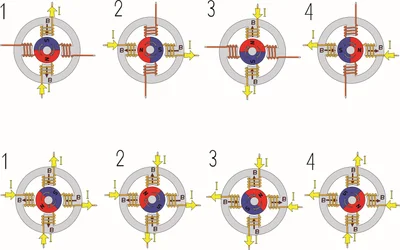
How microstepping works in stepper motors, the incremental torque cost of each resolution, and why finer microsteps do not improve positioning accuracy.
Discover how iAM Marketplace simplifies industrial additive manufacturing by unifying materials, validation services, and multi-brand technologies into one open ecosystem for efficient AM sourcing.
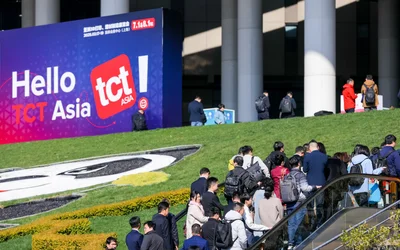
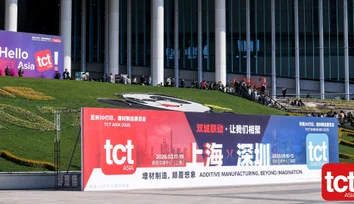
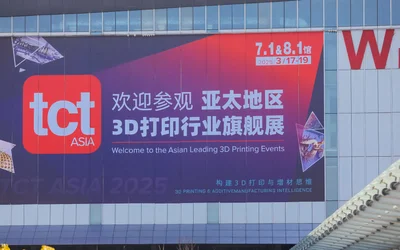
This article discusses what attendees can expect from TCT Asia 2026, including its conference format, focus areas, and the experts contributing to industry-specific discussions.
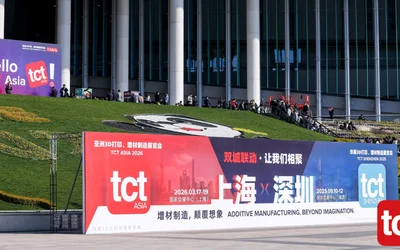
This article discusses the exhibitors, products, and industrial trends defining additive manufacturing across the Asia-Pacific region at TCT Asia 2026.
This article discusses how the Asia-Pacific region is advancing additive manufacturing and the role of TCT Asia as the leading 3D printing and additive manufacturing event in the Asia-Pacific.
The majority of ERIKS 3D printers are dedicated to prototyping, customized jigs, fixtures, and tooling for production or maintenance purposes.

5 minutes read
The vision for text-to-3D generative AI is not without its challenges.

4 minutes read
An In-depth Exploration of CNC Milling's Precision, Repeatability, and Versatility
This chapter excerpt discusses thermoplastic processing in engineering, highlighting challenges like precise parameter control and moisture sensitivity while emphasizing methods like injection molding, extrusion, and additive manufacturing for shaping thermoplastics to meet diverse needs.
In the world of printed electronics, surface energy often comes up around the interactions of materials, specifically when we’re printing conductive inks onto various surfaces (substrates).

7 minutes read
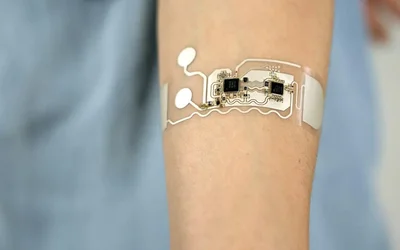
The COVID-19 pandemic and advancements in sensor technology have led to the widespread adoption of wearable health monitoring devices, particularly for telemedicine, to facilitate remote patient monitoring.
A Call to Innovate Across Mobility, Assistive Tech, Robotics, and More
FDM vs SLA is one of the most common questions asked by desktop 3D printer buyers. The two technologies have their respective strengths and weaknesses.
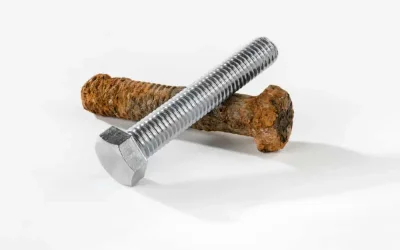
This article sums up the different ways of manufacturing corrosion resistant metal parts, with suitable metal materials, related technological processes and post-processing options.

6 minutes read
The high demands on individually manufactured components and the material properties make 3D printing indispensable for the development of motorsport.

3 minutes read
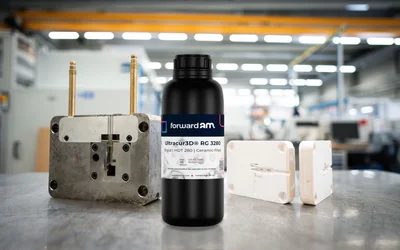
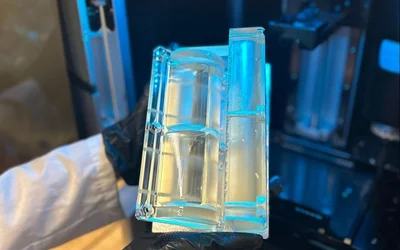
Turnkey design and part manufacturer uses 3D printed tooling to provide injection molding service in as fast as 10 days

3 minutes read
Comprehensive set of design guidelines for Freeform Injection Molding
Digital manufacturer, Protolabs, has launched its inspirON academy. A series of free CPD-accredited online training courses.

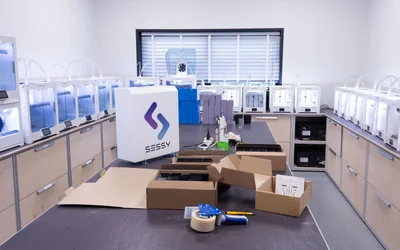
Korneel Bullens began using UltiMaker in 2013, when the company released its first desktop 3D printer, the Ultimaker 2. What started out as a personal fascination soon evolved into a business, thanks to collaborations with UltiMaker and Protolabs Network by Hubs (formerly 3D Hubs).
4 minutes read
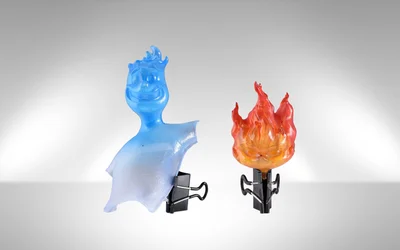
Using fast printing XiP, the Gentle Giant team swiftly iterated designs and gained Disney’s approval within 48 hours.
3 minutes read