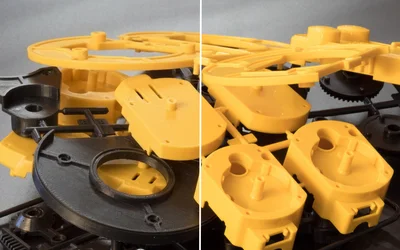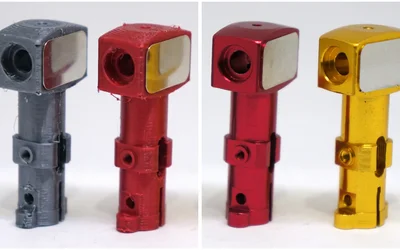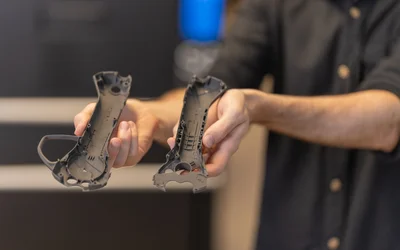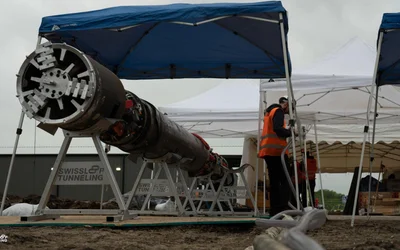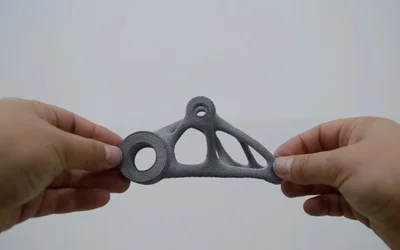
The Laboratory of Sustainability Robotics of the Swiss Empa institute develops a special drone for firefighting operations. Lightweight, stable and temperature resistant parts manufactured with SLS 3D printing is the key to success.
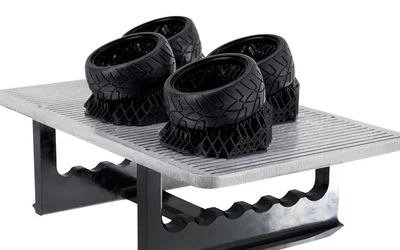
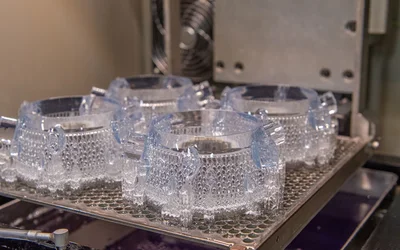
Reducing the carbon footprint of 3D printing requires work from 3D printer manufacturers and end-users. Nexa3D’s resin printers are built using recyclable materials and allow users to print responsibly too.
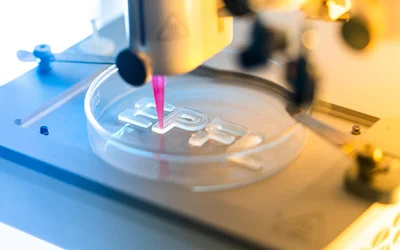
A bone-like composite developed at EPFL, in collaboration with researchers from ETH Zurich, Empa and the University of Fribourg, uses naturally occurring enzymes to accelerate mineralization through an energy-efficient, room-temperature process.
Discover how iAM Marketplace simplifies industrial additive manufacturing by unifying materials, validation services, and multi-brand technologies into one open ecosystem for efficient AM sourcing.
To help generative AI models create durable, real-world accessories and decor, the PhysiOpt system runs physics simulations and makes subtle tweaks to its 3D blueprints.
Discover how iAM Marketplace simplifies industrial additive manufacturing by unifying materials, validation services, and multi-brand technologies into one open ecosystem for efficient AM sourcing.
This article discusses what attendees can expect from TCT Asia 2026, including its conference format, focus areas, and the experts contributing to industry-specific discussions.
This article discusses the exhibitors, products, and industrial trends defining additive manufacturing across the Asia-Pacific region at TCT Asia 2026.
This article discusses how the Asia-Pacific region is advancing additive manufacturing and the role of TCT Asia as the leading 3D printing and additive manufacturing event in the Asia-Pacific.
The Laboratory of Sustainability Robotics of the Swiss Empa institute develops a special drone for firefighting operations. Lightweight, stable and temperature resistant parts manufactured with SLS 3D printing is the key to success.
Reducing the carbon footprint of 3D printing requires work from 3D printer manufacturers and end-users. Nexa3D’s resin printers are built using recyclable materials and allow users to print responsibly too.
3D printed Body-contouring Therapeutic Positioning Equipment provides support for people with mild to moderate control of the body and reduces damage caused by improper seating during child development.
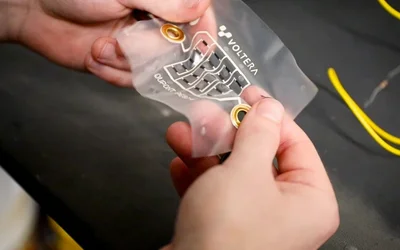
Printed electronics, characterized by their low cost and versatility through processes like inkjet or screen printing, are pivotal in advancing technologies such as wearable tech and the Internet of Things.
E2IP Technologies manufactures Flexible Heaters using Screen Printing Technology. This is one of the most important segments of printed and additive electronics with applications in cars, homes, and industrial settings.

At a Polish branch of TI Fluid Systems, functional prototypes and spare parts for the automotive industry are selectively laser sintered. Using a Sintratec S2, Paweł Pułtorak’s team prints precise and complex parts to validate their designs.
Nexa3D’s patented Lubricant Sublayer Photo-curing (LSPc) technology can print at up to 24 vertical centimeters per hour. That means more prototypes in less time.