Featured

Build vs buy in computer vision: discover why no-code platforms like Matroid cut deployment time, trim maintenance, and free engineers for innovation.
Build vs buy in computer vision: discover why no-code platforms like Matroid cut deployment time, trim maintenance, and free engineers for innovation.
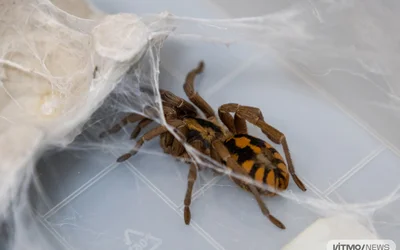
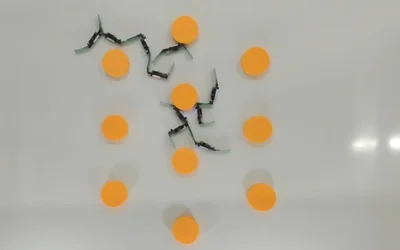
A team of researchers from ITMO University, Tel Aviv University, and University of Aveiro have come up with a new way to improve the mechanical properties of spider webs.
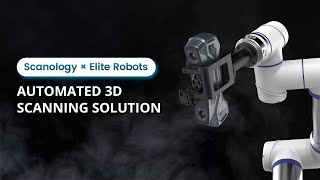
Scanology AM-DESK and Elite Robots deliver a plug-and-play automated 3D inspection solution, combining precision, flexibility, and speed to transform quality control for modern manufacturing and empower truly smart, data-driven factories.
This comprehensive article dives deep into the world of robotics, exploring the history, types, engineering components, applications, and future trends of robots, offering readers an in-depth understanding of how these remarkable machines work and shape our lives.
16 minutes read.
21 minutes read.
16 minutes read.
23 minutes read.
19 minutes read.
27 minutes read.


University
At the Harvard John A. Paulson School of Engineering and Applied Sciences (...
42 Posts

Robotics & Automation
READY Robotics is a robotics software company that vastly simplifies robot ...
24 Posts

Automation Machinery Manufacturing
We are a company in flying robotics, specializing in Non-destructive inspec...
23 Posts
Everyone, guess how fast is it?
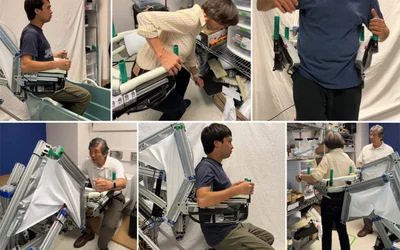
The new design could assist the elderly as they age in place at home.
The hospitality industry can leverage the gender characteristics of service robots to influence customers' decisions, according to new research from a team in the Penn State School of Hospitality Management.
Service robots have evolved from simple automated machines to intelligent adaptive systems that can navigate unpredictable environments and interact with humans.
Engineers at Princeton and North Carolina State University have combined ancient paper folding and modern materials science to create a soft robot that bends and twists through mazes with ease.
A research team from ETH Zurich and the University of Zurich (UZH) has developed a novel approach to treating spinal cord injuries: controllable microrobots deliver stem cells directly to the site of an injury, where they promote nerve cell regeneration.
Cornell engineers have developed a robotic collective that behaves less like a machine and more like a material that flows, reshapes and adapts to its environment without centralized control.
From hospital wards to crop fields, from microscopic swarms to biohybrid machines powered by fungi, robotics research at Cornell spans an astonishing range of scale, application and ambition.
Build vs buy in computer vision: discover why no-code platforms like Matroid cut deployment time, trim maintenance, and free engineers for innovation.
A team of researchers from ITMO University, Tel Aviv University, and University of Aveiro have come up with a new way to improve the mechanical properties of spider webs.

3 minutes read
Scanology AM-DESK and Elite Robots deliver a plug-and-play automated 3D inspection solution, combining precision, flexibility, and speed to transform quality control for modern manufacturing and empower truly smart, data-driven factories.

4 minutes read
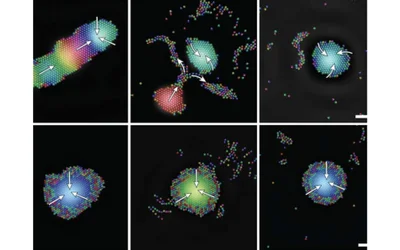
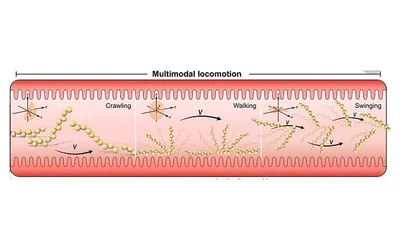
Microrobots modeled in simulations communicate via sound to form 'acoustic swarms' and move collectively

3 minutes read
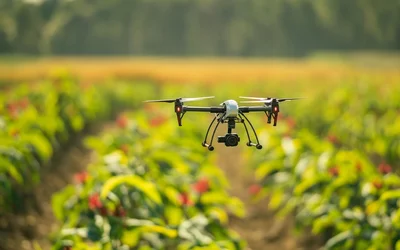
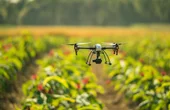
Agricultural technology is now part of clean technology. As global demand for food continues to rise, farmers need to maximize agricultural productivity while ensuring environmental sustainability. This article examines advances in agritech within the context of cleantech.
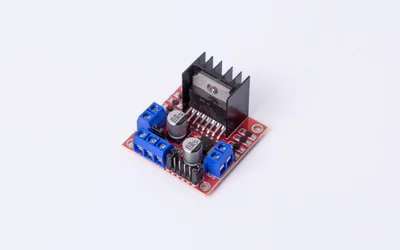
This guide offers engineers an in-depth understanding of H Bridge motor driver, explaining its basics, circuit topologies, device selection, driver IC comparisons, printed circuit design and practical considerations for next generation projects.
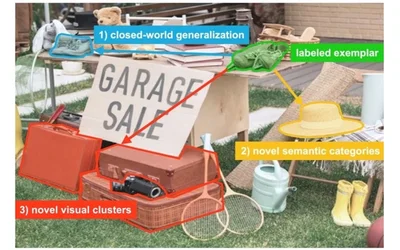
Open ad-hoc categorization approach combines language guidance with visual clustering to learn contextualized features for flexible image interpretation.

4 minutes read
Outdoor robots operate in unpredictable terrain, shifting weather, and continuous workloads. Reliable navigation requires precise visual processing enabled by seamlessly integrated compute and vision systems.
For high-consumption environments like professional kitchens, balancing power loads has become a make-or-break challenge. One Energietechnik is out to meet, with an innovative solution for distributed, real-time energy management – based on Arduino Opta and Arduino Cloud.

3 minutes read
Fabricated with a gel side for carrying drugs and a magnetic side for steering, these microrobots can navigate complex biological environments like intestines.
3 minutes read
Join us to develop/customize, ultra-lightweight at approximately 25kg, integrated with a Large Multimodal Model for voice and images, let's accelerate the advent of the agent era!

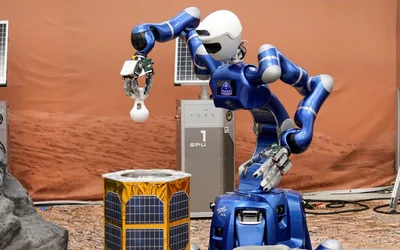
On 24 July, the Surface Avatar team carried out the final and most challenging experiment of the campaign to date. Astronaut Jonny Kim, aboard the Space Station, took command of the intelligent robot team on the ground, which helped him safely explore the 'Martian landscape' and collect samples

6 minutes read
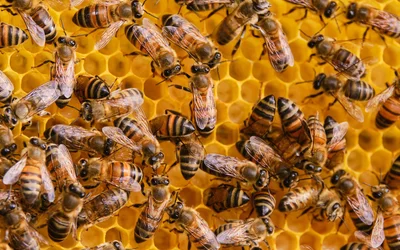
EPFL researchers are developing robotic beehive frames that help locate honey stores inside of beehives over time, without relying on cameras. The aim is to develop new observation tools to study honeybee behavior that better fit the bees' natural way to occupy space compared to current methods.

3 minutes read
Learn more about how UWB is evolving, how Matter's standardization is enabling scalable ecosystems, and why Qorvo's partnerships and secure SoC platforms make it a leading player in the future of intelligent connectivity.
Neural Jacobian Fields, developed by MIT CSAIL researchers, can learn to control any robot from a single camera, without any other sensors.