What is 3D printer filament made of? This guide examines polymers, additives, and composites, offering practical tips for digital design and hardware engineers.
Discover how to print with high-performance filaments like PEEK, PEKK, and ULTEM. Learn about their properties, hardware needs, challenges, and best practices for industrial-grade 3D printing.
Explore how 3D-Fuel's Pro PCTG filament advances additive manufacturing, offering higher impact strength, improved environmental resistance, and reliable printability for functional and industrial 3D printing applications.
3devo's next-generation desktop extruder combines industrial precision with lab-scale simplicity enabling more controlled, higher-performance and data-driven 3D printing material workflows.
Lightweighting materials play a crucial role in offering the potential for improved fuel efficiency, enhanced performance, and reduced emissions in the automotive industry. It is anticipated that the lighter and more efficient automotive materials and components will revolutionize the industry in the coming years.
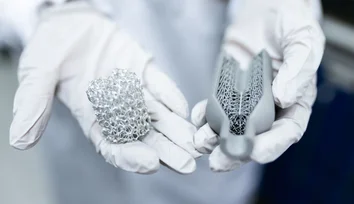
AlSi10Mg (3.2382) is a high-performance material widely used in metal 3D printing for various advanced applications. Let's take an in-depth look at its properties, applications, and mechanical characteristics.
Researchers from the Buchmann Institute for Molecular Life Sciences at Goethe University have used the microArch® S140, a microscale 3D printer from Boston Micro Fabrication, to help fabricate miniaturized vessels called hydrowells for culturing 3D cellular spheroids under microgravity conditions.
In this guide, we cover all the different types of polymer FDM 3D printing filament, from standard grades like PLA and ABS to advanced high-performance filaments like PEEK and fiber-reinforced materials.
Metal 3D printing offers significant design opportunities with its high geometrical freedom, but it requires careful design for additive manufacturing (DfAM) to address equipment and material constraints, a process supported by DfAM and 3D printing simulation tools in most major CAD software.
From entry-level FDM machines to industrial-grade metal printers, this guide demystifies the many types of 3D printers available to businesses and consumers.
Among the numerous factors influencing mold design and production quality, Melt Flow Rate (MFR) stands out as a key characteristic that mold makers must understand and optimize.
In this chapter, we separate metal AM post-processing into four categories: debinding and sintering, CNC machining and milling, heat treatment, and quality assurance.
The most commonly used 3D printing filament, PLA is not known for its flexibility. We explore why that is and list some alternative 3D printing materials can be used when flexibility is needed.
This article explores the thermal properties of TPU, including TPU glass transition temperature, extrusion and bed temperatures, and best practices for successful 3D printing.
An international team led by Penn State researchers aims to mitigate toxic organic compounds produced in manufacturing of the biomaterial known as biochar
Injection molding problems like sink marks and flash can be prevented by addressing their most common causes. This article serves as a basic troubleshooting guide.
Caltech researchers from campus and JPL have collaborated to devise a method for coating lithium-ion battery cathodes with graphene, extending the life and performance of these widely used rechargeable batteries.
A researcher at Washington University in St. Louis has received a grant of $1.5 million to convert CO2 into carbon nanotubes that could be used in lithium-ion batteries
A comprehensive technical analysis of PCB prepreg and core materials, examining their distinct material properties, manufacturing implications, and selection criteria for multilayer PCB design.