Featured
In the dynamic world of manufacturing, small batch injection molding is a game-changer.

In the dynamic world of manufacturing, small batch injection molding is a game-changer.
In the dynamic world of manufacturing, small batch injection molding is a game-changer.
A new test developed at the University of Illinois Urbana-Champaign can predict the performance of a new type of cementitious construction material in five minutes — a significant improvement over the current industry standard method, which takes seven or more days to complete.
In this episode, we explore how porous plastic sheets are being used to cool buildings by radiating heat into space and how this could reduce global energy consumption by 10% and CO2 emission by 7%.
Unlock the potential of aluminum die casting in modern engineering applications through advanced techniques.
12 minutes read.
16 minutes read.
18 minutes read.
14 minutes read.
8 minutes read.


Entertainment
The Next Byte Podcast is hosted by two young engineers - Daniel and Farbod - who select the most interesting tech/engineering cont...
165 Posts

University for science and technology
Freedom and individual responsibility, entrepreneurial spirit and open-min...
43 Posts
Discover how iAM Marketplace simplifies industrial additive manufacturing by unifying materials, validation services, and multi-brand technologies into one open ecosystem for efficient AM sourcing.
This article discusses what attendees can expect from TCT Asia 2026, including its conference format, focus areas, and the experts contributing to industry-specific discussions.
This article discusses the exhibitors, products, and industrial trends defining additive manufacturing across the Asia-Pacific region at TCT Asia 2026.
This article discusses how the Asia-Pacific region is advancing additive manufacturing and the role of TCT Asia as the leading 3D printing and additive manufacturing event in the Asia-Pacific.
Lightweighting materials play a crucial role in offering the potential for improved fuel efficiency, enhanced performance, and reduced emissions in the automotive industry. It is anticipated that the lighter and more efficient automotive materials and components will revolutionize the industry in the coming years.
In the dynamic world of manufacturing, small batch injection molding is a game-changer.
A new test developed at the University of Illinois Urbana-Champaign can predict the performance of a new type of cementitious construction material in five minutes — a significant improvement over the current industry standard method, which takes seven or more days to complete.

4 minutes read
In this episode, we explore how porous plastic sheets are being used to cool buildings by radiating heat into space and how this could reduce global energy consumption by 10% and CO2 emission by 7%.

12 minutes read
What is the most flexible 3D printing material? Here we discuss the options, from consumer TPU and TPE filaments to industrial-grade elastomers used in SLA and SLS.
By determining how readily electron pairs flow through this material, scientists have taken a big step toward understanding its remarkable properties.
Nozzle shape, print parameters tune liquid crystal elastomer morphing

4 minutes read
An international team of researchers co-led by Akhlesh Lakhtakia, Penn State Evan Pugh University Professor of Engineering Science and Mechanics, developed porous plastic sheets that can lower building temperatures through radiative cooling.

3 minutes read
Cornell scientists have developed a novel technique to transform symmetrical semiconductor particles into intricately twisted, spiral structures – or “chiral” materials – producing films with extraordinary light-bending properties.

3 minutes read
Scientists at ITMO University have developed multiple-use sensor substrates coated with gold nanoparticles for use in gauging the precise ratio of chlorogenic acid in natural and manufactured raw material.

3 minutes read
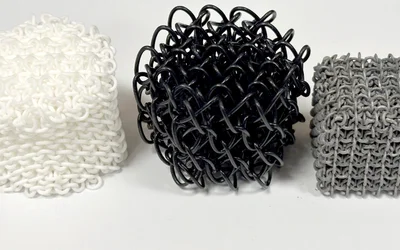
The new material, known as PAM (for polycatenated architected materials) could have uses in areas ranging from helmets and other protective gear to biomedical devices and robotics.

4 minutes read
Combining insights from two ancient art forms, Princeton engineers used a single sheet of material to create 3D structures with adjustable flexibility that could guide sound and light to perform complex tasks.

3 minutes read
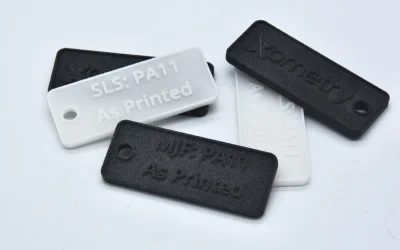
This article aims to examine the differences between PA 11 and PA 12. Despite their chemical similarity, these two polymers tend to produce different outcomes and end parts.

5 minutes read
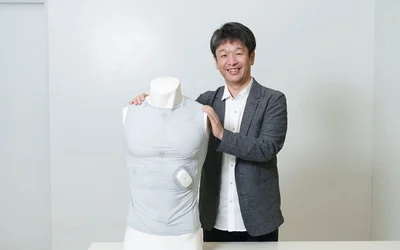
KUMIHIMO is a co-creation project focused on sourcing innovative ideas that utilize Murata's hardware. Xenoma's award-winning entry in this initiative was a smart apparel piece termed a "wearable phono-electrocardiograph."

5 minutes read
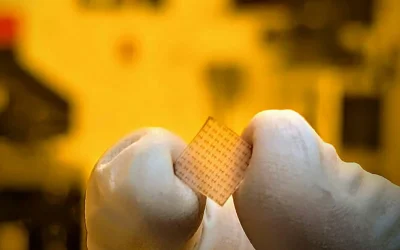
Researchers at Stanford Engineering have developed an ultrathin material that conducts electricity better than copper and could enable more energy-efficient nanoelectronics.

4 minutes read
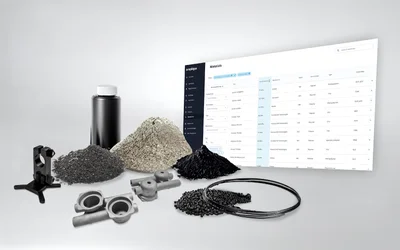
In additive manufacturing, the selection of materials is crucial for achieving specific mechanical properties such as tensile strength and heat resistance. Replique's Material Hub offers a comprehensive database to aid engineers in making cost-effective and technically sound material choices.