Featured
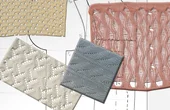
In this episode, we talk about how a research team led by MIT has found a way to create functional textiles from polyethylene, rumors surrounding the Apple car, and EPFL’s newest iteration of a retinal implant.
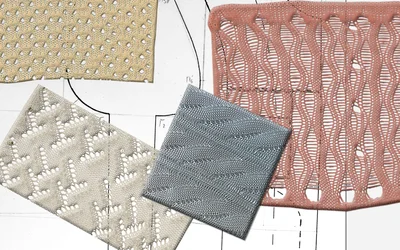
In this episode, we talk about how a research team led by MIT has found a way to create functional textiles from polyethylene, rumors surrounding the Apple car, and EPFL’s newest iteration of a retinal implant.
In this episode, we talk about how a research team led by MIT has found a way to create functional textiles from polyethylene, rumors surrounding the Apple car, and EPFL’s newest iteration of a retinal implant.
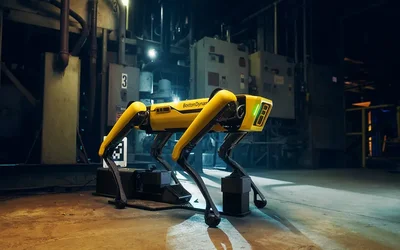
In this episode, we talk about Nissan’s new 50% thermally efficient internal combustion engine, the first 3D printed home for sale in the United States, and how NYPD is adding Boston Dynamic Spot robots to the police force.
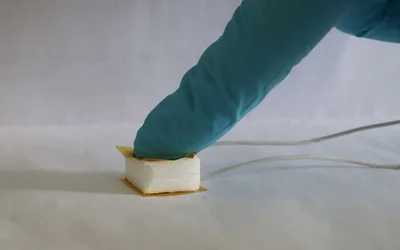
Researchers at ETH Zurich and Empa have chemically modified wood and made it more compressible, turning it into a mini-generator. When compressed, it generates an electrical voltage. Such wood could serve as a biosensor or as a building material that harvests energy.
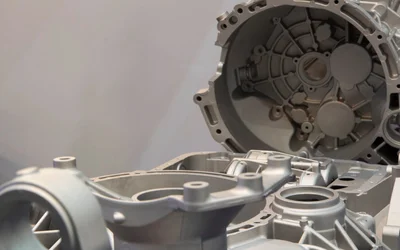
Unlock the potential of aluminum die casting in modern engineering applications through advanced techniques.
12 minutes read.
16 minutes read.
18 minutes read.
14 minutes read.
8 minutes read.


Entertainment
The Next Byte Podcast is hosted by two young engineers - Daniel and Farbod - who select the most interesting tech/engineering cont...
165 Posts

University for science and technology
Freedom and individual responsibility, entrepreneurial spirit and open-min...
43 Posts
Discover how iAM Marketplace simplifies industrial additive manufacturing by unifying materials, validation services, and multi-brand technologies into one open ecosystem for efficient AM sourcing.
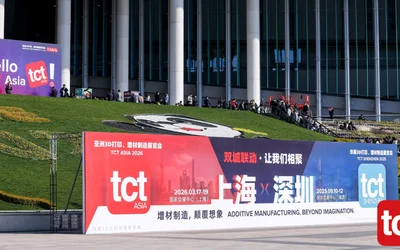
This article discusses what attendees can expect from TCT Asia 2026, including its conference format, focus areas, and the experts contributing to industry-specific discussions.
This article discusses the exhibitors, products, and industrial trends defining additive manufacturing across the Asia-Pacific region at TCT Asia 2026.
This article discusses how the Asia-Pacific region is advancing additive manufacturing and the role of TCT Asia as the leading 3D printing and additive manufacturing event in the Asia-Pacific.
Lightweighting materials play a crucial role in offering the potential for improved fuel efficiency, enhanced performance, and reduced emissions in the automotive industry. It is anticipated that the lighter and more efficient automotive materials and components will revolutionize the industry in the coming years.
In this episode, we talk about how a research team led by MIT has found a way to create functional textiles from polyethylene, rumors surrounding the Apple car, and EPFL’s newest iteration of a retinal implant.

In this episode, we talk about Nissan’s new 50% thermally efficient internal combustion engine, the first 3D printed home for sale in the United States, and how NYPD is adding Boston Dynamic Spot robots to the police force.
Researchers at ETH Zurich and Empa have chemically modified wood and made it more compressible, turning it into a mini-generator. When compressed, it generates an electrical voltage. Such wood could serve as a biosensor or as a building material that harvests energy.
Chemical-resistant materials are vital for many 3D printing applications. Corrosive chemicals can’t permeate their surface or cause degradation, making them ideal for industrial or end-use parts.

4 minutes read
Commercially pure copper is a highly desirable material for heat exchangers and electrical components due to its excellent thermal and electrical properties. While these properties are beneficial for the application, they also turn the process of using copper in AM into a challenge.
In this episode, we talk about cutting vehicle emissions testing using IoT devices, creating shape memory textiles from recycled wool, and an initiative to develop hydrogen fuel cell powered airplanes.
Vast majority of active particles in battery holds no share, instead, current is concentrated in ‘hot spots’ dictated by electrochemical phase transformation
In this episode, we talk about a novel approach to detect Alzheimer's using retinal images, monitoring stress levels using sweat, and a new method of processing biomass which leads to better bioplastics.
In this episode, we talk about NASA’s plan to make rocket fuel on Mars, a sustainable method to make wood that’s transparent, and smart plants that protect you from poison.
In this episode, we spoke about Material And Geometric Nonlinearities To Design Novel Materials. Can we design a simple structure with advanced functionalities? What are the accessible features with nonlinearities and which material's nonlinearities could be accessible?

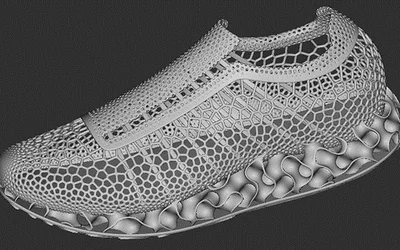
Fast Radius had an internal design challenge to create a shoe that could be printed as one part using an elastomeric material on HP's Multi-Jet Fusion technology. They designed workflows within nTop Platform as a way to explore the industrial design of the shoe.

3 minutes read
A material’s strength refers to the maximum stress it can be put under before its failure. Its stiffness refers to how much it will deform when pulled or bent. Materials with high stiffness often also have high strength.
4 minutes read
“Toughness” is a combination of an object’s strength (how easily it breaks) and ductility (how easily it deforms). In this way, toughness and impact resistance are one and the same – especially in material science, as toughness is a measure for how easily your part breaks upon impact.
4 minutes read
FFF 3D printing, or fused filament fabrication, is an additive manufacturing (AM) process in which thermoplastic material is pushed through a heated nozzle to create objects layer by layer.
6 minutes read
The Chair for Aerospace Systems is an integrating chair dealing with the aircraft in its entirety and the integration within civil and/or military aviation.

3 minutes read