Featured
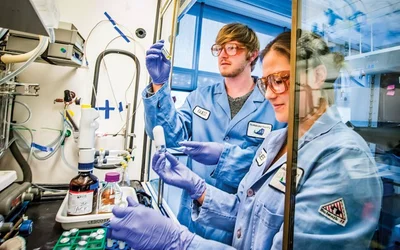
Peng Bai will work toward sustainable and efficient energy storage technology

Peng Bai will work toward sustainable and efficient energy storage technology
Peng Bai will work toward sustainable and efficient energy storage technology
How The COR ZERO Kickstarter campaign aims to revolutionize the 3D printing space by transforming makers into manufacturers.
Dr. Yuxuan Cosmi Lin and a team of researchers are studying the advantages of using semi-metals in different applications.
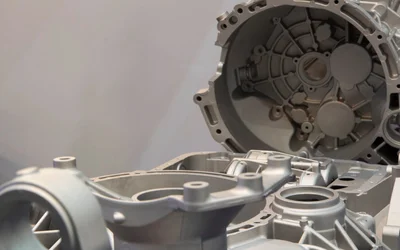
Unlock the potential of aluminum die casting in modern engineering applications through advanced techniques.
12 minutes read.
16 minutes read.
18 minutes read.
14 minutes read.
8 minutes read.


Entertainment
The Next Byte Podcast is hosted by two young engineers - Daniel and Farbod - who select the most interesting tech/engineering cont...
165 Posts

University for science and technology
Freedom and individual responsibility, entrepreneurial spirit and open-min...
43 Posts
Discover how iAM Marketplace simplifies industrial additive manufacturing by unifying materials, validation services, and multi-brand technologies into one open ecosystem for efficient AM sourcing.
This article discusses what attendees can expect from TCT Asia 2026, including its conference format, focus areas, and the experts contributing to industry-specific discussions.
This article discusses the exhibitors, products, and industrial trends defining additive manufacturing across the Asia-Pacific region at TCT Asia 2026.
This article discusses how the Asia-Pacific region is advancing additive manufacturing and the role of TCT Asia as the leading 3D printing and additive manufacturing event in the Asia-Pacific.
Lightweighting materials play a crucial role in offering the potential for improved fuel efficiency, enhanced performance, and reduced emissions in the automotive industry. It is anticipated that the lighter and more efficient automotive materials and components will revolutionize the industry in the coming years.
Peng Bai will work toward sustainable and efficient energy storage technology

How The COR ZERO Kickstarter campaign aims to revolutionize the 3D printing space by transforming makers into manufacturers.

7 minutes read
Dr. Yuxuan Cosmi Lin and a team of researchers are studying the advantages of using semi-metals in different applications.

3 minutes read
This article delves into flame-retardant plastics typically used to produce parts through 3D printing, CNC machining, and formative manufacturing technologies. It also covers the complexities of flame retardancy and industry standards, such as the UL 94 rating.

7 minutes read
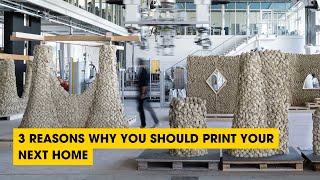
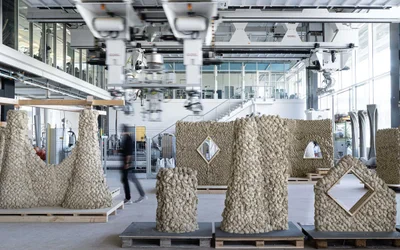
In this episode, we explore an innovative use of earth-based materials in 3D printing by ETH Zurich researchers to revolutionize the construction industry with sustainable and eco-friendly building techniques to pave the way for greener architecture and sustainable living.

21 minutes read
The role that material compatibility, adhesion, friction, and wear play in design of moulded parts.

5 minutes read
A team of academic and enterprise researchers has developed a synthesis process to produce a “rust-resistant” coating with additional properties ideal for creating faster, more durable electronics.

4 minutes read
Inspired by the architecture of human bone’s tough outer layer, engineers at Princeton have developed a cement-based material that is 5.6 times more damage-resistant than standard counterparts.

3 minutes read
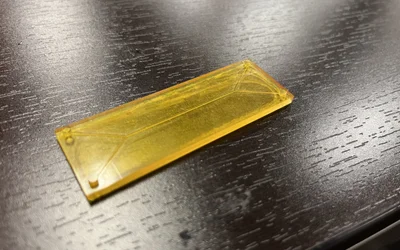
Soft lithography creates three-dimensional patterns and structures at the microscale and nanoscale levels. Unlike photolithography, a fabrication technique used by the semiconductor industry, soft lithography produces microfluidic devices, microarrays, and microelectromechanical systems (MEMS).

3 minutes read
The legacy of microscale robotics at Cornell continues to unfold – and refold and unfold itself again. The latest addition is a robot less than 1 millimeter in size that is printed as a 2D hexagonal “metasheet” but, with a jolt of electricity, morphs into preprogrammed 3D shapes and crawls.

4 minutes read
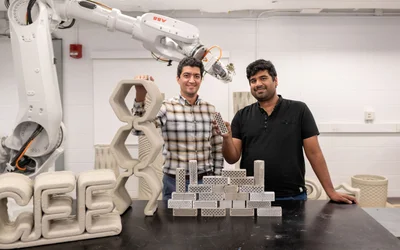
ETH Zurich researchers have developed a fast, robot-assisted printing process for earth materials that does not require cement.

A new family of integrated rock salt-polyanion cathodes opens door to low-cost, high-energy storage.
It’s a step toward smart coatings that change color—or other properties—on the fly.

4 minutes read
Drs. Joseph Kwon and Mark Barteau have discovered a way to produce ammonia for fertilizer that is greener and more efficient.
3 minutes read
Soft polymers with the combined properties of electrolytes and traditional polymers offer some unique and desirable properties that can be drastically changed on demand.

5 minutes read