
Featured
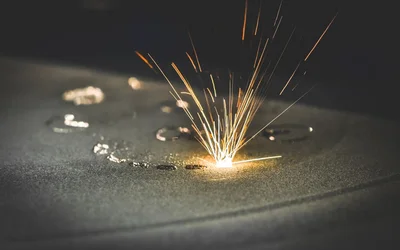
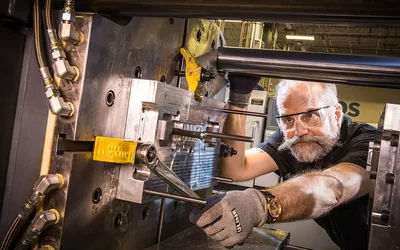
Breaking the Mold: How SLS Printing is Shaping the Future of Manufacturing with Unmatched Precision, Efficiency, and Creative Freedom
Breaking the Mold: How SLS Printing is Shaping the Future of Manufacturing with Unmatched Precision, Efficiency, and Creative Freedom
With a relatively low melting point (between 150°C and 180°C), PLA is one of the easiest thermoplastics to 3D print. Here’s how PLA melting point factors into choosing the optimal print settings, such as nozzle temperature and print bed temperature.
The world of polymer 3D printing is rich in technology. In this comparison, you will learn about the two most productive methods in detail: HSS and MJF
What is 3D printing? This article goes over the basics of 3D printing, otherwise known as additive manufacturing, covering its engineering principles and applications.
14 minutes read.
17 minutes read.
11 minutes read.
18 minutes read.
13 minutes read.
10 minutes read.


Entertainment
The Next Byte Podcast is hosted by two young engineers - Daniel and Farbod - who select the most interesting tech/engineering cont...
165 Posts
With just one month before the South Asian 3D printing trade show, we look at the events and showcases visitors will be able to take part in.
Lean manufacturing focuses on creating more value with less waste. Pioneered by Toyota in the 1950s, this approach helps businesses streamline processes, improve efficiency, and eliminate activities that don't add value to the final product.
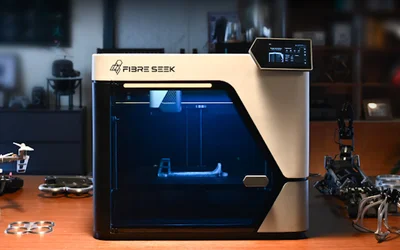
Following a successful crowdfunding campaign, the FibreSeeker 3 from FibreSeek is bringing continuous carbon fiber printing to a new audience.
ADDITIV Medical 2026 will bring together more than 500 medical professionals
The data problem
From leading experts at the CDFAM Computational Design Symposium
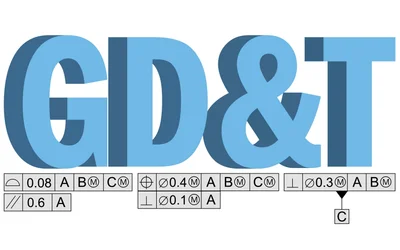
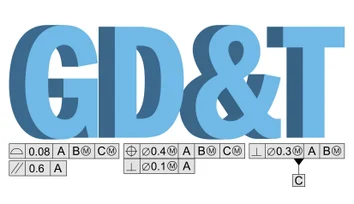
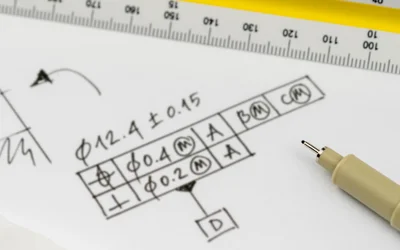
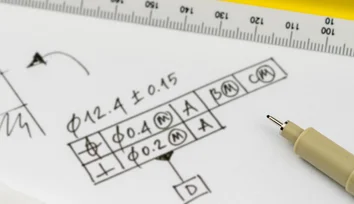
GD&T is the symbolic language engineers use to state exactly how much a part can vary and still work. This guide covers the basics.
This guide covers the true position formula, how to read the feature control frame, and how MMC and LMC generate bonus tolerance.
Breaking the Mold: How SLS Printing is Shaping the Future of Manufacturing with Unmatched Precision, Efficiency, and Creative Freedom
With a relatively low melting point (between 150°C and 180°C), PLA is one of the easiest thermoplastics to 3D print. Here’s how PLA melting point factors into choosing the optimal print settings, such as nozzle temperature and print bed temperature.
The world of polymer 3D printing is rich in technology. In this comparison, you will learn about the two most productive methods in detail: HSS and MJF

6 minutes read
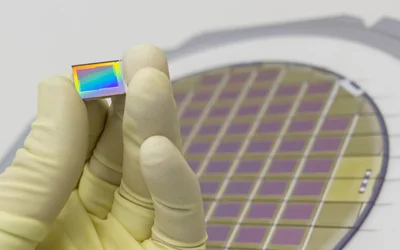
Wafer dicing separates individual integrated circuits or chips from a semiconductor wafer without damaging their delicate structures and circuits. This process is crucial for the production of electronic devices and components used in various industries, and the demand for it has increased with the development of high-performance and smaller electronic devices. Different dicing techniques, such as blade dicing, laser dicing, and plasma dicing, have been developed, and new innovations continue to emerge to address the challenges of complex semiconductor devices.
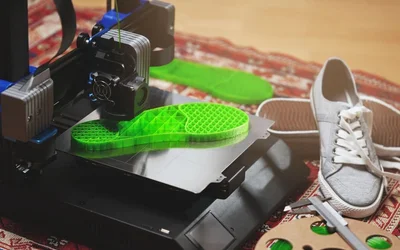
With its rubber-like material properties, TPU is a versatile 3D printing material that can be used for numerous applications. Here's what you need to know about 3D printing TPU, from filament storage, to printer settings, and more.
Protolabs’ expertise supported the fine tuning and optimisation of the design, to align with the projects speed and cost-effective requirements.
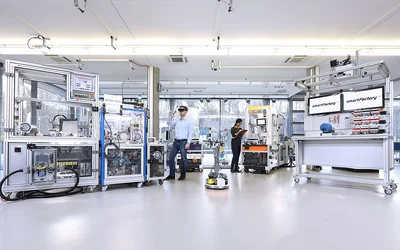
Article #3 of Transforming Industrial Manufacturing with Industry 4.0 Series: Manufacturing has an adoption rate of 85% for IoT, the highest among businesses. Driving the move toward smart factories, some challenges must be overcome to reap the benefits of this disruptive shift.
The world is aging; according to the World Health Organization (WHO), between 2015 and 2050, the proportion of the population over 60 will double from 12 percent to 22 percent.

4 minutes read
ADDITIV Medical World is a free virtual event offered by 3Dnatives, the leading online magazine about 3D printing and Additive Manufacturing.
ABS is a widely used 3D printing filament with good impact resistance and flexural strength. It also exhibits moderate heat resistance, making it a go-to material for mid-temperature 3D printing applications.
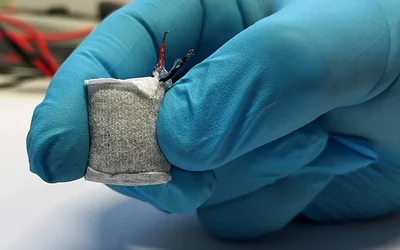
In this episode, we're exploring a groundbreaking innovation from ETH Zurich that could revolutionize how we power wearable devices. It's time to say goodbye to conventional batteries and hello to a sustainable, continuous, and convenient power source.

12 minutes read
Simulation tools from Altair streamline the product development cycle by accelerating product design, performing structural and multiphysics analyses, and ensuring manufacturing feasibility.
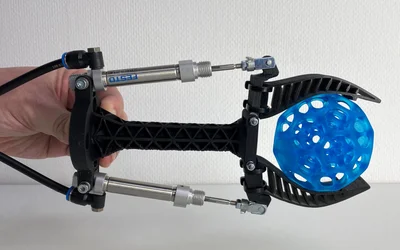
In this article, we explore how soft tooling 3D printing works and how it can enhance end-of-arm tooling as well as other applications. We use examples and case studies from BASF Forward AM.
You have been tasked with buying a 3D scanner. The only problem is figuring out where to start your search. You know what 3D scanning is but don’t know enough about it to make an informed choice.

14 minutes read
Build your digital signage solution to manage advertising displays with single-board computers.