Featured
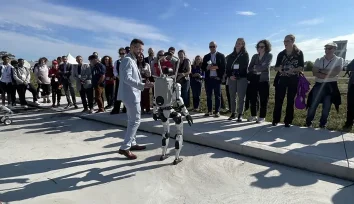
Lockheed Martin and General Motors are developing the next generation of lunar rovers for NASA's Artemis mission.
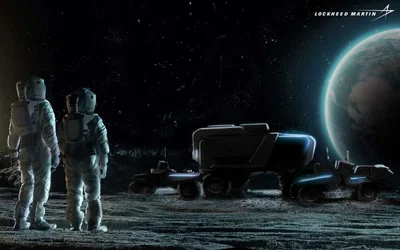
Lockheed Martin and General Motors are developing the next generation of lunar rovers for NASA's Artemis mission.
Lockheed Martin and General Motors are developing the next generation of lunar rovers for NASA's Artemis mission.
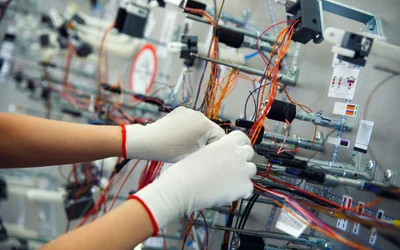
Article #3 of our Connected Transport Series. Successful connected car designs require secure, well-designed connectors that solve modularity challenges.
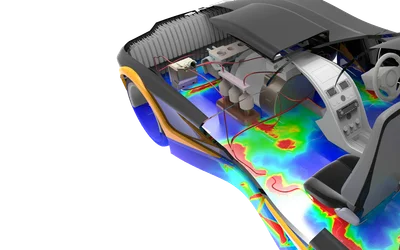
With transportation responsible for a significant percentage of global CO2 emissions, simulation technologies can be applied to all aspects of vehicle design to enable rapid innovation for greener vehicles.
Autonomous Vehicles (AVs) are poised to revolutionize human transportation by making it more safe, comfortable, and reliable. From passenger travel to cargo transportation, AVs equipped with AI and sensors offer tremendous potential.
16 minutes read.
14 minutes read.
18 minutes read.
10 minutes read.
16 minutes read.



Robotics and Drones
We empower R&D by providing the computational power, ROS packages, payloads...
14 Posts

Test and Measurement equipment
Keysight Technologies, Inc. (NYSE: KEYS) is a leading technology company th...
11 Posts

Electro-Mechanical Component Manufacturing
ISL Products is an engineering oriented designer and manufacturer of value-...
9 Posts
Examining the latest developments in self-driving vehicles.
Autonomous Vehicles (AVs) are poised to revolutionize human transportation by making it more safe, comfortable, and reliable. From passenger travel to cargo transportation, AVs equipped with AI and sensors offer tremendous potential.
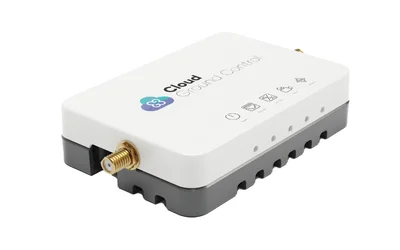
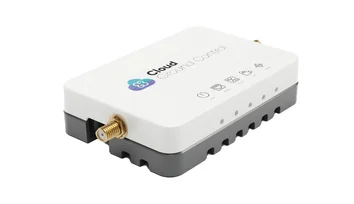
CGConnect, its cellular micro-modem that uses 4G/5G networks to link any drone or robotic vehicle to Cloud Ground Control’s cloud-based drone fleet management platform, enabling live-streaming, command and control from a web browser.
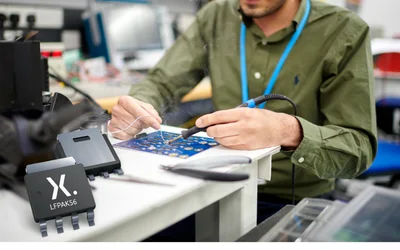
More than 20 years ago, a team set out to solve a problem: How do we reduce power loss and help reduce MOSFET size at the same time? LFPAK was the answer - and it changed everything.
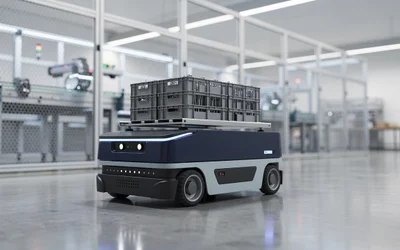
As robotics shifts from innovation showcases to real-world deployment, motion systems play a vital role in this next stage of robotics.
Specialized design and manufacturing of robotic systems for chemical, nuclear, and high-risk industrial applications.
The Companies and Concepts Redefining Tomorrow's Industries
Safe autonomy in various vehicle systems and in uncertain conditions.
Lockheed Martin and General Motors are developing the next generation of lunar rovers for NASA's Artemis mission.
Article #3 of our Connected Transport Series. Successful connected car designs require secure, well-designed connectors that solve modularity challenges.
With transportation responsible for a significant percentage of global CO2 emissions, simulation technologies can be applied to all aspects of vehicle design to enable rapid innovation for greener vehicles.
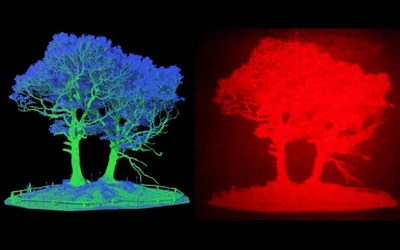
Researchers have developed the first LiDAR-based augmented reality head-up display for use in vehicles. Tests on a prototype version of the technology suggest that it could improve road safety by ‘seeing through’ objects to alert of potential hazards without distracting the driver.
Article #2 of our Connected Transport Series. Sensors activate automatic braking to avoid collisions when objects are too close, and they enable headlights to pan as we turn. But high-speed transfer of data is required to keep the connected advances coming.
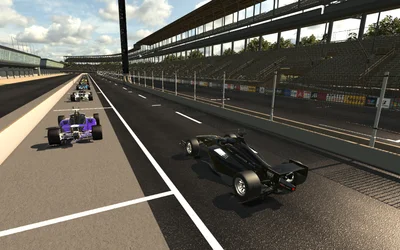
Before autonomous race cars take to the track, university teams must qualify in a simulation race around the Indianapolis Motor Speedway, where the winner will be awarded a $100,000 USD prize.
Article #1 of our Connected Transport Series. How The New 5G Mobile Standard Takes Connected Driving Another Step Closer to Reality.
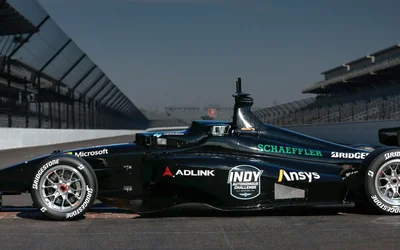
A high-speed autonomous vehicle race at the famous Indianapolis Motor Speedway. University teams program and race a modified Dallara AV-21 racecar to win $1.5 million in prize money.
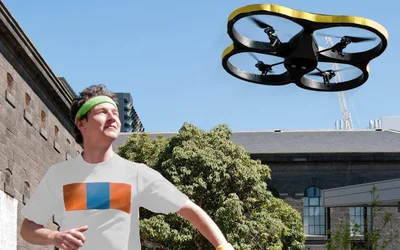
In this episode, we talk about Charm Industrial’s novel approach for carbon offsetting, a concept fitness drone from Hongik University that could be the first to commercialize, and a joint effort between MIT and US Navy to understand how sound waves are altered by water conditions in the North Pole.

The first car my family had during my childhood was a 1967 Hillman Hunter built by the Hillman Motor Car Company in Coventry, England. In case you are a bit shocked about the year…...where I grew up, we got cars that had already been out for a while. I am old but not THAT old.

4 minutes read
In this episode, we talk about how DeepMind’s AlphaFold algorithm solved protein folding, NASA JPL’s partnership with the Department of Homeland Security to better protect firefighters, and a trial for autonomous shuttles in DTU that can change the transportation infrastructure of the whole country
Brian de Bart, Team Lead Automotive System Innovation at NXP explains about chips and AI in automotive industry as part of a series from the founding partners of the AI Innovation Center at High Tech Campus Eindhoven.

5 minutes read
The guide to the technologies that can lower the environmental footprint of transport.
Integrated photonics offers promising solutions in a range of automotive applications.

5 minutes read
In this episode, we talk about how a research team led by MIT has found a way to create functional textiles from polyethylene, rumors surrounding the Apple car, and EPFL’s newest iteration of a retinal implant.