From Prototype to Deployment Designing Motion Systems for Real-World Robotics
As robotics shifts from innovation showcases to real-world deployment, motion systems play a vital role in this next stage of robotics.

11 Aug, 2026. 14 minutes read
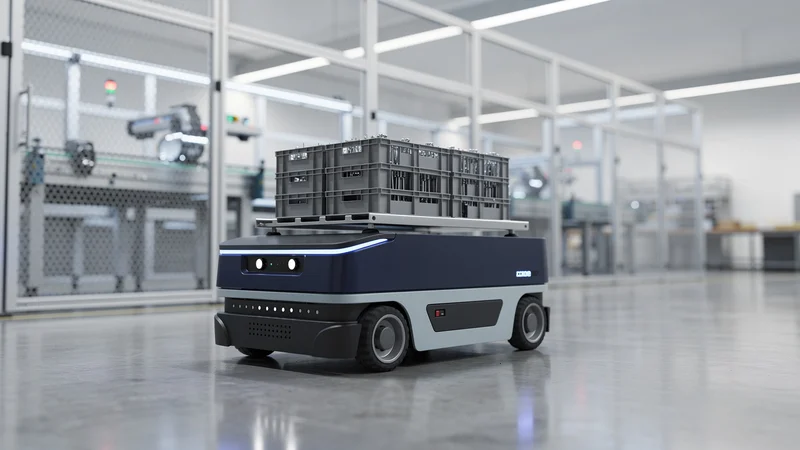
Introduction
Robotics is moving from controlled demonstrations into operating environments where machines are expected to work safely, repeatedly, and efficiently. That shift changes how robotic systems need to be designed. A robot that performs well in a lab may still fail in the field if it cannot manage heat, repeated motion cycles, environmental stress, safety demands, service needs, or production variability.
Motion systems are central to this challenge. They convert software decisions into physical movement. Motors, gearheads, encoders, controllers, firmware, bearings, seals, cooling paths, and communication interfaces all shape how a robot moves and how reliably it performs. In real-world deployment, these elements cannot be treated as separate parts selected late in the design process. They need to function as a unified motion architecture.
This whitepaper examines the motion-system priorities that matter when robots move from prototype to deployment. It draws on technical material related to frameless motors, integrated robotic drives, warehouse automation, surgical robotics, and system-level robotics design. The main argument is that the next stage of robotics will depend not only on better autonomy or software intelligence, but also on dependable physical motion systems designed for real operating conditions.
Robotics Is Moving Beyond the Demo
The Industry’s Transition to Real-World Deployment
Robotics is expanding across logistics, healthcare, manufacturing, autonomous mobility, industrial automation, and service environments. In these areas, the expectations placed on robotic systems are changing. Early prototypes often aim to prove that a machine can perform a specific task. Deployed systems must do more. They must perform that task consistently under real operating constraints.
This transition is especially visible in mobile robotics and logistics automation. AGVs and AMRs are no longer treated only as pilot technologies. They are increasingly expected to support material movement, warehouse throughput, picking workflows, and continuous operations. Similar pressures exist in healthcare, where surgical robotic systems must deliver repeatable, precise motion within compact, safety-critical environments.
The result is a broader engineering shift. Robotics teams are no longer judged only on whether their systems can demonstrate capability. They are judged on whether those systems can operate reliably, safely, and efficiently over time.[1]
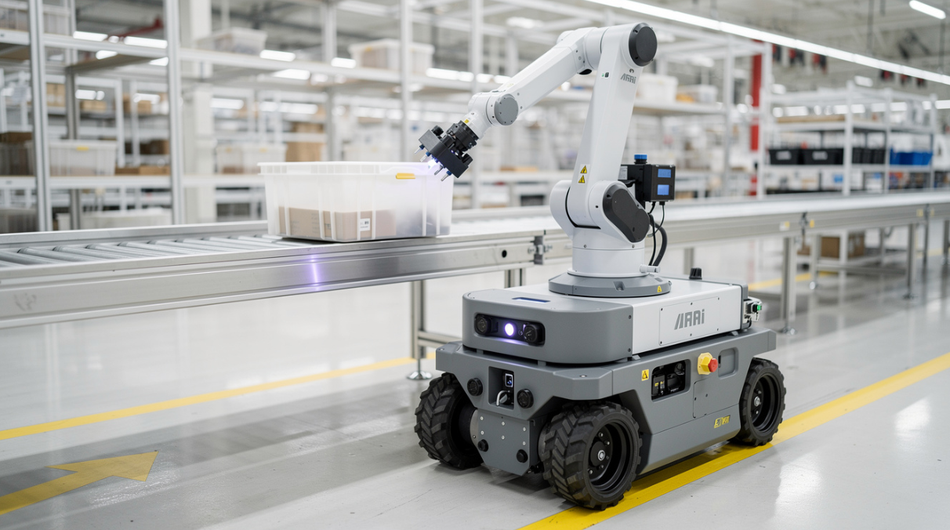
What Separates Deployable Robots from Demonstrations
A demonstration shows that a concept is possible. A deployable robot must show that the concept can survive repeated use. The difference is practical rather than theoretical.
Field conditions introduce variables that may not appear during short demonstrations. Robots may encounter dust, vibration, shock, temperature fluctuations, repeated acceleration cycles, mechanical stress, limited access for service, and unpredictable human interaction.[1] These conditions expose weaknesses in thermal design, mechanical integration, control behavior, wiring, sealing, and actuator reliability.
Deployable robots, therefore, require a different definition of success. Functionality matters, but it is not enough. Reliability, repeatability, uptime, maintainability, and scalability become equally important. A robot that works once under controlled conditions is not the same as one that can support real-world operations every day.
The Critical Role of Motion Systems
Motion systems sit between robotic intelligence and physical action. Perception, planning, and autonomy may determine what the robot should do, but the motion system determines how that decision translates into movement.
Every acceleration, stop, grip, turn, correction, or positioning move depends on the actuation layer. If the motion system is inefficient, hard to cool, noisy, unreliable, or difficult to manufacture consistently, the wider robotic platform inherits those limitations. This is why motion systems are increasingly treated as a core design issue rather than a supporting detail.[1]
The practical question for robotics teams is not only, “Can the robot move?” It is, “Can the robot move safely, predictably, efficiently, and repeatedly under real operating conditions?”
Why Motion Systems Have Become a Strategic Design Challenge
The Growing Complexity of Modern Robots
Modern robots are becoming more complex across nearly every category. Humanoids and quadrupeds require many high-torque actuators. Mobile manipulators combine mobility with arm motion. AGVs and AMRs must operate efficiently over long duty cycles. Surgical robots must provide compact, precise operation under strict safety and medical constraints. Industrial systems must deliver repeatability, durability, and predictable performance.
This diversity creates different design pressures, but the underlying issue is similar. Motion performance depends on how multiple technologies work together. Motors, gearheads, encoders, controllers, electronics, software, seals, bearings, and mechanical interfaces all contribute to final behavior.[2]
As robots become more capable, teams must coordinate more axes of motion, more feedback signals, more safety functions, and more thermal constraints. This makes motion-system architecture a strategic design issue.
Balancing Competing Performance Requirements
Motion systems must balance torque density, precision, velocity, efficiency, weight, packaging, thermal behavior, safety, and cost. These requirements are closely connected.
Increasing torque can increase size, mass, heat, and energy use. Reducing package size can make cooling more difficult. Improving precision may require better feedback, tighter mechanical control, improved encoder integration, and more stable controller behavior. Improving efficiency may depend on motor design, gear selection, controller strategy, and the robot's actual operating profile. [3]
These trade-offs cannot be solved by looking at a single component. A motor with strong specifications can still produce poor results if paired with a mismatched gearhead, a weak cooling path, poor encoder alignment, or an unsuitable control architecture. Motion performance is a system outcome.
Why Actuation Is No Longer a Component Decision
Actuation is no longer only a matter of selecting a motor. It involves the complete motion chain: motor, gearhead, encoder, controller, firmware, communication, bearings, seals, housing, thermal path, and mechanical interface.
Motion-system decisions need to be made early because actuators influence packaging, thermal management, structural dynamics, power distribution, and controllability.[2] Once the hardware architecture is fixed, changing the actuator system can require extensive redesign.
This means actuation should be treated as part of the robot architecture from the beginning. Teams should define gearing, power supply structure, communication, cooling strategy, peak and continuous performance, safety concepts, and duty cycles before final component selection.
Core Motion-System Design Priorities
Torque Density and Lightweight Design
Torque density is one of the most important requirements in mobile and compact robotics. Robots that carry their own batteries need to manage mass carefully. Every added gram affects payload, runtime, balance, acceleration, and safety.
Torque density is a core design requirement in modern robotics because many platforms rely on multiple high-torque actuators working within strict weight and packaging limits. Autonomous mobile robots and mobile manipulators, for example, may require several dozen actuators, and each actuator must deliver the maximum torque per unit mass. [3] This is especially important for humanoids, quadrupeds, exoskeletons, and mobile manipulation platforms, where added mass can affect payload, runtime, balance, acceleration, and safety.
Frameless motors can support compact, lightweight designs by allowing the motor to be integrated directly into the robot’s mechanical structure. But this also increases the importance of integration quality. Mounting concentricity, air gap control, encoder alignment, assembly tolerances, and thermal contact all affect final performance. [3]
Energy Efficiency and Power Management
Energy efficiency affects runtime, battery sizing, charging frequency, thermal load, and fleet productivity. In battery-powered robots, every watt consumed by the drive system reduces available operating time.
This is especially important in logistics robotics. AGVs and AMRs often operate over long duty cycles, and even modest efficiency improvements can matter when multiplied across large fleets. maxon’s logistics material also identifies high efficiency as a key requirement for maximizing operation time in autonomous vehicles and logistics robots. [4]
Efficiency should be evaluated across real operating conditions, not only ideal motor specifications. Robots accelerate, brake, turn, carry variable payloads, and operate at changing speeds. These dynamic profiles affect actual energy use and heat generation.
Thermal Management
Thermal management often defines the practical performance ceiling of a robotic actuator. A motor may be capable of high peak torque, but if heat cannot be removed effectively, continuous performance will be limited.
Thermal management is often addressed through high-temperature materials, controlled potting, efficient heat dissipation toward the cooling interface, and direct temperature sensing near the motor winding. These design choices allow the actuator to operate closer to its thermal limits while reducing the risk of overheating during peak or continuous operation. In the referenced motor platform, the stator winding is rated for operation up to 155°C under the specified design conditions. [3]
Thermal design matters because robots often operate under repeated load cycles. Warehouse robots may run for long periods with frequent acceleration and braking. Surgical systems must limit heat in compact clinical environments. Humanoids and mobile manipulators may generate heat across many actuators at once. In all cases, thermal planning needs to happen early.
Precision, Smoothness, and Controllability
Precision is not only about final position accuracy. Real robotic motion also depends on smoothness, low vibration, stable low-speed operation, predictable braking, and repeatable response.
Low cogging torque helps reduce torque ripple, noise, and vibration, supporting smoother low-speed motion and more predictable robotic control.[3] In surgical robotics, smooth and precise motion is especially important because the system must translate human input into controlled instrument movement inside confined spaces
Controllability depends on the whole motion chain. Motor behavior, encoder quality, gearhead characteristics, controller tuning, communication timing, and mechanical stiffness all influence the robot’s response. A motion system should therefore be evaluated as an integrated control-and-mechanical system.
Reliability as a System-Level Requirement
Why Reliability Determines Commercial Success
Reliability determines whether a robot becomes a deployable product or remains a promising prototype. A single actuator problem can affect the entire machine. The interview notes that if a single actuator fails, the entire robot often goes down, making actuator robustness central to deployment success. [1]
Downtime affects more than repair costs. It can disrupt warehouse workflows, delay production, erode customer confidence, or raise safety concerns. As robotic systems scale from one prototype to many units, reliability becomes a commercial requirement.
For robotics teams, reliability must be designed into the system rather than added through late testing. This includes mechanical design, thermal design, protection against contamination, overload behavior, production quality, and service access.
Environmental Challenges in Real-World Robotics
Real environments expose robots to shock, vibration, dust, contamination, temperature changes, mechanical stress, and limited installation space. These factors affect actuators, bearings, gearheads, encoders, electronics, seals, and cables.
Warehouse environments may appear controlled, but robots still face repeated acceleration cycles, mechanical shock, debris, and thermal loading. Surgical systems face a different environment, including sterilization, sealing, heat, vibration, and long-term safety constraints. Mobile robots and humanoids may also experience impact loads and dynamic motion that exceed those of normal steady-state operation.
These conditions should be considered during actuator and joint design, not left as afterthoughts.
Designing for Long-Term Performance
Long-term performance depends on overload tolerance, thermal resilience, ingress protection, robust actuator architecture, and repeatable production quality. For robotics platforms moving toward higher-volume deployment, production consistency becomes especially important because small variations in assembly can affect motion quality, thermal behavior, and service life. Traceable components and automated production processes support repeatable manufacturing, quality control, and long-term reliability across deployed systems. [3]
Integration quality is also part of reliability. Poor mounting concentricity, long encoder tolerance chains, or weak thermal interfaces can create problems that may not appear immediately but can reduce performance later in the field. [3] This is one reason the total cost of integration can be as important as component performance.
A deployable robot needs components that perform well, but it also needs a motion architecture that can be consistently assembled, tested, and maintained.
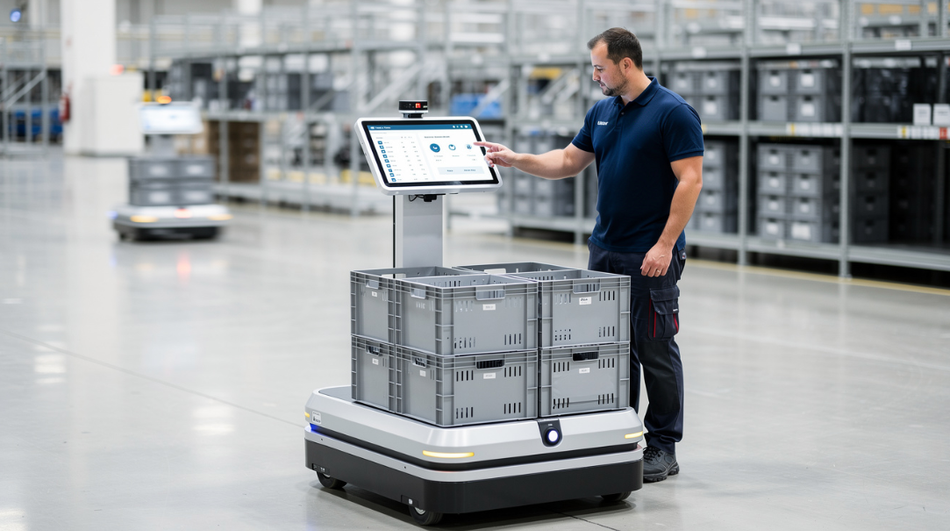
Application Spotlight: Warehouse Automation
The Rise of AGVs and AMRs
Warehouse automation is a clear example of robotics moving from pilot projects to operational infrastructure. AGVs and AMRs support material movement, inventory transport, picking workflows, shuttle systems, and goods-to-person operations.
As adoption grows, the engineering question changes. Operators are no longer asking only whether a robot can navigate. They are asking whether it can work continuously, safely, and efficiently under real warehouse conditions.
This makes the drive system central. It affects energy consumption, thermal behavior, uptime, positioning accuracy, maintenance requirements, and scalability.
Designing for Continuous Operation
Continuous operation places heavy demands on motion systems. Warehouse robots may travel long distances, accelerate and brake repeatedly, carry different loads, and operate for extended periods with limited maintenance windows.
The drive system must support this pattern without excessive heat, unstable control behavior, or premature wear. Battery efficiency is also critical because charging frequency affects fleet productivity.
For this reason, AGV and AMR motion systems should be evaluated across realistic duty cycles. A design that performs well in a short test may need refinement before it can support sustained operation across many units.
Motion-System Priorities for Logistics Robotics
For logistics applications, maxon emphasizes compact design, high efficiency, adaptability, support for high radial loads, and exceptional reliability as key drive system requirements. maxon’s logistics page identifies compact design, high efficiency, adaptability, gearheads for high radial loads, and high reliability as key requirements for the drive.[4] It also states that drive systems require precise positioning, reliable motion sequences, operation in narrow spaces, and, ideally, continuous around-the-clock operation to avoid downtime.[4]
These requirements reflect the reality of warehouse design. Robots must fit into existing layouts, preserve space for batteries and payloads, and move predictably near workers and equipment.
Motion behavior also affects safety. Braking, acceleration, stopping accuracy, and predictable response all influence how safely robots share space with people.
Lessons for Broader Robotics Development
Warehouse automation shows that uptime can become a competitive advantage. A system that performs reliably over long duty cycles creates more value than one that only demonstrates impressive navigation.
The broader lesson is that deployment success depends on motion systems designed for repeated use. Reliability, efficiency, compactness, thermal resilience, and maintainability are not secondary concerns. They shape whether robotic platforms can scale.
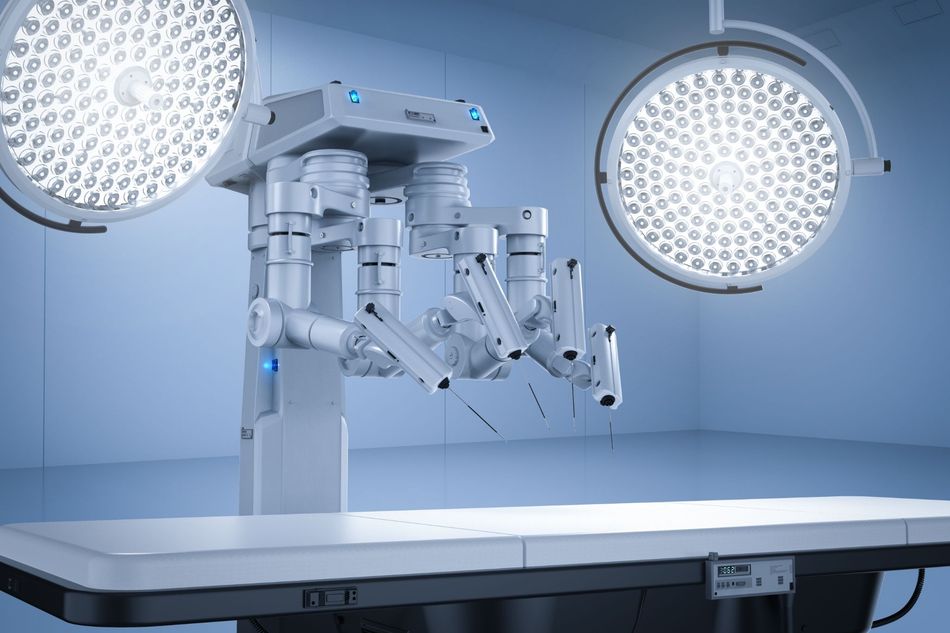
Application Spotlight: Surgical Robotics
The Evolution of Robotic-Assisted Surgery
Robotic-assisted surgery is becoming an important part of modern healthcare because it enables procedures that require precision, control, and minimal tissue disruption. In these systems, motion quality is directly tied to clinical usefulness.
The value of a surgical robot is not only what the surgeon sees on a display. It is also how precisely the system converts human input into physical instrument movement. Motors, gearheads, encoders, controllers, and software determine how smoothly and reliably that motion occurs.
Precision in Highly Constrained Environments
Surgical robots operate in extremely constrained spaces. Robotic arms, joints, instruments, and end effectors must fit within tight mechanical limits while still delivering torque, accuracy, feedback, and safe control.
This creates a difficult trade-off between compactness and performance. A small actuator must still support fine motion control, smooth response, and predictable positioning. In surgical use, compactness is only valuable if it does not weaken reliability, control, or safety.
Precision also requires smooth movement. Low vibration, low cogging behavior, stable control, and reliable feedback are important because surgical motion often occurs near sensitive tissue.
Engineering Requirements for Surgical Systems
Surgical systems have requirements that many other robotic systems do not face. They may need low heat generation, low vibration, quiet operation, sterilizability, corrosion resistance, sealing, and long-term durability.
Heat, noise, and vibration are not minor concerns in medical settings. Vibration can affect instrument steadiness. Heat can limit compact packaging and affect comfort or safety. Noise can affect the operating environment. Sterilization and cleaning requirements can influence material selection, lubrication, electronics protection, and sealing.
This means surgical motion systems cannot be evaluated by motor size and torque alone. They must be assessed as complete medical motion systems.
Reliability When Failure Is Not an Option
Reliability is a basic design requirement in surgical robotics. The system must perform consistently throughout a procedure. Unexpected actuator failure, excessive heat, unstable motion, or loss of control can affect the entire robotic platform.
This makes early motion-system planning essential. Engineers must define torque, speed, thermal limits, communication structure, feedback requirements, safety behavior, and failure response before hardware decisions become fixed.
Surgical robotics shows the same broader lesson as logistics robotics, but under stricter constraints: real-world robots succeed through dependable motion, not demonstration value alone.
System Integration: Where Robotics Projects Succeed or Fail
Motion-System Decisions Must Happen Early
Motion-system decisions influence packaging, thermal management, structural dynamics, power distribution, communication, controllability, and serviceability.[1] If these choices are made too late, redesign becomes difficult.
Early architecture work should answer practical questions. What peak and continuous torque are required? What gearing is suitable? How much space is available? Where will the heat go? What communication protocol will be used? How will safety functions be supported? How will the system be assembled and serviced?
These questions are not separate from robot performance. They shape it.
Simulation and Virtual Validation
Simulation can reduce design risk before physical hardware is finalized. It allows teams to compare actuator sizing, thermal behavior, energy consumption, duty cycles, and control assumptions. Simulation does not replace physical validation, but it helps reduce unnecessary hardware iterations and can narrow the gap between expected and real performance.
For logistics robotics, simulation can help evaluate battery use, thermal performance, and drive-system efficiency across operating scenarios. Surgical robotics can help test assumptions about torque, speed, heat, packaging, and control behavior before changes become expensive.
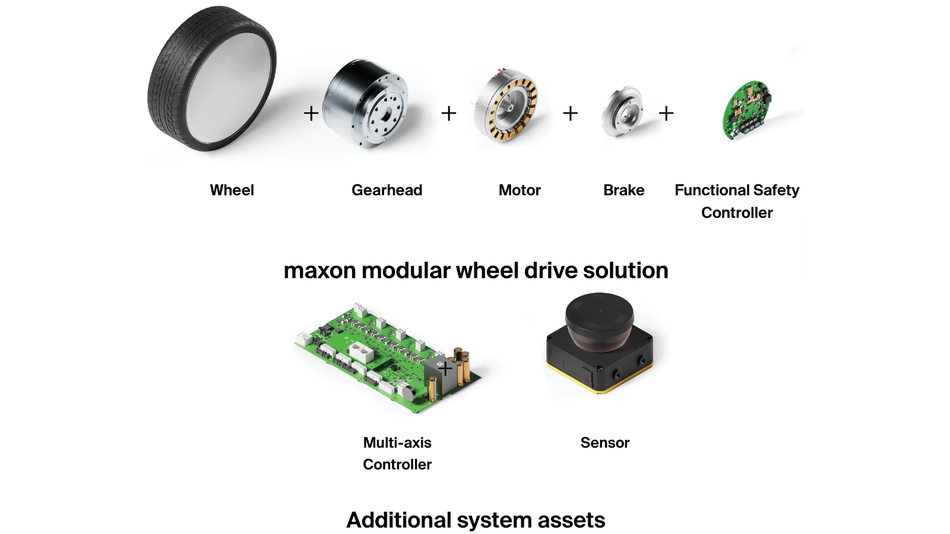
Evaluating the Complete Motion System
A complete motion system includes motors, encoders, gearheads, controllers, communication architecture, firmware, thermal paths, and mechanical interfaces. These elements should be evaluated together.
A motor may meet its specifications while the full system still performs poorly due to communication delays, poor thermal transfer, encoder tolerance issues, gear mismatches, vibration, or assembly variations. System-level testing helps reveal these issues earlier.
Integrated drive platforms can reduce the number of interfaces that robot developers must manage. They may also simplify sourcing, validation, assembly, and service. The value is not only space-saving. It is a risk reduction.
Lowering the Total Cost of Robotics Deployment
Looking Beyond Component Performance
Component cost is only part of the total deployment cost. Robotics teams also need to account for integration effort, assembly complexity, quality control, testing, service access, redesign cycles, maintenance, and production yield.
A low-cost component can become expensive if it requires tight tolerances, manual alignment, added cooling hardware, custom mounting, or frequent service. A more integrated solution may reduce total cost if it improves assembly yield, reliability, and time to deployment. [2]
The right question is not simply, “What does the part cost?” It is, “What does this motion architecture cost to integrate, build, maintain, and scale?”
Designing for Production
A robot that works as a prototype is not necessarily ready for production. Production requires repeatable manufacturing, quality control, traceability, and high assembly yields.
Production quality and repeatability are critical when scaling robotics systems. Traceable components, controlled assembly processes, and integration features that reduce tolerance chain and thermal interface risks help ensure consistent performance at volume.[3]
These details matter because small variations in assembly can affect cogging, vibration, encoder behavior, thermal performance, and service life. Production readiness is therefore part of motion-system design.
Selecting Technology Partners
Technology partners can affect development speed, integration risk, and scalability. Robotics teams may need support with sizing, simulation, customization, safety considerations, manufacturing, testing, and system optimization.
Technology partners can also support robotics teams through simulation models, kinematic analysis, system engineering, optimization, and functional safety or risk assessment support. This can reduce integration risk when moving from prototype development to scalable deployment.[2] This type of support is relevant because many robotics teams are not only buying components. They are trying to reduce integration risk as they move from prototype to production.
The right partner should support both engineering performance and production scalability.
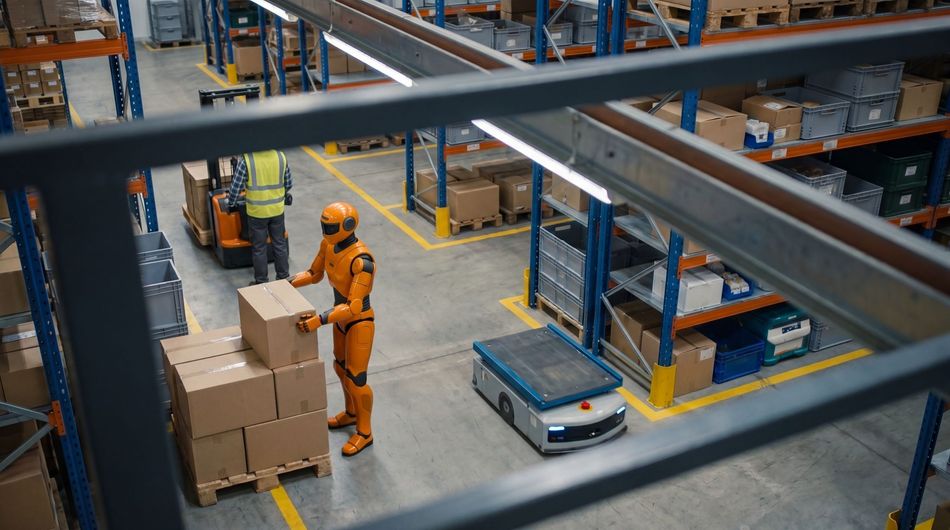 Humanoid warehouse robot and AMR. Source: AdobeStock.
Preparing for the Next Generation of Robotics
Humanoids and Mobile Manipulation
Humanoids and mobile manipulators are likely to increase demand for high-performance actuation. These systems may contain many actuators and require high torque density, low weight, efficient power use, and reliable thermal behavior.[3]
The challenge is not simply adding more power. More actuators increase system complexity, energy use, heat, wiring, control coordination, and failure points. This makes integrated motion architecture increasingly important.
Robotics in Dynamic Environments
Robots are moving into more dynamic environments where they may operate near people, equipment, and sensitive processes. These settings require predictable motion, functional safety, and real-time responsiveness.
Safety and safe-motion architectures will become increasingly important as robots move into broader real-world deployment and operate closer to people, equipment, and sensitive processes.[2] Precision alone is not enough. The complete safety architecture must support predictable behavior and safe response.
Future Motion-System Requirements
Future motion systems will need higher levels of integration, improved efficiency, greater reliability, and faster development cycles. They will also need better thermal paths, stronger feedback systems, compact packaging, and easier production.
As robotics systems become more capable, the hidden engineering layer will matter more. Motors, gearheads, encoders, controllers, sealing, thermal design, firmware, communication, and manufacturing quality will shape whether robots can perform consistently in the field.
Motion Systems Will Define the Next Era of Robotics
Robotics is moving from innovation showcases toward real-world deployment. This shift changes the role of motion systems. Actuation is no longer a secondary engineering detail. It is one of the main factors that determines whether a robot can scale.
Across logistics, surgery, mobile manipulation, humanoids, and industrial automation, successful robots need motion systems that deliver torque, precision, efficiency, thermal stability, smooth control, safety support, and long-term reliability. These qualities cannot be achieved by selecting parts in isolation. They require system-level design.
The strongest robotics platforms will be built around integrated motion architectures where motors, gearheads, encoders, controllers, firmware, cooling paths, communication, mechanical interfaces, and manufacturing processes are considered together. Early design choices will shape not only motion performance, but also uptime, service life, total cost, and scalability.
Robots that succeed in the field will not be defined only by what they can demonstrate once. They will be defined by how consistently they can move, work, and recover under real operating conditions. Motion systems will therefore play a defining role in the next stage of robotics.
References:
Mario Mauerer, “Robots in the Real World: What It Takes to Build Motion Systems That Deliver,” maxon thought leadership interview.
maxon group, “Powerful robot drives: Perfect solutions for modern robotics.”
maxon, “EC frameless DT: A High-Performance Motor Platform for Robotics,” March 2024.
maxon group, “Drive systems for logistics.”