Scaling From Prototype to Fleet: The Motion Challenges Nobody Talks About in AGV Development
Engineering AGVs for consistent performance across large-scale deployments.

08 Oct, 2026. 8 minutes read
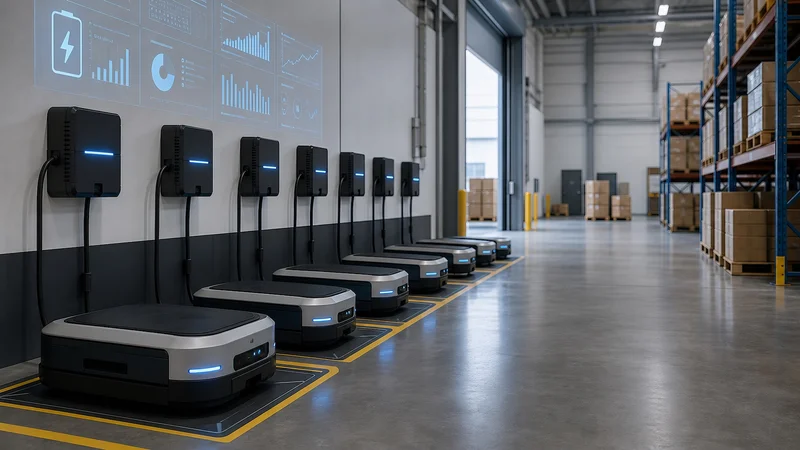
Automated guided vehicles (AGVs) and autonomous mobile robots (AMRs) are increasingly used in warehouses, factories, and distribution centres, but a successful prototype does not guarantee a successful fleet. Prototypes usually run on selected routes, under known loads, with engineers nearby. A commercial deployment may involve 100 or more vehicles across different facilities, shifts, floors, temperatures, and traffic patterns.
At scale, a small inconsistency in a motor, controller setting, wheel, connector, or mechanical interface can be repeated across every vehicle. Motion architecture therefore becomes a key factor in scalability, alongside supply continuity, serviceability, energy efficiency, functional safety, and long-term support. Manufacturers increasingly rely on integrated drive systems for logistics automation to improve repeatability across fleets. The goal is a system-level platform that performs consistently across production units and environments.
Why Successful AGV Demonstrations Often Fail at Scale
Controlled Demonstrations Versus Real Operations
Prototype demonstrations often involve limited operating hours, selected routes and floor conditions, and a narrow range of payloads and movement scenarios. Engineers can troubleshoot immediately, replace components, and change settings. Exposure to continuous shifts, peak workloads, people, forklifts, and other warehouse equipment may be limited. Fleets remove these controls and require repeatable maintenance rather than prototype-level intervention.
Problems Exposed During Fleet Deployment
Fleet deployment introduces wider variation in payload, speed, acceleration, braking, gradients, floors, temperature, and contamination. Vehicles may run through multiple shifts while repeatedly turning, reversing, lifting, and positioning. These conditions can expose thermal buildup in motors and controllers, wear in wheels and mechanics, and weaknesses in cables, connectors, or mounting. Scale also increases demand for replacement parts and technical support.
The Cost of Repeating Prototype Weaknesses
A component, configuration, or serviceability problem becomes more expensive when reproduced across many vehicles. Repeated failures increase technician workload and spare-part inventory. Software or parameter corrections may need fleet-wide deployment, while redesign after production starts can delay manufacturing and customer schedules. Prototype weaknesses should therefore be treated as potential fleet-wide costs.
Motion-System Consistency Across Large Fleets
Consistent Vehicle Performance
Vehicles built to the same specification should show similar acceleration, braking, speed and position control, torque delivery, stopping distance, low-speed behaviour, and thermal performance under comparable loads. Reducing unnecessary variation makes fleet control, maintenance, and troubleshooting more predictable.
Sources of Motion-System Variation
Variation can come from motor and gearhead characteristics, encoder calibration, wheel diameter and wear, controller parameters, cable and connector installation, mechanical alignment, and assembly tolerances. Firmware or software versions add another source of variation, while supplier or manufacturing-process changes may alter performance even when a replacement appears equivalent.
Production and Validation Controls
Standard component specifications defined assembly and alignment procedures, controlled motor-controller parameter sets, and end-of-line motion tests help limit variation. Calibration records, serial numbers, and component traceability should be maintained where needed. Firmware and configuration management matter equally. Results should be compared across production batches, while field data should be reviewed for fleet-wide patterns.
Standardization Versus Customization
Benefits of Standardized Motion Platforms
Common motors, gearheads, encoders, brakes, controllers, interfaces, and software settings reduce the number of unique parts and configurations. This simplifies procurement, inventory planning, technician training, replacement, repair, and testing, while reducing the risk of configuration errors across related vehicle models.
Need for Application-Specific Design
Not every AGV can use the same drivetrain. Payload, dimensions, speed, acceleration, lifting, steering, traction, and positioning requirements vary. Indoor and outdoor operation can impose different demands, as can floors, gradients, space, weight, battery voltage, communications, and safety or braking requirements. The objective is controlled customization within a common architecture.
Modular Drive Platforms
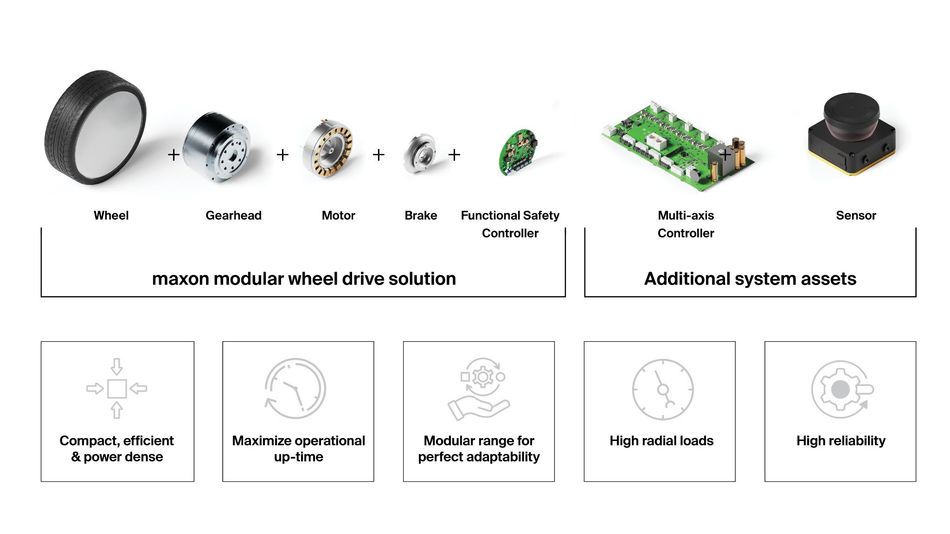
A modular platform uses reusable mechanical and electrical interfaces with configurable components. Motors can cover different power and speed ranges, gearheads, torque levels, and encoders, brakes, controllers, or wheels can be added as needed. Standard modules can then serve several AGV models.
The maxon wheel-drive architecture is one example of a compact drive system for AGVs that combines the motor, gearhead, and encoder into a standardized platform [1]. It illustrates the balance between flexibility and repeatable interfaces.
Managing Power Consumption and Battery Life at Scale
Motion-System Energy Demand
Energy is used during acceleration, travel, steering, lifting, and load handling. Demand rises with gradients, uneven floors, repeated starts and stops, vehicle and payload mass, and losses in motors, gearheads, controllers, and wheels. Sensors, computers, and communications add auxiliary consumption. Battery and drive sizing should therefore reflect realistic duty cycles.
Fleet-Level Impact of Drive Efficiency
Small efficiency losses matter when multiplied across a fleet. Higher consumption can shorten the operating time between charges, increase charging frequency and station demand, reduce vehicle availability during peak periods, increase facility electricity use, and increase battery cycling. Energy per completed transport mission is therefore a useful fleet-level measure.
Power Density and Compact Drive Design
AGVs often need high torque and power within limited space. Compact motors and integrated drives can support smaller, lighter platforms, but power density must be balanced with thermal performance. Efficient motors and controllers matter in battery-powered vehicles.
Engineers evaluating compact AGV architectures should consider how modular drive technology affects power density, efficiency, serviceability, and future scalability. Gearheads should be selected for torque, speed, and efficiency, and wheels for rolling resistance and floor conditions. Battery voltage and drivetrain requirements should be considered together. maxon describes compact and modular wheel-drive and mobility systems for AGV applications [1, 2].
Battery and Charging Strategy
Battery capacity should reflect realistic routes, loads, charging time, and operating time. Opportunity charging during workflow pauses and automatic charging within fleet schedules may be useful where appropriate. State of charge, battery temperature, and health should be monitored. Because route planning affects energy use, mission assignment and charging should be coordinated through fleet management.
Functional Safety During Fleet Expansion
Motion Functions Affecting Safety
Safety-related motion includes controlled acceleration and deceleration, reliable normal and emergency braking, accurate speed and position feedback, safe stopping when obstacles are detected, controlled steering and load handling, and defined responses after power or communication loss.
Safety Across Different Facilities
A vehicle moved to another facility may encounter different aisle widths, routes, mixed traffic, floors, visibility, operating speeds, payloads, loading areas, crossings, doors, and blind corners. Each facility therefore needs its own risk assessment and validation of operating zones before deployment.
Functional Safety and Motion Architecture
Safety requirements should be included early, with standard control separated appropriately from safety-related functions. Encoders and safety sensors must provide appropriate feedback, brakes must be suited to expected vehicle loads, and safe torque or motion functions should be used where required. Diagnostic coverage of critical motion components, controlled changes to software and parameters, and fault-condition testing on representative vehicles are also important.
ISO 3691-4:2023 specifies safety requirements and means of verification for driverless industrial trucks and their systems, including AGVs and AMRs. It also recognizes that operating-zone conditions can significantly affect safe operation [3].
System-Level Engineering for Fleet Scalability
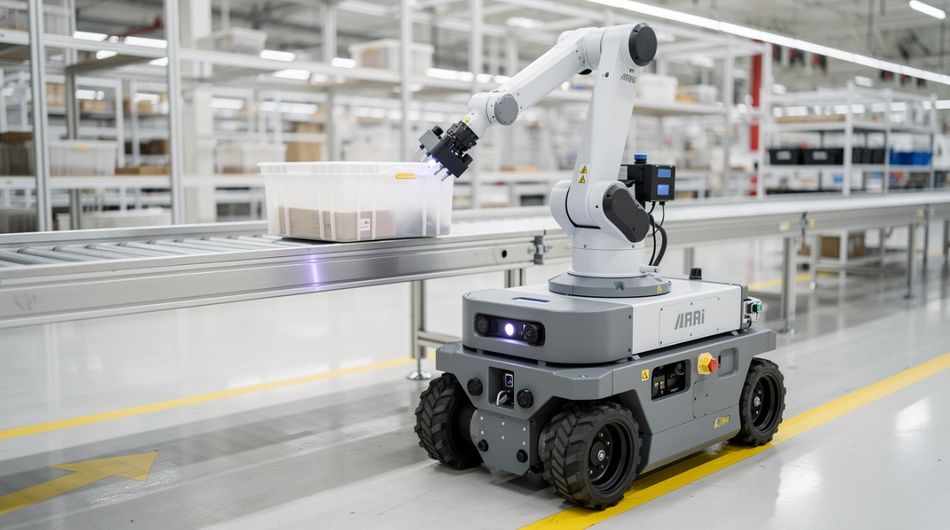
Successful fleet deployment depends on viewing motors, gearheads, sensors, electronics, and software as a coordinated mechatronic drive system rather than independent components.
Motion Components as One System
Motors, gearheads, encoders, brakes, controllers, batteries, wheels, and communications interact. Mechanical load affects current and temperature; controller settings must respect motor and gearhead limits; battery voltage affects drive performance; wheel and floor conditions alter torque demand; and communication response and safety functions form part of the complete motion architecture.
Early Architecture Decisions
Drive requirements should be defined before detailed vehicle design. Real payload and route data should guide selection, while installation space, maintenance access, thermal management, cable routing, and connector access should be planned early. Communication protocols should be chosen before controller integration, common modules identified across future models, and production and service needs considered during prototyping.
Validation Before Fleet Production
Validation should cover realistic payloads and routes, continuous-duty and thermal performance, battery consumption, acceleration and braking, different floors and gradients, repeated steering, lifting, and positioning, and fault response and safety testing.
A pilot fleet should be large enough to reveal unit-to-unit variation, with clear acceptance criteria established before full production. This reduces the risk of multiplying an unresolved prototype weakness across the commercial fleet.
Supply Chain Stability and Long-Term Support
Long-term fleet support depends on stable production processes, quality controls, and lifecycle management practices. See maxon's approach to quality and production standards.
Component Availability During Production
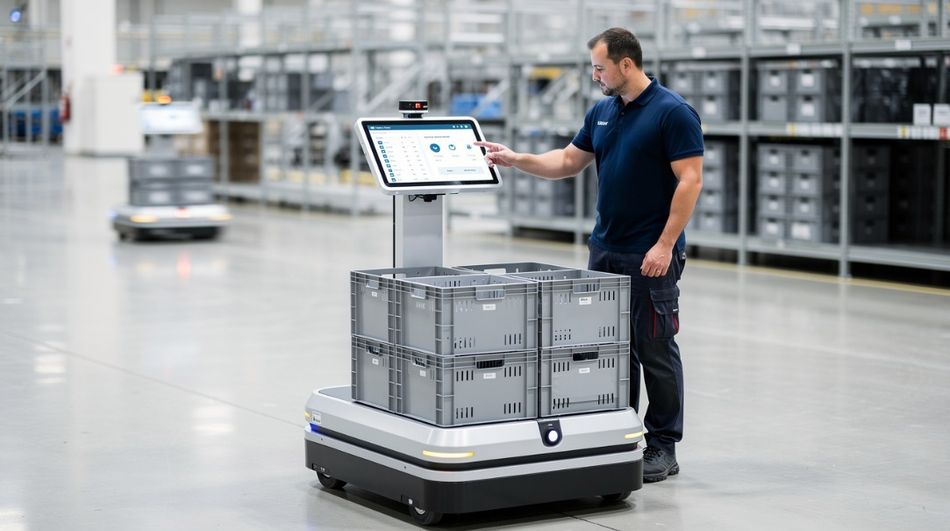
Fleet production requires reliable access to motors, gearheads, controllers, encoders, brakes, and electronics across multiple batches. Lead times must align with production schedules, and any relevant product or manufacturing changes should be communicated in advance.
Alternative components should undergo controlled approval; supplier and component changes should be traceable; and electronic-component obsolescence should be considered before it leads to an unexpected redesign.
Spare Parts and Lifecycle Support
Replacement parts should remain available through the expected fleet life where commercially practical. Common spares simplify inventory, while repair procedures, firmware, software, documentation, and configuration records support repeatable service.
OEMs should also consider local access to technical assistance across different countries and facilities and plan for discontinued components before existing inventories are exhausted.
Selecting a Technology Partner
A supplier should be evaluated for prototype and production-volume support, system-level engineering, manufacturing quality, traceable supply processes, modular options, integration and testing support, global technical and sales presence, long-term spare availability, and change or obsolescence procedures. Support should not create unnecessary dependence on suppliers.
maxon states that its production network includes locations in Europe, the United States, and Asia operating to common production standards [4]. The company also describes support from specification and development through series production [2]. Its supplier information emphasizes long-term collaboration, quality, delivery, and supply-chain resilience [5]. These are manufacturer-described capabilities and should be assessed against project-specific requirements
Applying the Approach: maxon Drive Platforms and Support
maxon's wider portfolio includes motors, gearheads, encoders or sensors, controllers, mechatronic systems, battery technology, and modular wheel-drive systems [1, 2, 6, 7]. Its mechatronic approach combines motors, gearheads, sensors, electronics, software, and housings as coordinated systems, while the company describes development support extending from the initial concept to series production [2, 7].
For space-limited, battery-powered vehicles, compactness, power density, and efficiency can be relevant design criteria. maxon states that its production network covers Europe, Asia, and the United States, while its wider business operates internationally [4].
These capabilities should not be taken as proof that a single supplier or drive architecture is suitable for every AGV fleet. Required production volume, payload, environment, safety functions, local technical support, lifecycle expectations, spare-part strategy, and the risk of unnecessary supplier dependence still require project-specific assessment.
Conclusion
A successful AGV prototype proves feasibility; fleet deployment tests repeatability. Large deployments expose variation in components, assembly, software, thermal behaviour, energy use, maintenance, and supply. Standardized platforms can reduce complexity and variation, while modular systems allow controlled application-specific changes. Driving efficiency affects charging demand and fleet availability. Functional safety must remain valid across facilities, and stable supply, spare parts, and long-term support should be included in early engineering decisions.
Moving from demonstration to production therefore requires system-level planning. Organizations planning larger AGV deployments should evaluate complete mobility solutions rather than individual components alone when assessing long-term fleet performance. The goal is not one successful prototype, but an AGV architecture that can be manufactured, configured, serviced, and operated consistently across the fleet.
Download the complete maxon guide to AMR drive selection and functional safety. This practical resource helps you make informed engineering decisions when developing autonomous mobile robots (AMRs), reducing integration risk and improving fleet performance.
References
[1] maxon group, “A compact drive system for AGVs,” maxon group. https://www.maxongroup.com/en/knowledge-and-support/blog/a-compact-drive-system-for-agvs-256770
[2] maxon group, “Drive systems for mobility solutions,” maxon group. https://www.maxongroup.com/en-us/market-solutions/mobility-solutions
[3] International Organization for Standardization, Industrial Trucks, Safety Requirements and Verification, Part 4: Driverless Industrial Trucks and Their Systems, ISO 3691-4:2023, 2nd ed., Jun. 2023: https://www.iso.org/standard/83545.html
[4] maxon group, “The maxon quality mindset,” maxon group. https://www.maxongroup.com/en/company/quality
[5] maxon group, “Supplying to maxon,” maxon group. https://www.maxongroup.com/en-us/company/supplying-to-maxon
[6] maxon group, “Electromobility: E-bike motors and battery systems,” maxon group. https://www.maxongroup.com/en/market-solutions/mobility-solutions/electric-mobility
[7] maxon group, “Mechatronic drive systems,” maxon group. https://www.maxongroup.com/en-us/drives-and-systems/mechatronic-drive-systems