The Reliability Imperative: Why the Next Generation of AGVs Will Be Measured in Uptime, Not Speed
Engineering motion systems for availability, serviceability, and lifecycle cost.

02 Oct, 2026. 8 minutes read
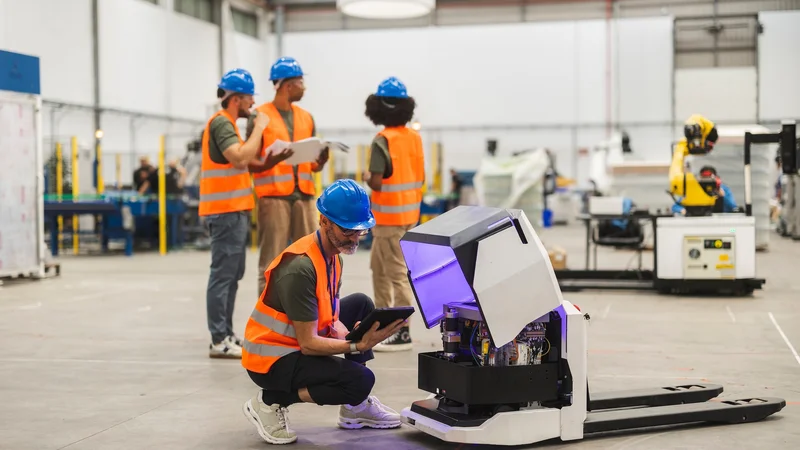
Automated guided vehicles (AGVs) and autonomous mobile robots (AMRs) are increasingly used in warehouses, factories, and distribution centres for continuous material movement. Their development is often discussed in terms of navigation, artificial intelligence, fleet management, speed, and throughput. These capabilities matter, but they do not fully determine operational performance.
A fast vehicle that frequently requires resets, recovery, or repair may contribute less useful capacity than a slightly slower vehicle that operates consistently. For continuous logistics operations, the focus is therefore moving toward availability, maintainability, and lifecycle performance. IEC 60300-3-10:2025 places maintainability and maintenance within the wider context of reliability, availability, and lifecycle management [1].
Motion systems are central to this issue because motors, gearheads, encoders, brakes, controllers, wheels, bearings, cables, and connectors operate repeatedly under changing mechanical and thermal loads. Learn how modern manufacturers are addressing these challenges through integrated wheel-drive systems for AGVs and AMRs.
The Hidden Cost of AGV Downtime
Direct Maintenance Costs
AGV downtime creates immediate maintenance expenses. Motors, gearheads, encoders, brakes, wheels, controllers, and other components may require diagnosis, repair, or replacement. Additional costs include technician labour, spare parts, vehicle recovery, calibration, and return-to-service testing.
The repair itself may not be the largest expense. Difficult-to-identify faults can extend diagnostic time, and unresolved root causes may lead to repeated service events. Accurate maintenance records are therefore important for distinguishing isolated failures from recurring problems.
Operational Disruption
A failed AGV can also disrupt the wider logistics process. Fleet capacity falls while the vehicle is unavailable, and other vehicles may need to compensate. On heavily used routes, this can contribute to congestion or delayed material movement.
Manufacturing equipment may wait for components, while warehouses may experience slower order fulfilment. Some facilities may temporarily use backup vehicles or manual material handling. As a result, the operational effect of downtime can extend well beyond the vehicle being repaired.
Fleet-Level Impact
The significance of one failure depends on fleet size, route criticality, redundancy, and repair time. A large fleet with spare capacity may absorb the loss of one vehicle, whereas a small fleet operating close to full utilization may experience a noticeable loss of throughput.
For this reason, component cost should be separated from total downtime cost. A low-cost component can still create substantial disruption if diagnosis and repair take several hours. Failure frequency and maintenance duration therefore need to be measured at both vehicle and fleet level.
Why Uptime Is Becoming a C-Suite KPI
Moving Beyond Vehicle Speed
Maximum vehicle speed is useful as a technical specification, but completed transport missions provide a better indication of operational performance. An AGV that travels quickly but frequently stops for faults, resets, or maintenance may deliver less useful work over a complete shift.
Availability therefore complements speed and throughput. The important question is not only how quickly a vehicle can move, but how consistently it remains capable of completing its assigned missions.
Key Reliability and Maintenance Metrics
Useful measures include vehicle and fleet availability, mean time between failures, mean time to repair, number of service events, maintenance hours per vehicle, planned and unplanned maintenance, spare-part consumption, cost per operating hour, and cost per completed mission.
These indicators help separate different problems. Frequent failures may point to design or component weaknesses, while long repair times may reflect poor accessibility, inadequate diagnostics, unavailable spares, or incomplete service procedures.
IEC 60300-3-10:2025 supports incorporating maintainability and maintenance requirements into lifecycle planning rather than considering them only after deployment [1].
Business Impact of Uptime
Fleet availability affects production continuity, labour planning, capital utilization, order fulfilment, customer service, and decisions about fleet expansion. Low availability may force operators to purchase additional vehicles or maintain excess backup capacity.
Uptime targets should therefore reflect process criticality and redundancy. A figure such as 99.9 percent may be appropriate for some critical applications, but it is not a universal AGV standard. Appropriate targets depend on operating hours, fleet design, maintenance capability, and the consequences of downtime.
Designing Motion Systems for Millions of Operating Cycles
Continuous AGV Duty Cycles
AGVs repeatedly accelerate, brake, turn, reverse, and position at low speeds. Payloads vary, and vehicles may operate continuously across multiple shifts while travelling over floor joints, ramps, and uneven surfaces.
These repeated cycles create mechanical, electrical, and thermal stresses that may not be apparent during short-duration testing. Drive selection should therefore be based on realistic duty-cycle information rather than peak speed or torque alone.
Selecting the right drive platform begins with a clear understanding of vehicle duty cycles, payload requirements, and operating environments. Engineers evaluating new platforms can benefit from this guide to selecting the right drive solution for autonomous mobile robots (AMRs).
Motion Components Affecting Reliability
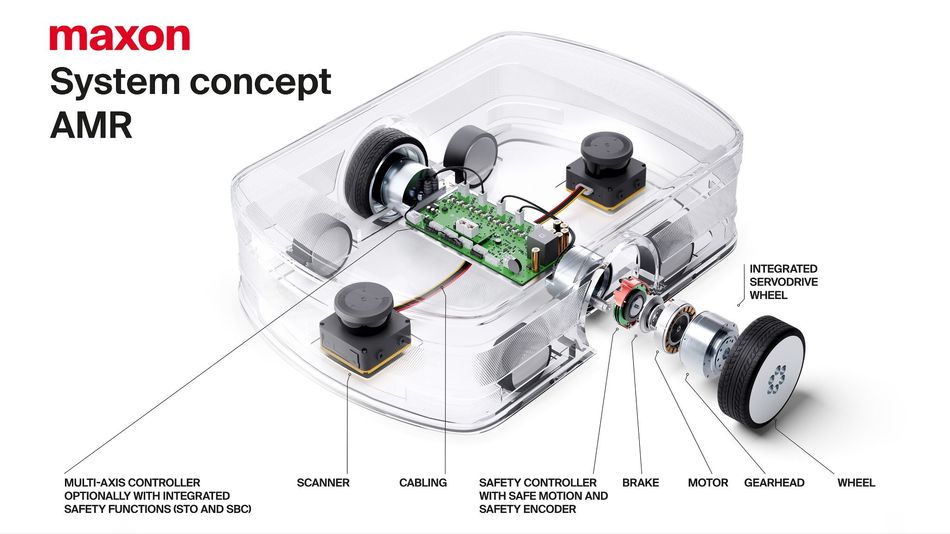
Motors must provide the required torque and operating duration, while gearheads experience repeated loading and direction changes. Bearings are affected by vehicle mass, payload, and turning forces. Encoders provide position and speed feedback, and brakes perform stopping and holding functions.
Controllers experience variations in current and temperature. Wheels are affected by floor conditions and payload, while cables and connectors can experience vibration, flexing, and contamination. Reliability, therefore, depends on the interaction within the complete motion system. As vehicle architectures become more compact, many OEMs are adopting integrated AGV drive systems that combine motors, gearheads, encoders, brakes, and controls into a coordinated solution.
Thermal and Mechanical Requirements
Vehicle mass, payload, wheel diameter, rolling resistance, acceleration frequency, gradients, ambient temperature, ventilation, and heat generated by motors and controllers all affect drivetrain performance.
Thermal buildup is particularly important during continuous operation. Adequate design margins are necessary, but unnecessary oversizing can increase mass, cost, space requirements, and energy consumption. Components should therefore be matched to representative operating conditions.
Testing and Reliability Validation
Testing should reproduce realistic loads, routes, and operating cycles. It can include continuous operation, thermal cycling, repeated acceleration and braking, vibration, wheel impacts, and cable flexing. Gears, bearings, brakes, wheels, and connectors should also be inspected after representative test cycles.
Laboratory results should be compared with field performance to improve understanding of operating limits and failure modes. ISO 3691-4:2023 separately establishes safety requirements and verification for driverless industrial trucks and their systems, including AGVs and AMRs [2]. Reliability testing does not replace these safety requirements.
Predictive Maintenance and Drive Health Monitoring
Maintenance Approaches
Corrective maintenance responds after failure, while scheduled maintenance is based on time or operating hours. Condition-based maintenance uses equipment condition to determine when service is needed, and predictive maintenance examines trends and fault indicators to identify developing problems.
The objective is to move suitable maintenance activities from unexpected breakdowns into planned service periods.
Motion-System Data
Useful drive-system information can include motor current, motor and controller temperature, speed and position errors, torque demand, vibration, braking behaviour, controller fault codes, energy consumption, operating hours, and movement cycles.
NIST identifies monitoring, diagnostics, and prognostics as technologies that can support reduced unplanned downtime and more effective planned maintenance in manufacturing operations [3]. However, collecting data alone is insufficient. Signals must be interpreted against representative operating conditions.
Predictive Diagnostics
Changes in motor current may correspond with increased friction, misalignment, wheel deterioration, or additional load. Temperature changes may result from drivetrain condition, cooling, ambient temperature, or operating demands. Position errors may indicate encoder, control, or mechanical issues.
These signals are not definitive diagnoses by themselves. Trend analysis and comparison with baseline behaviour are more useful than isolated measurements.
Condition-monitoring technologies can provide engineering and financial benefits, but these benefits should be evaluated for the specific industrial application [4].

Drive-Based Condition Monitoring: maxon MIND
The maxon MIND is an example of drive-based condition monitoring. According to maxon, motor and controller signals can provide information about the motor and connected mechanics [5]. The approach combines machine-learning methods with physical knowledge of the drive system to identify deviations from normal behaviour.
Standardized measurement cycles help improve comparison between measurements. Because these capabilities are manufacturer-described, they should be tested and validated under the actual loads, routes, temperatures, and floor conditions of the intended AGV application.
Explore how drive-based condition monitoring for AGV motion systems uses motor and controller data to support predictive maintenance and equipment health analysis.
Limits of Predictive Maintenance
Predictive maintenance has practical limitations. Changing payloads, routes, floors, and temperatures can alter drive signals and cause false alarms. Poor-quality data can also result in missed faults.
Representative baselines and validated diagnostic thresholds are therefore necessary. Maintenance findings should be fed back into the monitoring process, while physical inspections and safety checks remain essential. The technical and financial case should also be assessed before fleet-wide deployment [4].

Integrated Drive Systems and Reduced Service Events
Integrated Motion-System Architecture
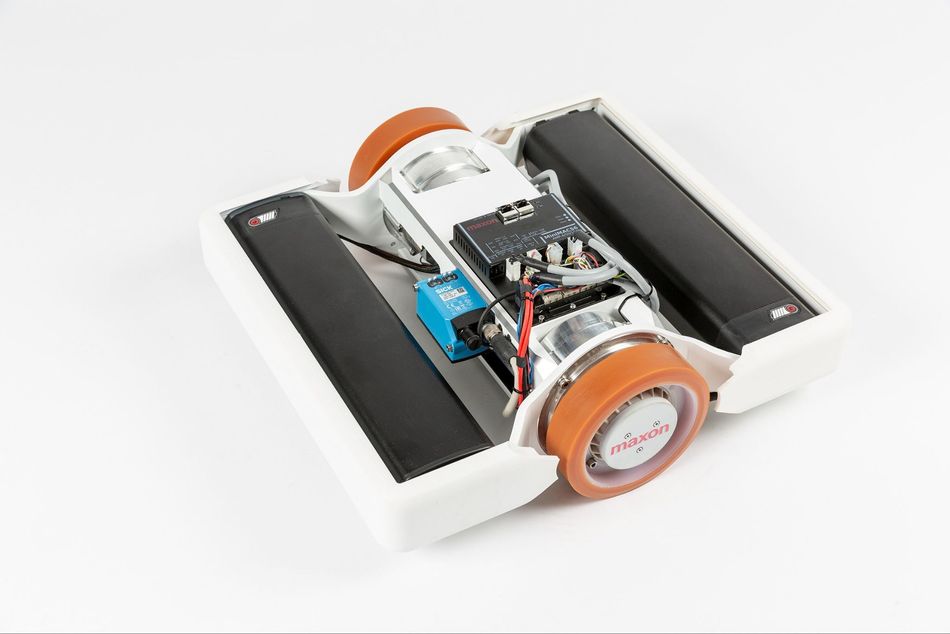
An AGV drivetrain can include a motor, gearhead, encoder, brake, controller, wheel, cables, and connectors. Selecting each separately introduces additional mechanical and electrical interfaces that require mounting, alignment, wiring, configuration, and testing.
An integrated architecture treats these components as a coordinated system, potentially reducing interface count and packaging complexity. This system-level approach reflects a broader industry trend toward integrated motion solutions for logistics automation and warehouse robotics.
Integrated Wheel Drives
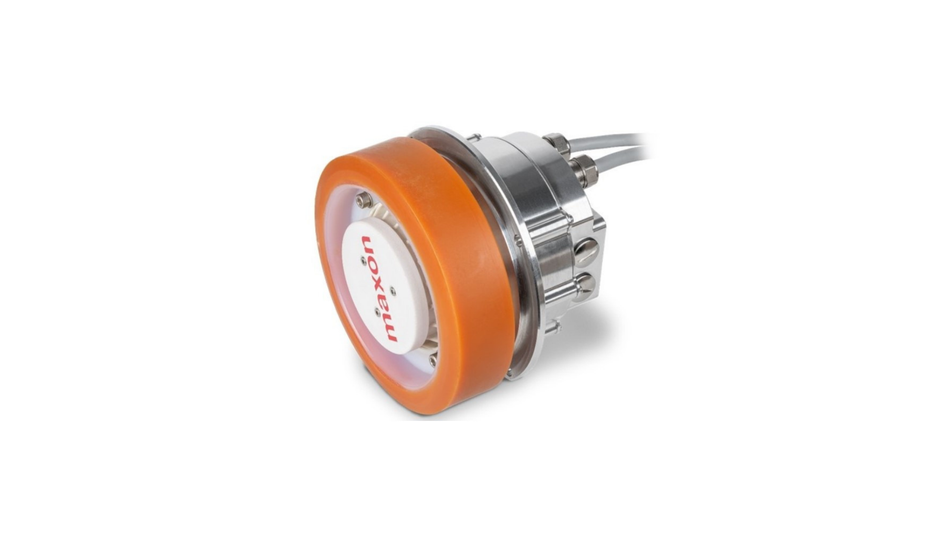
The compact AGV wheel drive for autonomous mobile robots combines a motor, gearhead, and encoder, with options to incorporate a brake, a controller, and a wheel, depending on the application [6]. Such modular assemblies can be configured for different payload and propulsion requirements while occupying limited vehicle space.
Reduction of Service Events
Fewer interfaces may reduce alignment, wiring, and commissioning work and lower the risk of selecting incompatible components. During maintenance, replacing a complete drive module can also reduce the time required to isolate individual component faults.
Standard modules used across similar vehicle platforms may simplify spare-part management. These benefits, however, depend on diagnostic quality and the availability of replacement modules.
Integrated-System Trade-Offs
Integration can also concentrate heat and reduce internal repair options. Failure of a single component may require replacement of an entire module, and operators can become dependent on specific spare parts, firmware, and supplier support.
The appropriate level of integration should therefore balance packaging, thermal performance, diagnostics, module cost, repairability, spare availability, and long-term support.
Engineering AGVs for Serviceability and Lifecycle Cost
Maintenance Access
Serviceability should influence vehicle layout from the design stage. Motors, wheel drives, controllers, brakes, sensors, cables, and connectors should be accessible without unnecessary disassembly.
Replaceable wear components, standard fasteners, clear access panels, safe lifting and isolation points, and suitable protection from contamination can reduce maintenance effort.
Reducing Repair Time
Repair time includes diagnosis, access, replacement or repair, calibration, testing, and return to service. Clear fault codes, service logs, troubleshooting procedures, stored configuration files, calibration instructions, technician training, and preassembled replacement modules can shorten these activities.
Measuring each stage separately can also reveal whether downtime is primarily caused by component failure or by the maintenance process itself.
Lifecycle Cost Considerations
Lifecycle cost includes more than initial component price. It can include integration, commissioning, energy consumption, preventive maintenance, unplanned repairs, spare inventory, backup vehicles, training, software and firmware support, downtime, and end-of-life replacement.
IEC 60300-3-10:2025 supports the consideration of maintainability and maintenance throughout the lifecycle [1]. A lower initial purchase cost may therefore be less attractive if it creates substantially higher maintenance or downtime costs later.
Early OEM Engineering Decisions
Successful AGV platforms are typically developed using a system-level approach to designing AGVs for 24/7 logistics operations.
Reliability targets should be included in early system requirements. Duty-cycle data should guide drive selection, while maintenance access and thermal management should influence vehicle layout.
Mechanical, electrical, controls, maintenance, and procurement teams should coordinate during development. Prototype testing should represent realistic routes, loads, floors, temperatures, and operating periods. Field failure and maintenance data can then inform later designs.
Conclusion
AGV performance needs to be measured by availability, speed, and throughput. Downtime can affect connected production and warehouse processes, making reliability a fleet-level concern rather than simply a component issue.
Motion systems should be designed around realistic duty cycles and validated under representative conditions. Condition monitoring can support earlier maintenance decisions when data and thresholds are properly validated. Integrated wheel drives can reduce interface and packaging complexity, although thermal performance, diagnostics, repair strategy, and spare availability must also be considered.
Serviceable layouts can shorten recovery time when failures occur. Ultimately, the value of an AGV is determined not only by how fast it moves, but by how consistently it completes missions, how quickly it can be restored to operation, and what it costs to maintain throughout its lifecycle.
References
- International Electrotechnical Commission, Dependability Management, Part 3-10: Application Guide, Maintainability and Maintenance, IEC 60300-3-10:2025, 2025. https://webstore.iec.ch/en/publication/65334.
- International Organization for Standardization, Industrial Trucks, Safety Requirements and Verification, Part 4: Driverless Industrial Trucks and Their Systems, ISO 3691-4:2023, 2nd ed., 2023. https://www.iso.org/standard/83545.html.
- National Institute of Standards and Technology, “Monitoring, Diagnostics and Prognostics for Manufacturing Operations,” NIST. https://www.nist.gov/programs-projects/monitoring-diagnostics-and-prognostics-manufacturing-operations.
- M. Dadfarnia, M. E. Sharp, and J. W. Herrmann, “Comprehensive evaluations of condition monitoring-based technologies in industrial maintenance: A systematic review,” Journal of Manufacturing Systems, vol. 82, pp. 449-477, 2025. DOI: https://doi.org/10.1016/j.jmsy.2025.06.015.
- C. Jaquemet, “The motor as a sensor,” maxon group, 2026. https://www.maxongroup.com/en/knowledge-and-support/blog/the-motor-as-a-sensor-300480.
- maxon group, “A compact drive system for AGVs,” 2025. [Online]. Available: https://www.maxongroup.com/en/knowledge-and-support/blog/a-compact-drive-system-for-agvs-256770.