Featured

Borrowing methods from biology, a team of scientists and engineers designed and tested an electrolyte that keeps battery power delivery high, cycle after cycle.

This white paper explains how precision timing solutions support reliable PNT architectures across aerospace, defense, and industrial systems.
Borrowing methods from biology, a team of scientists and engineers designed and tested an electrolyte that keeps battery power delivery high, cycle after cycle.
Futureproofing Aerospace Series. Article #3: What challenges do designers have to navigate when they are faced with component obsolescence?
Explore BrainChip's latest advancements by tuning into Episode 5 of their Quarterly Investor Podcast. CEO Sean Hehir addresses critical topics for shareholders, including the successful Akida space launch, takeaways from the Embedded World Conference, and updates on the Akida Edge AI Box.
Aerospace CNC machining is the backbone of modern aircraft production. This guide explains the theory and practice behind it.
12 minutes read.
16 minutes read.
16 minutes read.
9 minutes read.

Robotics and Drones
We empower R&D by providing the computational power, ROS packages, payloads...
14 Posts
Learn why growing hardware teams slow down as they scale, and how aligned workflows, parallel collaboration, and real-time design visibility restore speed and momentum.
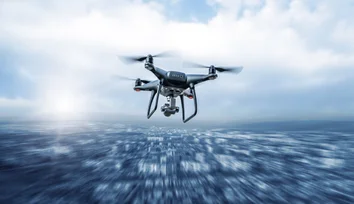
How standardized electronic identification will enable high-volume, complex drone operations.
In this episode, we explore how the mechanics of bird wings are inspiring new approaches to prevent airplanes from stalling and learn how bio-mimetic designs from nature are paving the way for innovations in aviation, enhancing stability and safety for future flights.
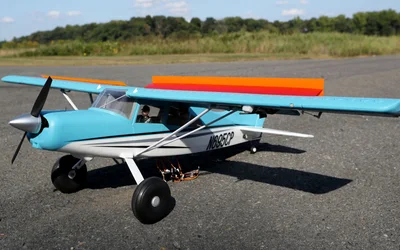
Taking inspiration from bird feathers, Princeton engineers have found that adding rows of flaps to a remote-controlled aircraft’s wings improves flight performance and helps prevent stalling, a condition that can jeopardize a plane’s ability to stay aloft.
In this episode, we explore NASA's successful test of a powerful new lithium-fed electric thruster that could one day power human missions to Mars.
A novel electromagnetic thruster passed an initial test in a specialized chamber at JPL. With further development, these thrusters could support human missions to the Red Planet.
Humanity's drive to explore has taken us across the solar system, with astronaut boots, various landers and rovers' wheels exploring the surfaces of several different planetary bodies.
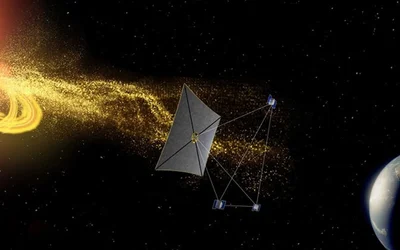
A spacecraft that sails on light could provide new vantage point on solar eruptions that can disrupt modern electrical and navigation systems.
Borrowing methods from biology, a team of scientists and engineers designed and tested an electrolyte that keeps battery power delivery high, cycle after cycle.

4 minutes read
Futureproofing Aerospace Series. Article #3: What challenges do designers have to navigate when they are faced with component obsolescence?
Explore BrainChip's latest advancements by tuning into Episode 5 of their Quarterly Investor Podcast. CEO Sean Hehir addresses critical topics for shareholders, including the successful Akida space launch, takeaways from the Embedded World Conference, and updates on the Akida Edge AI Box.

4 minutes read
Futureproofing Aerospace Series. Article #2: Understanding the causes of component obsolescence can help us better prepare for it.
Drones are integral to military operations globally, especially in high-risk environments where manned flight is impractical. Learn how to integrate sensors into these devices properly.

10 minutes read
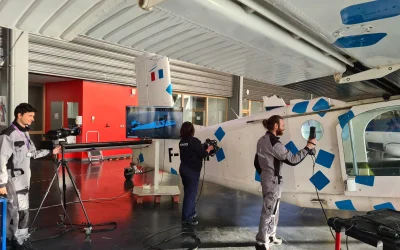
Poorly documented dents can lead to more significant problems, potentially compromising the aircraft’s structural integrity or performance. They can trap moisture and lead to corrosion. Their impact on the structure can also affect the aircraft’s aerodynamic performance.

7 minutes read
Futureproofing Aerospace Series. Article #1: The aviation industry is continually evolving, but preserving legacy systems remains crucial.
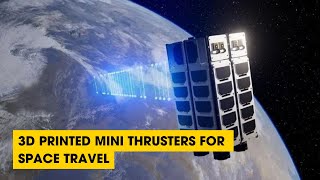
In this episode, we discuss how MIT researchers are leveraging a state of the art 3D printer to create much more efficient field electron emitters which could unlock huge potential for ion propulsion in space travel!

15 minutes read
Listen in as Dr. Tony Lewis, BrainChip's CTO, Laurent Hili (Microelectronics Engineer), and Luis Mansilla (AI Expert) discuss the growing role of AI in space exploration, ESA's investments in this technology, and how BrainChip's Akida chip contributes to this exciting frontier
The latest innovation in inspection flying robots explicitly tailored for the non-destructive testing (NDT) industry.

Researchers at MIT used a Voltera NOVA to successfully print field electron emitters with a high-concentration carbon nanotube ink. The research has exciting implications for small satellites.
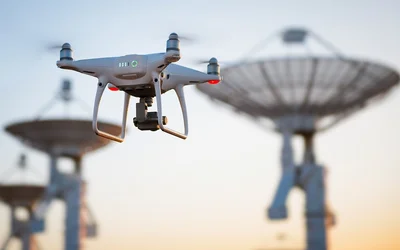
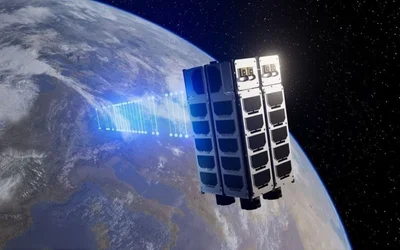
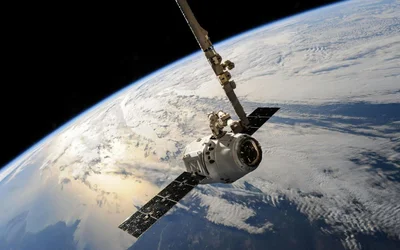
Remote satellite maintenance is crucial to critical data acquisition and global communication
In this episode, ANT61 Founder and CEO Mikhail Asavkin joins BrainChip CTO Dr. Tony Lewis to discuss the evolution of Space Technology and its impact on daily life.
The aeronautics industry is without question a dynamic sector of activity where progress takes place at breakneck pace and where the players in the field have to deal with remarkable technological advances that follow each other at increasingly shorter intervals.
3 minutes read