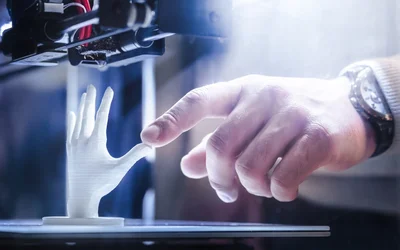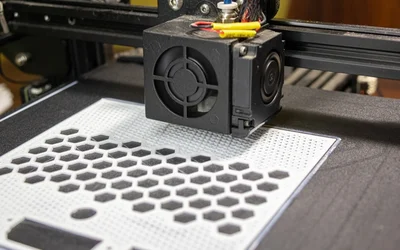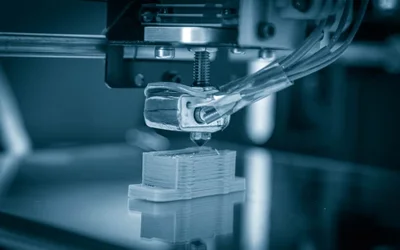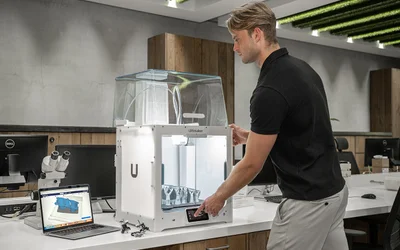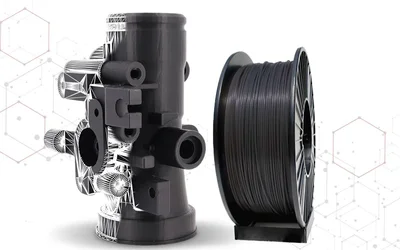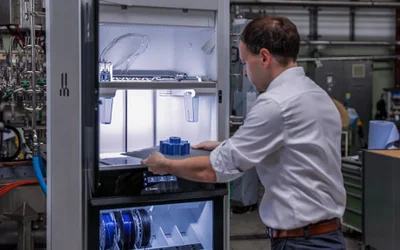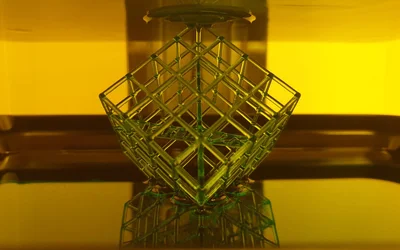
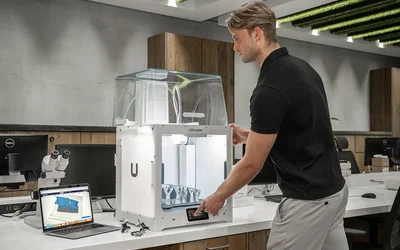
What is 3D printing? This article goes over the basics of 3D printing, otherwise known as additive manufacturing, covering its engineering principles and applications.
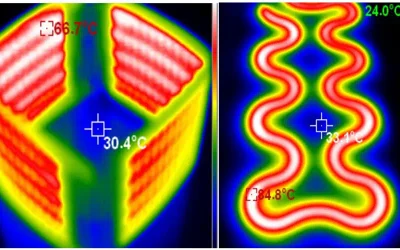
E2IP Technologies manufactures Flexible Heaters using Screen Printing Technology. This is one of the most important segments of printed and additive electronics with applications in cars, homes, and industrial settings.
Here’s what to do if you notice clicking noises, under-extrusion, or other print quality issues caused by extruder skipping on the Ender 3 by Creality.
Unwanted lines in 3D prints can show up for many reasons and take different forms. Here we look at the most common types of lines in 3D prints and how to eliminate them.
KIT researchers are developing a process with which, for the first time, mirrors with a reflection of more than 99 percent can be printed in variable sizes
From shredded scraps to repurposed spool Fiberthree circular process slashes CO2 emissions by up to 90 percent, with recycled filament priced equal to new material.
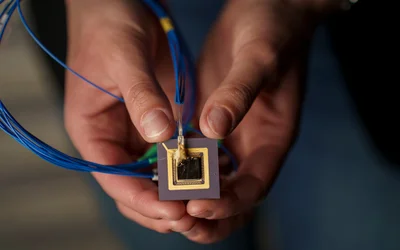
New electronics printing technologies enable the production of miniature, high-performance 3D electronic devices, with nanomaterials being key to the process
UltiMaker’s ecosystem, including Digital Factory for remote print management, enables defense organizations to integrate 3D printing into their workflows effectively. In this article, we aim to outline the key benefits and some of the potential applications of 3D printing in defense.
A detailed comparison of Orca Slicer vs Cura, two leading 3D printing slicers, evaluating slicing algorithms, features, usability, and real-world print results
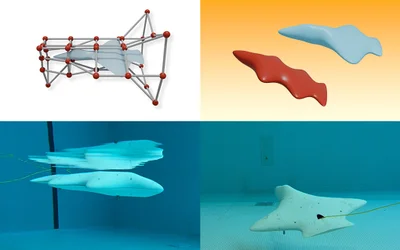
In this episode, we discuss how Harvard researchers cracked the code of 3D printing “shapeshifting” materials and why their efforts lay the groundwork for other innovations in the material science field.
Flexible hybrid electronics (FHE) enable bendable, stretchable devices for healthcare, consumer tech, and automotive. Explore how electronics manufacturers are leveraging FHE to meet new requirements across industries.
This article will examine how 3D printing can be integrated across different levels of education and how it helps equip students with essential skills for their future workplace.
Metal (Powder) Injection Molding (MIM) is an advanced manufacturing process that combines the versatility of plastic injection molding with the material strength of powdered metals and ceramics.
3D printing materials filled with precise quantities of nanoparticles are making a profound impact on industries like electronics, healthcare, and aerospace