Lighter, Cleaner, Faster: Magnesium AM Enters Industry
By eliminating greenhouse-gas shielding and enabling 20% savings, this wire-based process could reshape aerospace and mobility parts manufacturing.

08 May, 2025.
This article was first published on
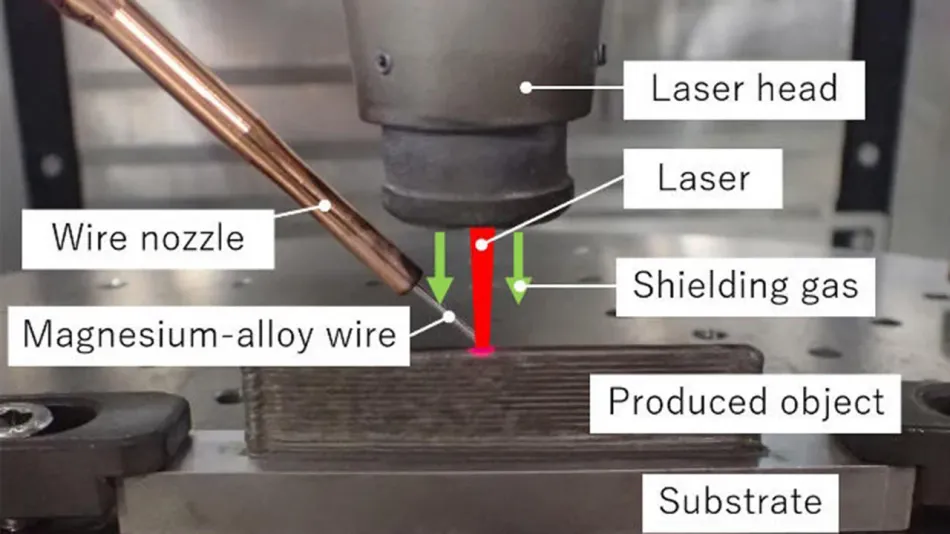
formnext.mesago.comThe consortium consists of Mitsubishi Electric, the Magnesium Research Center (MRC), Kumamoto University, Toho Kinzoku, and the Japan Aerospace Exploration Agency (Jaxa). A wire-based DED 3D printer, a special alloy and special process parameters make this innovative processing possible.
Explore the latest breakthroughs, technologies, and industry leaders shaping the future of flight at Formnext 2025, the world’s premier event for industrial 3D printing and engineering innovation.
Register today.
Aircraft, electric vehicles, robots
Jaxa has been running a research and development program for an innovative future space transportation system since September 2022. The aim is to reduce the weight of rockets and thus drastically cut costs. The consortium also believes there is high demand for weight reduction using magnesium alloys in commercial aircraft, electric vehicles, and robot components.
Magnesium alloys are usually processed using die casting, but complex structures and hollow interiors are difficult to implement. At the same time, PBF printing (for example) is not an option for applying AM to magnesium, as the highly reactive material could oxidize. There is also the risk of a dust explosion.
Precise temperature control
To ensure safe processing, the consortium employed a DED metal 3D printer from Mitsubishi Electric and used metal wire instead of metal powder. The material chosen was a heat-resistant Kumadai magnesium alloy developed by MRC, which Toho Kinzoku turned into wire. According to the consortium, the key to reliable processing is precise temperature control.
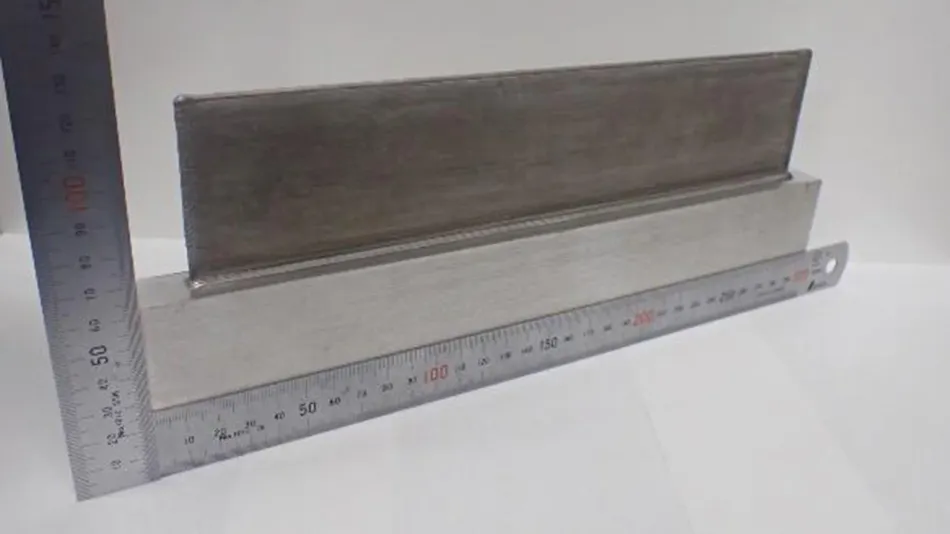
An evaluation of AM production samples conducted by Jaxa found that some rocket parts could be up to 20 percent lighter than those made from conventional aluminum alloys. In order to better exploit the potential of magnesium alloy for other industries, the agency’s research will continue until around 2029. At the same time, Mitsubishi Electric will be working on commercializing the new technology.
According to the consortium, another advantage of its new magnesium alloy is that it does not require sulfur hexafluoride (SF6), a greenhouse gas normally used as a shielding gas when casting such alloys.
Explore the latest breakthroughs, technologies, and industry leaders shaping the future of flight at Formnext 2025, the world’s premier event for industrial 3D printing and engineering innovation.
Register today.