BigRep ONE 3D Printer Sparks Innovation in Higher Education
From hydraulic engineering to art, flagship 3D printer by BigRep is enabling researchers to drive innovation in their fields.

03 Mar, 2026. 5 minutes read
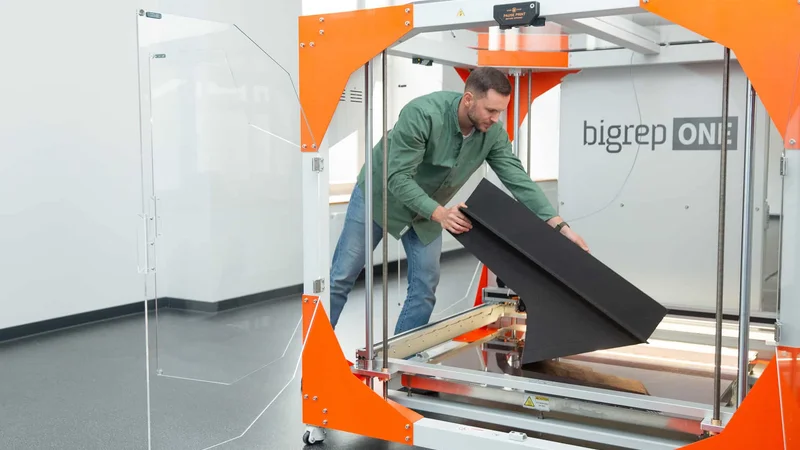
3D printing is playing an increasingly integral role in the education sector. In elementary and high schools, the technology is allowing educators to build a bridge between digital skills and hands-on, tactile learning, while in higher education, it has become a vital tool for researchers as they explore new ideas and drive innovation in their fields. 3D printing company BigRep, which specializes in large-format additive manufacturing (LFAM), has long recognized the impact that the technology has in education and has positioned itself to support research efforts in a diversity of disciplines.
The company’s BigRep ONE 3D printer in particular, which offers a combination of large-scale printing, versatility, and user friendliness, is enabling individuals and teams in higher education to achieve incredible things and push the limits of what is possible. As we’ll see, there are various examples of how the BigRep ONE is being used by those in higher education to facilitate advances in a wide range of fields, from hydraulic engineering to art.
Meet the BigRep ONE
First launched over a decade ago, the BigRep ONE 3D printer quickly established BigRep as a force within the LFAM market. With a build volume of one cubic meter and a global installed base of over 500, the flagship system is recognized as a trusted workhorse that enables the on-demand production of large-scale, geometrically complex thermoplastic parts.
It’s not only its large volume that sets it apart on the market: the BigRep ONE integrates a host of capabilities that facilitate productivity and, perhaps above all, versatility. These features include a robust extruder that can process a wide range of materials (including fiber-reinforced thermoplastics); an enclosed build envelope that ensures a stable print environment; and an optional dual-extruder function called Twin Mode that unlocks faster deposition rates.
The BigRep ONE has inevitably undergone upgrades over the years, and BigRep has ensured that its long-time customers can take advantage of these improvements on their existing hardware. For example, BigRep ONE.3 and ONE.4 machines can be upgraded to the company’s latest generation, the BigRep ONE.5. In terms of specific features, upgrades include the new PEX2 fiber-ready power extruder that comes with interchangeable nozzle sizes, and magnetic SWITCHPLATE print surfaces that offer enhanced adhesion for a range of materials.
The combination of large-volume printing, rapid deposition rates, and material compatibility has led to the BigRep ONE being used for a plethora of applications. This versatility is illustrated in the world of higher education, where the printer offers users in all disciplines a way to produce complex structures in a cost, time, and labor efficient manner. The BigRep ONE also has the benefit of being intuitive and easy to use, meaning that researchers from a wide range of backgrounds can learn the technology easily and exploit its capabilities.
Rapid prototyping for hydraulic structures
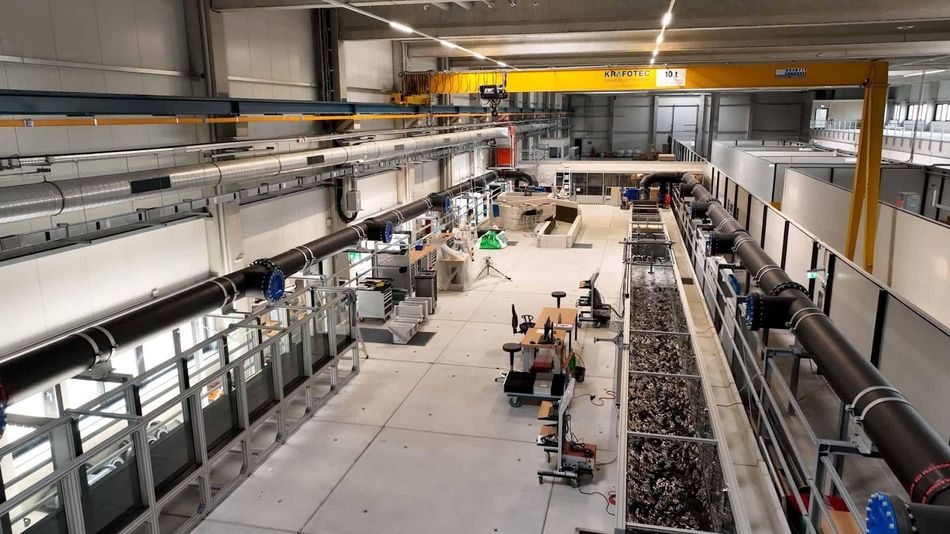
In recent years, the BigRep ONE has played a vital role in the advanced hydraulics lab at Helmut Schmidt University in Hamburg, Germany. There, hydraulic engineers develop and test new water management systems in a controlled setting. With the BigRep ONE in-house, the team has transformed its development workflow, using the 3D printer to rapidly iterate weir prototypes that can then be tested in the lab’s scaled river model.
The ability to test new water management structures physically helps the team understand how the design performs in real-world settings and gain greater insights into its physical and fluid structure interaction. For example, in a recent project, the hydraulic engineering researchers leveraged the BigRep ONE in the development of piano key weirs, which are compact systems designed to manage high flow rates and prevent flooding. Typically, prototype production for piano key weirs would involve laser cutting acrylic glass parts and then manually assembling them. With LFAM, however, the team was able to consolidate the weird design and print it directly, without the need for tooling or post-print assembly. This approach not only enabled the team to more rapidly iterate and test piano key weir designs, but it also enabled them to cut production costs.
Ultimately, having the BigRep ONE at Helmut Schmidt University has brought several benefits to the hydraulics engineering lab, including faster lead times, more agile design iteration, complex and consolidated geometries, and lower costs. Perhaps above all, the ability to 3D print physical weir prototypes and test them directly has given the team the ability to scale data collection in its development work and an overall deeper understanding of hydraulic phenomena.
Hands-on wind turbine education
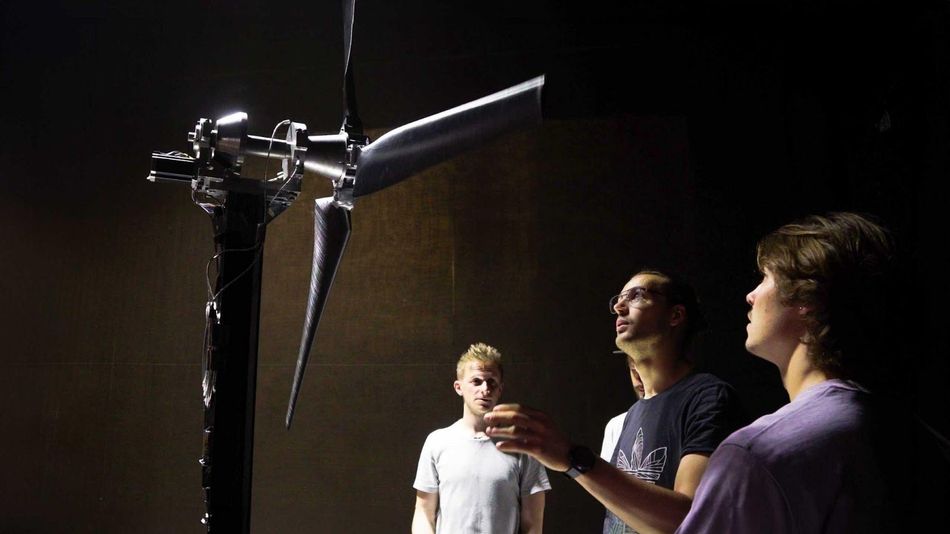
At TU Berlin, cutting-edge work is being done in wind turbine technology that has the potential to shape the future of renewable energy. In this context, BigRep’s flagship system has come to play an important role, helping the next generation of engineers learn the fundamentals of wind turbine functionality in a hands-on way.
As part of the university’s Wind Turbine Measurement Techniques course, engineering students learn how to measure the performance of wind turbine blades in a wind tunnel. In their lessons, the students compare two different types of rotor: a traditional hand-carved wooden blade and a one-meter-long 3D printed rotor blade with a gyroid infill. This 3D printed rotor, made in a single piece from PRO HT filament, was developed as part of a master’s thesis aimed at exploring alternative methods for making wind turbine blades.
Having access to the 3D printer has been key to the development of the innovative wind turbine rotor blades and has also enabled TU Berlin engineers to experiment and test out rotor structures with ease. For students learning how to measure the performance of wind turbines, the scaled down 3D printed model has facilitated hands-on training for reading wind speed, amount of power generated, and more. Down the line, the research made possible thanks to BigRep’s large-scale 3D printing solution could influence how full-scale rotors are designed and manufactured.
Contemporary art inspired by ancient times
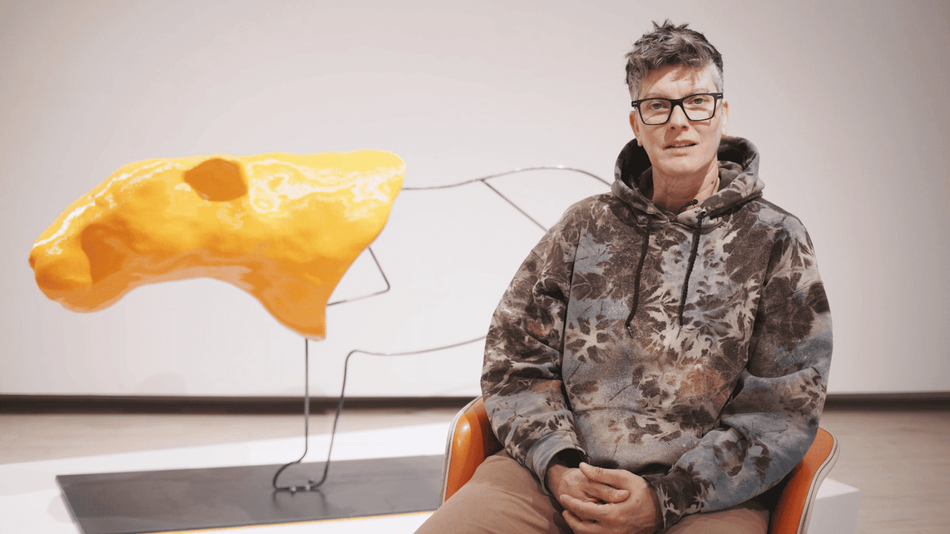
As we’ve seen, the BigRep ONE is a game changer in engineering disciplines, but there are also other areas where the LFAM technology is making an impact. Specifically, BigRep’s 3D printer has become an important tool—or medium—for designers and artists. Such is the case for Welly Fletcher, an American contemporary artist whose work focuses on the intelligence of animals and material bodies.
In a recent exhibition, the artist drew inspiration from a prehistoric art piece—a sculpture of a lion man made 40,000 years ago by Homo Sapiens. After Fletcher encountered the ancient piece, they were inspired to recreate the animalistic form in a way that explored the relationship between art, technology, humans, and animals. The resulting piece, called “Trans Time”, is a 3D printed sculpture based on a 3D scan of a handmade clay sculpture made by Fletcher.
The 3D printer that brought the piece to life was a BigRep ONE installed at the University of New Mexico’s Art Lab. The size of the printer enabled the large sculpture to be printed in a single piece and allowed Fletcher to work with a sustainable PLA material, keeping in line with the exhibit’s ecological, animal-focused ethos. The finished piece, a striking bright orange lion’s head, has been mounted on a steel animal skeleton—not unlike the original Lion Man sculpture’s presentation at the Museum of Ulm in Germany. Ultimately, BigRep’s technology facilitated the creation of the sculpture and became an interesting element in the discourse on the relationship between art, humans, animals, and technology.
Supporting innovation in education
It’s no secret that educators, researchers, and artists are driven by a need to innovate and create, whether it’s developing more efficient water management systems or putting history into new perspectives. BigRep’s large-scale 3D printer is proving to be a valuable resource in education, allowing learning minds to explore and develop in an unbridled way.
Thanks to the BigRep ONE’s versatility, size, and user friendliness, the system has become an indispensable tool for a range of higher education disciplines. Critically, it is empowering students and researchers as they invent, create, and validate in a real-world, tactile way. You can learn more about BigRep’s LFAM solutions for research and education here.