This Report shows how tools like artificial intelligence, digital twins, and on-demand manufacturing are no longer emerging concepts, but are already delivering measurable impact across the product lifecycle.
An update for Ultimaker S-line printers, Firmware 6.5 helps to improve your 3D printing workflow, as we introduce more streamlined troubleshooting and error handling, and the ability to import material profiles from USB.
Color, Material, and Function (CMF) are three things to consider when designing a new product. When used appropriately and combined with additive manufacturing, they can help set your product apart from competition when others have brand recognition, lower price, or better technical specs.
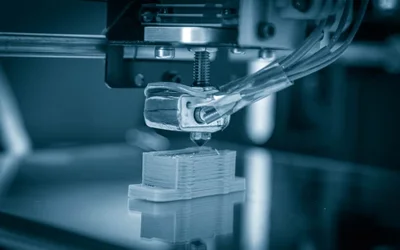
What is 3D printing? This article goes over the basics of 3D printing, otherwise known as additive manufacturing, covering its engineering principles and applications.
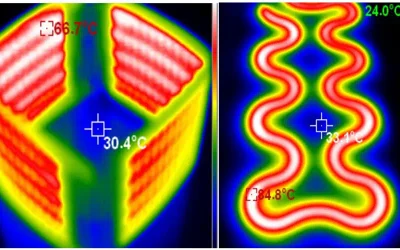
E2IP Technologies manufactures Flexible Heaters using Screen Printing Technology. This is one of the most important segments of printed and additive electronics with applications in cars, homes, and industrial settings.
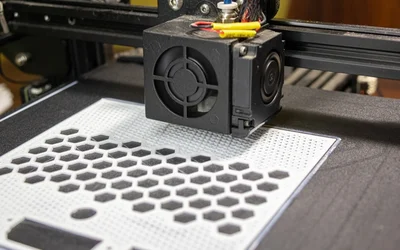
Here’s what to do if you notice clicking noises, under-extrusion, or other print quality issues caused by extruder skipping on the Ender 3 by Creality.
Unwanted lines in 3D prints can show up for many reasons and take different forms. Here we look at the most common types of lines in 3D prints and how to eliminate them.
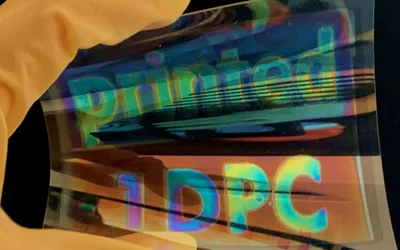
KIT researchers are developing a process with which, for the first time, mirrors with a reflection of more than 99 percent can be printed in variable sizes
Join the largest gathering of industrial 3D printing and additive manufacturing professionals in North America. Discover emerging technologies, hear from leading innovators, and make connections that drive real industrial impact.
An update for Ultimaker S-line printers, Firmware 6.5 helps to improve your 3D printing workflow, as we introduce more streamlined troubleshooting and error handling, and the ability to import material profiles from USB.
Color, Material, and Function (CMF) are three things to consider when designing a new product. When used appropriately and combined with additive manufacturing, they can help set your product apart from competition when others have brand recognition, lower price, or better technical specs.
Designing a product for full color 3D printing can be a bit of a nightmare because you need a way to convert your files into the file extension type that allows you to print without losing the design intention. Read further to learn how I do it at Stratasys.
Manufacturing industrial grippers come with their challenges and difficulties. The role of additive manufacturing is growing in the robotics industry, and gripping systems appear to be an interesting part of producing with this technology.
3D printing benefits many businesses in varying industries and sectors. The technology – also known as additive manufacturing – is a fast, easy way to create prototypes in-house, and to manufacture tools and end-use products.
Accurate mesh generation is a critical step of every engineering design workflow that involves FE analyses, CFD simulations, or Additive Manufacturing.
Delve into the variety of filament options available and discover how to select the perfect material to meet the specific requirements of your 3D printed projects.
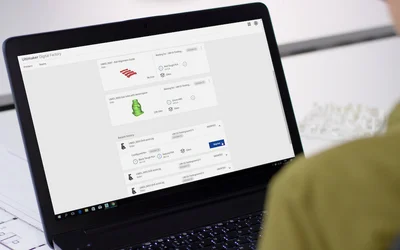
Before starting to 3D print, you will need to make sure you have gathered all the necessary software “ingredients” that will guide you through the printing process, from preparing your 3D model to managing printers themselves.
In this episode, we talk about a new machine learning model developed by NIST to predict flashover in burning buildings and protect firefighters, NASA’s new ultrasonic additive manufacturing approach, and an affordable, high performance athletic prosthetic.
3D printed sand casting molds and cores are changing the way high-performance, large metal parts are manufactured today. Additive manufacturing is enabling modern foundries to produce complex metal parts in rapid lead times.
ABS and PETG are, along with PLA, some of the most affordable and widely used 3D printing filaments for extrusion-style printing. This article discusses the key differences between the two thermoplastic materials.