FibreSeeker 3 Brings Continuous Carbon Fiber 3D Printing to the Masses
Following a successful crowdfunding campaign, the FibreSeeker 3 from FibreSeek is bringing continuous carbon fiber printing to a new audience.

16 Sep, 2026. 5 minutes read
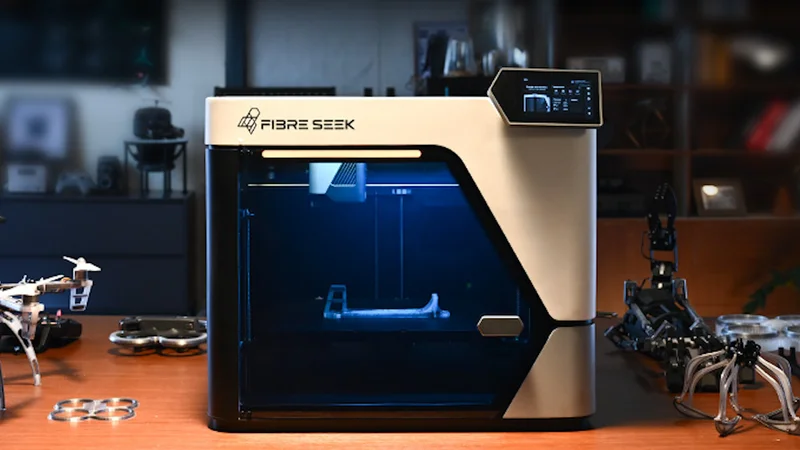
The brand-new FibreSeeker 3 has the key distinction of bringing continuous fibre 3D printing to the consumer market. At around the price of a mid-level FFF printer or CNC router, the FibreSeeker promises new possibilities for engineers and product designers. Rather than being limited to visual models and conventional prototypes, this printer is designed to produce reinforced functional parts. According to FibreSeek, continuous carbon fibre reinforced specimens printed on the system have achieved tensile strength of up to 900 MPa along the fibre direction, although actual part performance depends on factors including fibre placement, material selection, geometry and print parameters.
Carbon Fibre 3D Printing Today
Carbon fibre is known for being exceptionally stiff, strong, and lightweight, making it a valuable material in areas like aviation, civil engineering, and consumer goods. In these fields, carbon fibre parts are usually made in a mold, where sheets of woven fibres are combined with a resin to form a strong composite.
Carbon fibre can also be found in FFF (FDM), the most common type of 3D printing technology. Many thermoplastic filaments like PETG, ABS, and nylon can be formulated with the addition of carbon or glass fibres. However, engineers familiar with carbon fibre molding are likely to be disappointed by carbon fibre 3D printing filament—despite it being much easier to process than traditional layups. Why? Because these filaments contain randomly oriented chopped fibres rather than the uniformly oriented fibres found in carbon fibre fabrics and prepregs. Chopped fibres can improve stiffness, dimensional stability and depending on the material formulation and processing conditions, certain strength properties. However, they generally cannot transfer loads as efficiently as continuous fibres aligned with a principal load direction.
Harnessing the strength benefits of carbon fibre requires continuous fibre placement, allowing loads to be transferred along the full length of the fibre. A normal FFF 3D printer won’t help here: continuous strands of fibre can’t be extruded through a regular printer nozzle or be made to follow the same patterns as molten thermoplastic, and the printer has no way to sever the fibre upon completion of a layer. Instead, a specialized continuous fibre 3D printer is needed, but these printers are more complex than standard extrusion printers and have historically been marketed exclusively at industrial users.
Introducing the FibreSeeker 3
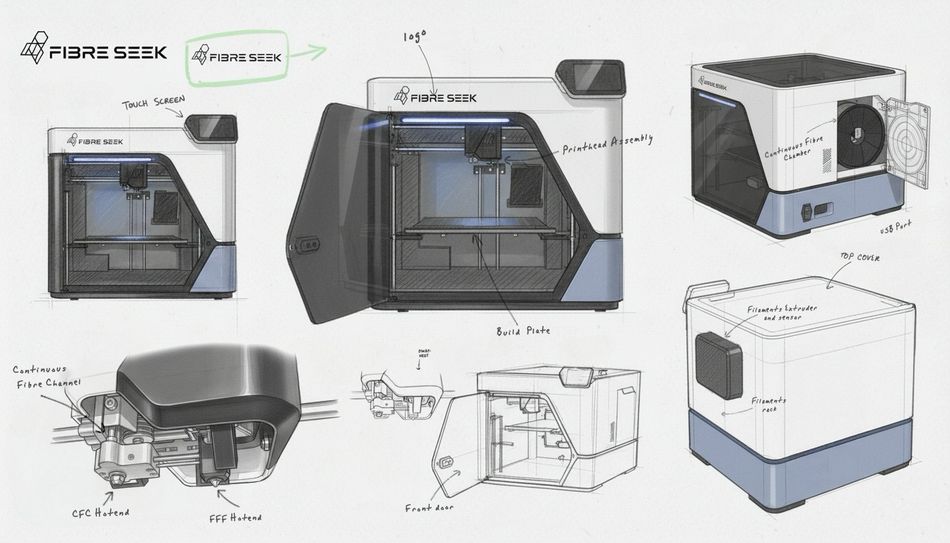
In November 2025, a new 3D printing company called FibreSeek launched a Kickstarter campaign for the FibreSeeker 3, a continuous fibre 3D printer marketed at the consumer market. The campaign described a printer that would use a proven technology called Composite Fibre Co-extrusion (CFC), at a significantly lower price point than any continuous fibre machine on the market. Before the FibreSeeker 3, the most affordable machines for printing continuous carbon fibre sat around the $10,000 mark, while the Markforged Mark 2, probably the most well-known system in the category, currently costs around $20,000. With an MSRP of $3,499 (Manufacturer’s Suggested Retail Price) and almost half that price for the earliest backers, the FibreSeeker clearly obliterates that price floor.
The FibreSeeker 3 campaign had raised over $4 million by the time of its conclusion in January, making it one of the most successful examples of crowdfunding for a 3D printer. By comparison, another printer that set about to reshape the market in its technological category, the Formlabs Form 1, raised just under $3 million on the same platform.
A Closer Look at the Printer
Only a handful of continuous fibre 3D printers exist, and not all of them work in the same way. The wide technological gap between 3D printing and traditional carbon fibre manufacturing means companies have had to devise creative ways to achieve continuous fibre placement during 3D printing. Some use fibres pre-impregnated with resin; some use a combination of fibre placement and UV resin curing.
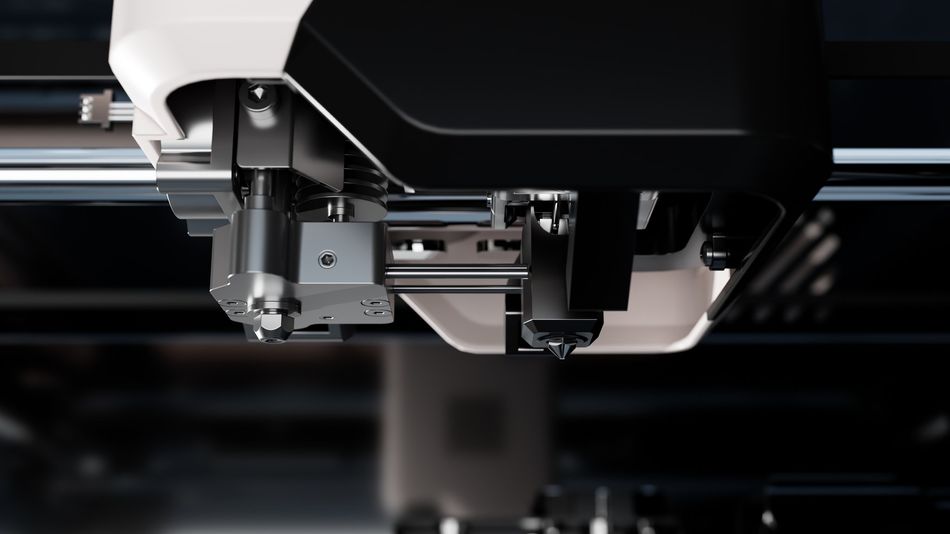
FibreSeek deploys a technology called Composite Fibre Co-extrusion (CFC), which has been used in industrial-grade systems for over a decade and which offers some unique benefits over competing processes. CFC works by embedding continuous fibre strands into melted thermoplastic during extrusion: one nozzle deposits the pre-impregnated continuous fibres as another extrudes a matrix thermoplastic. Advantages of the technology include precise fibre steering along curved trajectories, the ability to create reinforced lattice structures, and an open material system for maximum thermoplastic compatibility.
The novelty of the FibreSeeker 3 is putting that proven industrial technology within an affordable and user-friendly desktop system. According to FibreSeek, the enclosed printer offers three printing modes: FFF-only for fast prints, dual-nozzle for selective reinforcement, or CFC-only for maximum strength. And the accompanying Rocket Slicer software appears versatile enough to serve a range of users. Beginner-friendly features include simplified infill selection and optimized toolpath generation based on load distribution and fibre paths, but the software also offers a more technical “expert” mode for experienced users.
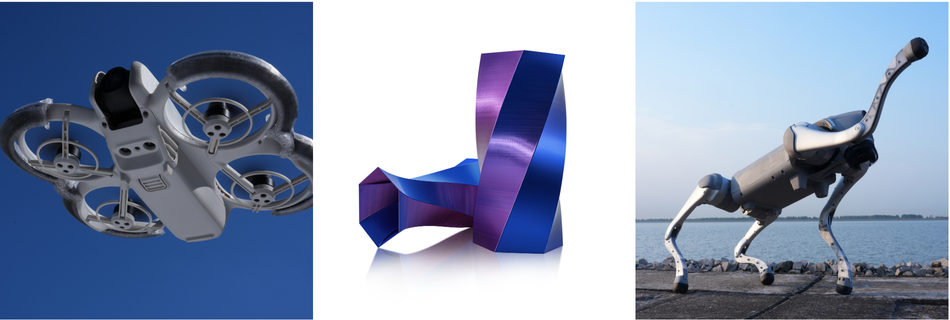
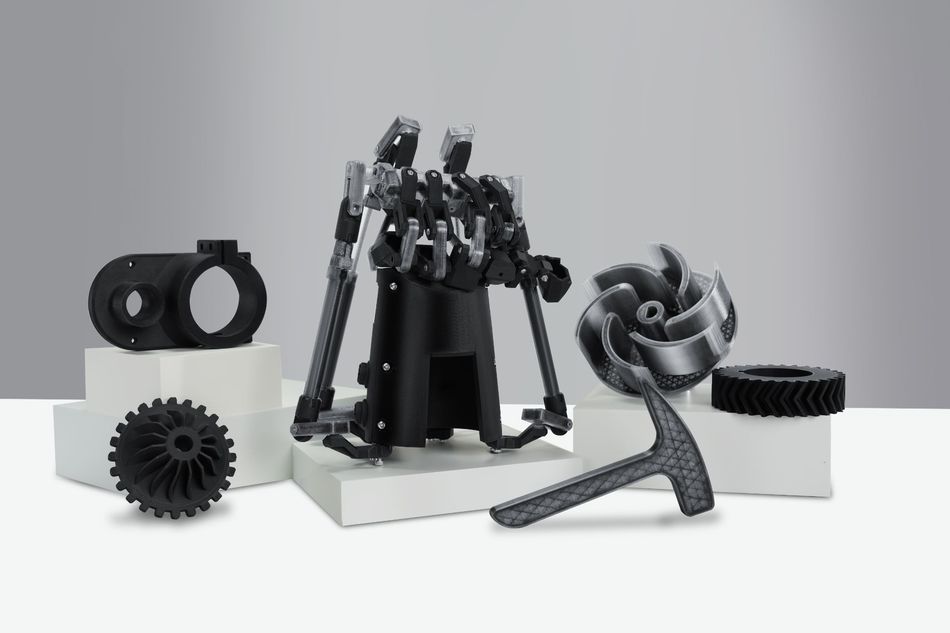
Performance is where the FibreSeeker 3 will ultimately be judged, and signs are promising for early backers and future customers: test prints have been achieved with 900 MPa tensile strength—stronger than machined aluminum 6061 and worlds apart from chopped fibre filament. Suitable prints could therefore include drone frames, robotic joints, tooling, bike components, and prosthetics. A community of new FibreSeeker users has also been sharing use cases for the printer, such as a reinforced motorcycle motor mount that would cost $1,000 if sent to a machine shop for steel milling.
Continuous Fibres for Everyone
The 3D printing community is about to find out whether FibreSeek has delivered on its bold promise of a consumer-priced continuous carbon fibre printer.
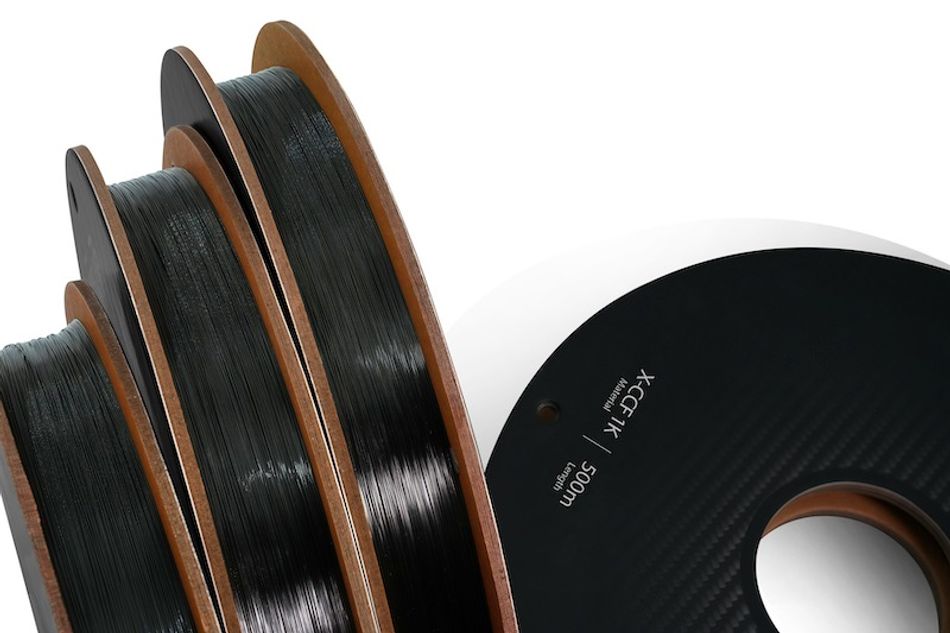
Mass production of the printer began in April, and machines are being shipped to “VIP” backers now as the company works on expanding its material range. In addition to its current CCF (Continuous Carbon fibre) and CGF (Continuous Glass fibre) consumables, FibreSeek will later introduce CBF (Continuous Basalt fibre) and CKF (Continuous Kevlar fibre) to suit applications with specific thermal or impact resistance requirements. All of these materials are offered at a price point suitable for the machine’s target market: 500 meters of X-CCF continuous carbon fibre costs $49, about a fifth the cost of Markforged materials and comparable to the raw materials used in carbon fibre molding that come with significant tooling and labor expenses.
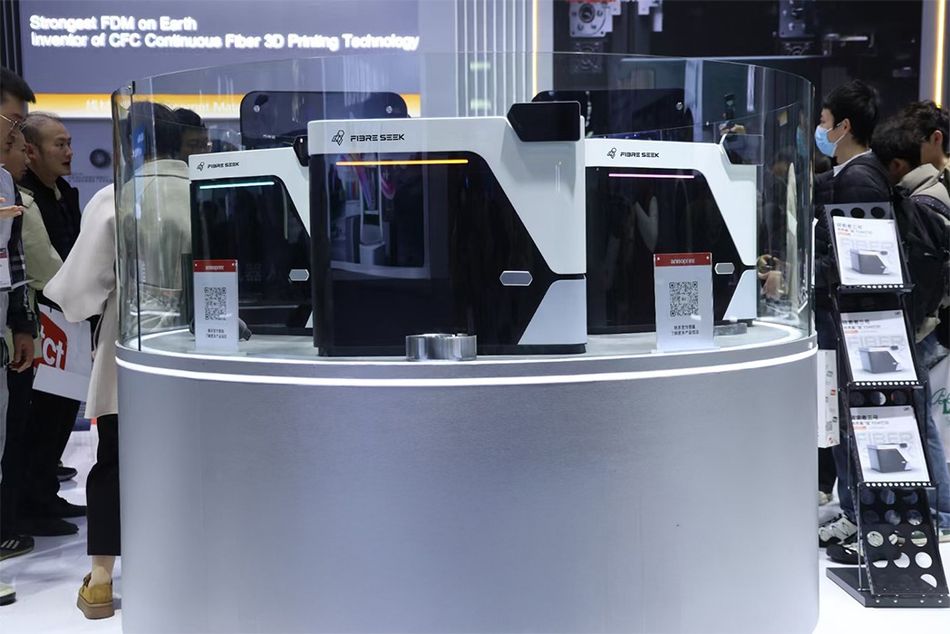
On the face of it, the advantages of a machine like the FibreSeeker are clear: a low price point, a huge strength increase over regular FFF, a tool-free process more convenient than injection molding, and a low-waste, desktop-friendly alternative to CNC machining. Its impact on the carbon fibre 3D printing market could therefore be significant. Most importantly, consumers and smaller engineering firms gaining access to continuous fibre printing will give them powers only hinted at by chopped fibre filaments.
FibreSeeker 3 will be available through a limited-time pre-sale on the FibreSeek eShop, with the first batch limited to 500 units.