This Report shows how tools like artificial intelligence, digital twins, and on-demand manufacturing are no longer emerging concepts, but are already delivering measurable impact across the product lifecycle.
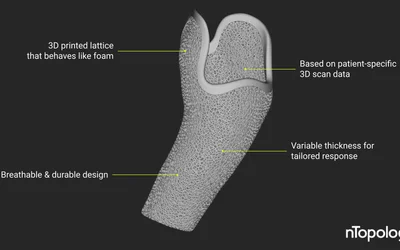
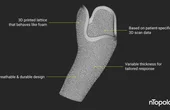
LifeNabled volunteers and designers created a fully digital workflow to produce custom 3D printed prosthetic sockets with flexible inner liners. Now, 35 patients in the jungle of Guatemala are walking on the most advanced prosthetic and orthotic devices in the world.
What is TPU filament? Thermoplastic polyurethane (TPU) is one of the most practical and affordable 3D printing materials for making flexible parts. This article looks at how and why to print it.
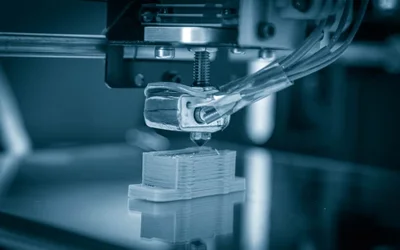
What is 3D printing? This article goes over the basics of 3D printing, otherwise known as additive manufacturing, covering its engineering principles and applications.
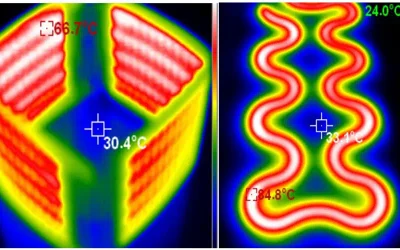
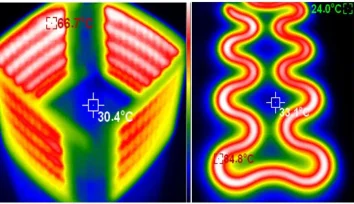
E2IP Technologies manufactures Flexible Heaters using Screen Printing Technology. This is one of the most important segments of printed and additive electronics with applications in cars, homes, and industrial settings.
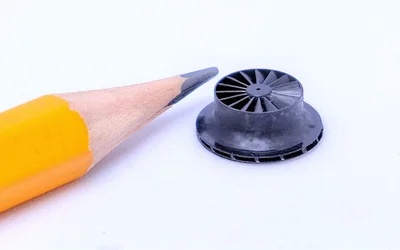
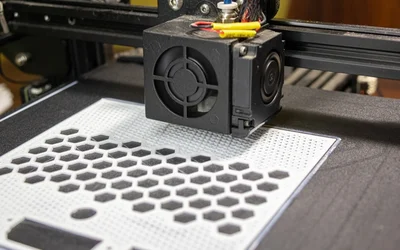
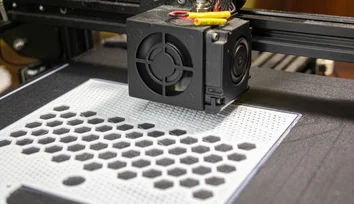
Here’s what to do if you notice clicking noises, under-extrusion, or other print quality issues caused by extruder skipping on the Ender 3 by Creality.
Unwanted lines in 3D prints can show up for many reasons and take different forms. Here we look at the most common types of lines in 3D prints and how to eliminate them.
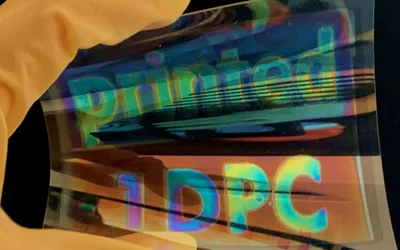
KIT researchers are developing a process with which, for the first time, mirrors with a reflection of more than 99 percent can be printed in variable sizes
Join the largest gathering of industrial 3D printing and additive manufacturing professionals in North America. Discover emerging technologies, hear from leading innovators, and make connections that drive real industrial impact.
LifeNabled volunteers and designers created a fully digital workflow to produce custom 3D printed prosthetic sockets with flexible inner liners. Now, 35 patients in the jungle of Guatemala are walking on the most advanced prosthetic and orthotic devices in the world.
What is TPU filament? Thermoplastic polyurethane (TPU) is one of the most practical and affordable 3D printing materials for making flexible parts. This article looks at how and why to print it.
How do you use a 3D printer step by step? Many different technologies share the same basic steps which we’ll cover next, but each 3D printer can also be easier or harder to use depending on its features.
In this episode, we talk about a solar powered car that could be the next step in the EV evolution cycle and how a 3D printed hypercar broke the world record lap time at Laguna Seca.
Any technology exists to solve a problem or make our lives better – and 3D printing is no different. Before diving into all the technical details, let’s look at what 3D printing is used for.
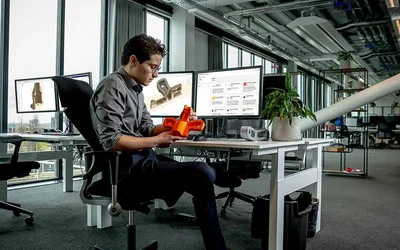
The new CMM Fixturing Module of the FDM™ Fixture Generator streamlines fixture design for inspection in Coordinate Measuring Machines. The tool enables QA engineers and technicians to generate & 3D print custom fixtures with just a couple clicks.
We don’t yet fully know what this “new normal” will mean for the global economy. But it’s clear that food and beverage manufacturers are facing bigger challenges than ever.
The old adage, two heads are better than one, simply indicates that two people can solve a problem better than an individual can. This is certainly the case when it comes to 3D printing, and why dual extruder technology is must-have for any engineer, designer, architect or artist.
Learning is always easier with the right tools. 3D printing empowers teachers, educators, and students who want to bridge theory and reality by making objects that suit every situation!
Adding desktop 3D printing to your workflow can make a big difference. Concepts and prototypes can be printed in a matter of hours. Multiple iterations produced quickly and cheaply. And complex ideas conveyed through a physical model that team members and stakeholders can see and touch.
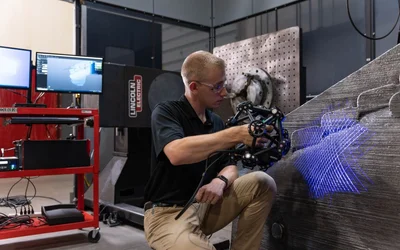
The U.S. Air Force Institute of Technology (AFIT) leveraged nTopology and architected materials to develop an additively manufactured CubeSat bus assembly from Inconel 718 that was 50% lighter and 20% stiffer than the original aluminum assembly.
Learn how Ford optimized factory-floor tooling production with a 94% lead time reduction by introducing BigRep large-format additive manufacturing. Following an incredible success, Ford expanded their BigRep ONE’s use and needed more additive manufacturing capacity – leading to a BigRep PRO!