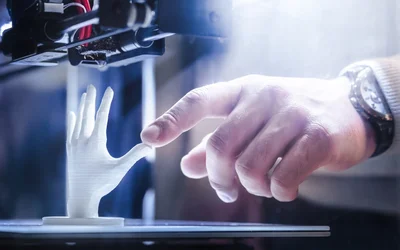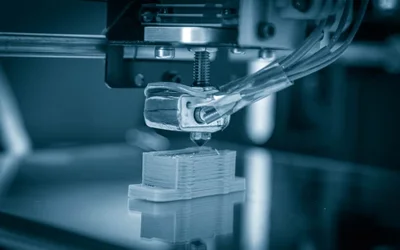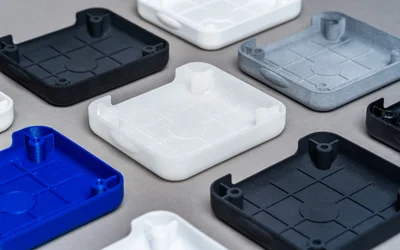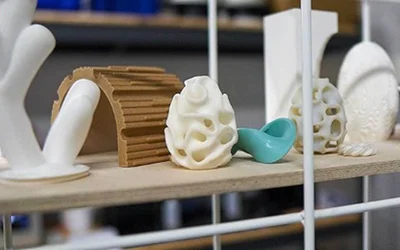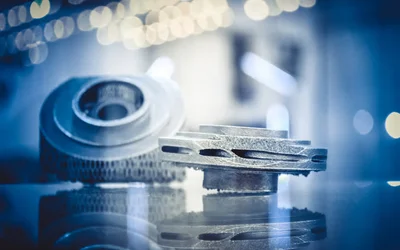
What is 3D printing? This article goes over the basics of 3D printing, otherwise known as additive manufacturing, covering its engineering principles and applications.
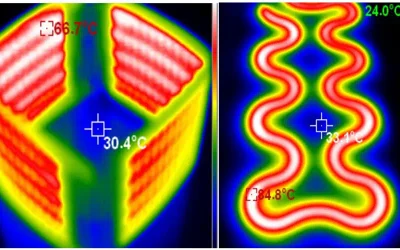
E2IP Technologies manufactures Flexible Heaters using Screen Printing Technology. This is one of the most important segments of printed and additive electronics with applications in cars, homes, and industrial settings.
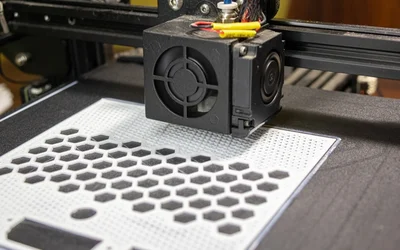
Here’s what to do if you notice clicking noises, under-extrusion, or other print quality issues caused by extruder skipping on the Ender 3 by Creality.
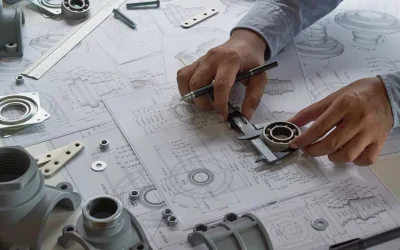
Unwanted lines in 3D prints can show up for many reasons and take different forms. Here we look at the most common types of lines in 3D prints and how to eliminate them.
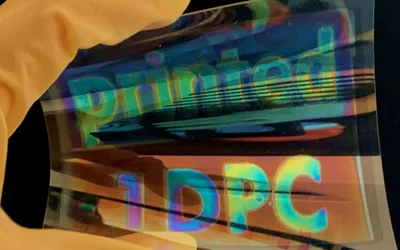
KIT researchers are developing a process with which, for the first time, mirrors with a reflection of more than 99 percent can be printed in variable sizes
Stanford materials engineers have 3D printed tens of thousands of hard-to-manufacture nanoparticles long predicted to yield promising new materials that change form in an instant.
Dutch welding solutions specialist Elektrolas uses the UltiMaker
S5 ProBundle to minimize machine downtimes and facilitate cobot welding for its customers.
Multi-material printing without inks? The technology’s on-demand and in-situ nanoparticle generation and real-time sintering capability allow the printing of various electronics and functional devices with pure, multifunctional, hybrid materials printing - without inks and with bulk properties!
The global surge in thermoplastics demand has led to increased production and plastic waste, surpassing annual production levels, necessitating the development of sustainable recycling methods and practices throughout the product life cycle to mitigate environmental impacts.
A new process for microscale 3D printing creates particles of nearly any shape for applications in medicine, manufacturing, research and more – at the pace of up to 1 million particles a day.
The Laboratory of Sustainability Robotics of the Swiss Empa institute develops a special drone for firefighting operations. Lightweight, stable and temperature resistant parts manufactured with SLS 3D printing is the key to success.

Reducing the carbon footprint of 3D printing requires work from 3D printer manufacturers and end-users. Nexa3D’s resin printers are built using recyclable materials and allow users to print responsibly too.
3D printed Body-contouring Therapeutic Positioning Equipment provides support for people with mild to moderate control of the body and reduces damage caused by improper seating during child development.