
This Report shows how tools like artificial intelligence, digital twins, and on-demand manufacturing are no longer emerging concepts, but are already delivering measurable impact across the product lifecycle.
The CREATE Education Project and 3DGBIRE are pleased to announce that they are now partnered with WorldSkills UK to launch a new Additive Manufacturing competition category aimed at Post-16 students in education and training throughout the UK.
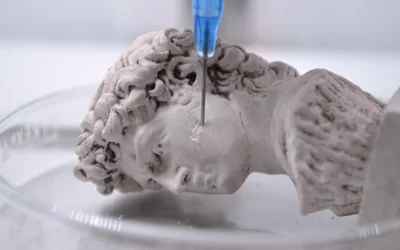
Although 3D printing was predicted to be more widespread than it has turned out to be, the technology is still undergoing enormous development. Senior Researcher David Bue is in charge of establishing DTU’s giant ‘3D printing playground’, where new records for miniature printing are currently being set.
EPFL researchers have developed a way to use holograms to guide laser light for ultra-efficient, fast, and precise volumetric 3D printing. The innovation enables cell-compatible, high-resolution 3D printing at scales suitable for biomedical applications.
Princeton researchers have combined brain cells and advanced electronics into a 3D device that can be programmed to recognize patterns using computational techniques.
Discover how iAM Marketplace simplifies industrial additive manufacturing by unifying materials, validation services, and multi-brand technologies into one open ecosystem for efficient AM sourcing.
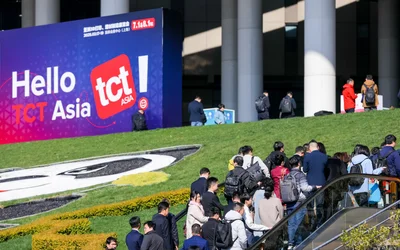
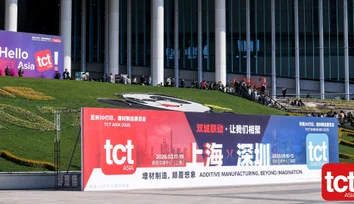
This article discusses what attendees can expect from TCT Asia 2026, including its conference format, focus areas, and the experts contributing to industry-specific discussions.
This article discusses the exhibitors, products, and industrial trends defining additive manufacturing across the Asia-Pacific region at TCT Asia 2026.
This article discusses how the Asia-Pacific region is advancing additive manufacturing and the role of TCT Asia as the leading 3D printing and additive manufacturing event in the Asia-Pacific.
The CREATE Education Project and 3DGBIRE are pleased to announce that they are now partnered with WorldSkills UK to launch a new Additive Manufacturing competition category aimed at Post-16 students in education and training throughout the UK.
Although 3D printing was predicted to be more widespread than it has turned out to be, the technology is still undergoing enormous development. Senior Researcher David Bue is in charge of establishing DTU’s giant ‘3D printing playground’, where new records for miniature printing are currently being set.
In this episode, we talk about how a boutique custom motorcycle company is leveraging 3D printing to create desired components at a fraction of the cost and time required by conventional manufacturing techniques.
Columbia University devising a way to grow engineered skin in complex, three-dimensional shapes, making it possible to construct, for example, a seamless “glove” of skin cells that can be easily slipped onto a severely burned hand.
Large Format Additive Manufacturing can be game-changing in product and process optimization, contributing to fighting climate breakdown. For the project Demo4Green - 𝗥𝗔𝗥𝗲-𝗪𝗔𝗦𝗧𝗘, Caracol used recycled glass fibers and polypropylene to produce a lamination tool for micro wind turbines.
With the high degree of technical complexity and integrated project management, the automotive industry has always been an outstanding representative of high-end manufacturing.
Multi Jet Fusion makes it possible to produce functional nylon prototypes and end-use parts in as fast as 1 day. This video looks at the process and what it can offer you.
Elisava Racing Team are creating a fully electric, intelligent motorcycle equipped for mountain rescue in hostile terrains. Collaborating with us at BCN3D, 19 end-use parts were printed using 3D FFF technology in a variety of different technical materials and sizes.