Featured
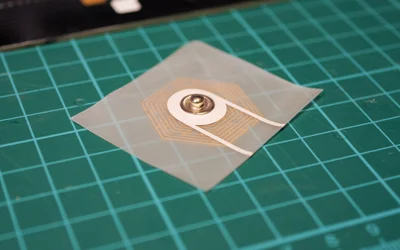
This article explores the role of biocompatible inks in bioelectronics, particularly within Direct Ink Writing (DIW) systems and forecasts future trends and challenges in on-body and in-body bioelectronic technologies over the next decade.
This Report shows how tools like artificial intelligence, digital twins, and on-demand manufacturing are no longer emerging concepts, but are already delivering measurable impact across the product lifecycle.
This article explores the role of biocompatible inks in bioelectronics, particularly within Direct Ink Writing (DIW) systems and forecasts future trends and challenges in on-body and in-body bioelectronic technologies over the next decade.
As technology continues to advance, the educational sector is evolving to ensure that students are equipped with the skills and knowledge necessary for the future.
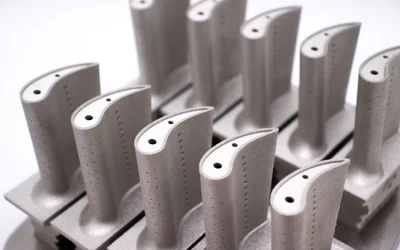
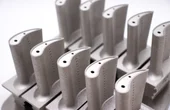
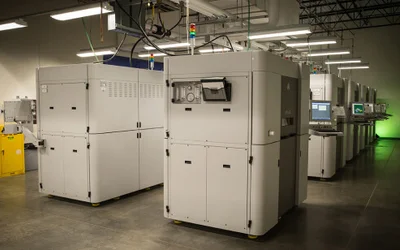
An engineer’s guide to understanding the state of the art in metal 3D Printing
15 minutes read.
22 minutes read.
11 minutes read.
18 minutes read.
12 minutes read.
16 minutes read.


Entertainment
The Next Byte Podcast is hosted by two young engineers - Daniel and Farbod - who select the most interesting tech/engineering cont...
165 Posts
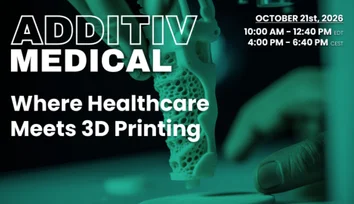
ADDITIV Medical 2026 will bring together more than 500 medical professionals
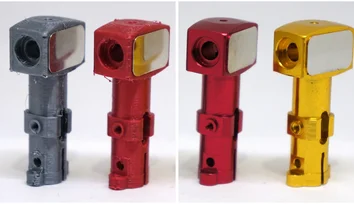
Choosing between 3D printing and injection molding is one of the key decisions in product development—especially in case of prototyping.
The choice between 3D printing and CNC machining is the most common decision regarding manufacturing methods that must be made before placing the first order for prototypes. The correct answer depends on tolerance requirements, material specifications, component geometry, and schedule.
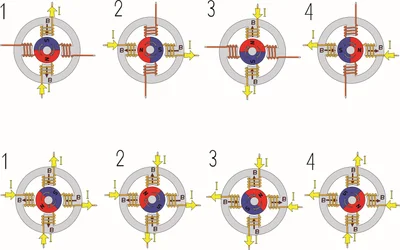
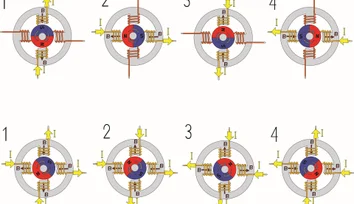
How microstepping works in stepper motors, the incremental torque cost of each resolution, and why finer microsteps do not improve positioning accuracy.
Discover how iAM Marketplace simplifies industrial additive manufacturing by unifying materials, validation services, and multi-brand technologies into one open ecosystem for efficient AM sourcing.
This article discusses what attendees can expect from TCT Asia 2026, including its conference format, focus areas, and the experts contributing to industry-specific discussions.
This article discusses the exhibitors, products, and industrial trends defining additive manufacturing across the Asia-Pacific region at TCT Asia 2026.
This article discusses how the Asia-Pacific region is advancing additive manufacturing and the role of TCT Asia as the leading 3D printing and additive manufacturing event in the Asia-Pacific.
This article explores the role of biocompatible inks in bioelectronics, particularly within Direct Ink Writing (DIW) systems and forecasts future trends and challenges in on-body and in-body bioelectronic technologies over the next decade.
An engineer’s guide to understanding the state of the art in metal 3D Printing
As technology continues to advance, the educational sector is evolving to ensure that students are equipped with the skills and knowledge necessary for the future.

2 minutes read
Automated solutions in post-processing address the challenges of 3D printing workflows, allowing for more precise sorting, efficient handling of diverse parts, and rapid iteration without manual bottlenecks.
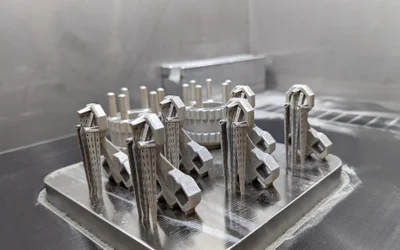
In the world of precision machining, efficiency and reliability are paramount. This case study explores the challenge, solution, and benefits of integrating a metal 3D-printed coolant ring into the machining process.
3 minutes read
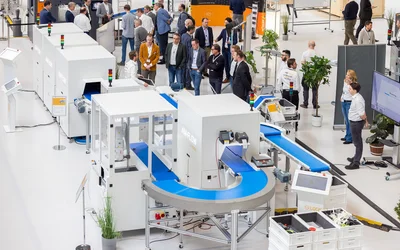
Leaning into the flexibility aspect previously covered, we want to be clear that 3D printing can be integrated in all types of automated packaging systems such as filling, sealing, labeling and wrapping machines, palletizing systems and many others.

7 minutes read
Injection molding vs. 3D printing doesn’t have to be an either/or proposition. Some projects use both processes during a product’s lifecycle. Traditionally, 3D printing has been used for prototyping and injection molding has been used for production.

4 minutes read
3D printing applications continued to flourish in more technical industries, and the technology has become an intrinsic part of manufacturing and producing products from hearing aids, dentistry parts or surgical instruments and inhalers.
5 minutes read
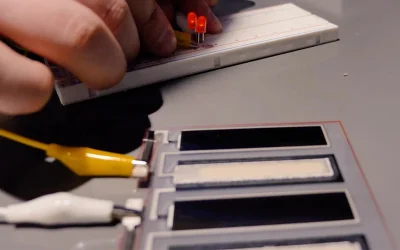
Explore Voltera's innovative project to create a seven-layer magnesium-zinc battery using printable technology. Developed with Saral Designs and employing the NOVA system, the project focuses on building lightweight, flexible, and environmentally friendly batteries on PET substrates.

7 minutes read
Metal 3D printing requires precise control over a variety of parameters to achieve high-quality parts. Whether you're printing aerospace components, medical devices, or complex machinery, understanding the core settings that influence the outcome is crucial. Lets talk about the most important ones.
3 minutes read
Why engineers need to think critically about the materials properties that matter.

5 minutes read
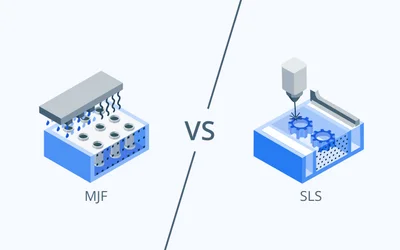
This article compares HP Multi Jet Fusion (MJF) and Selective Laser Sintering (SLS) 3D printing technologies and provides insights on how to choose the optimal process for your specific parts.

8 minutes read
High-temp 3D printer filaments are challenging to print, but they can be used to make vital end-use parts like automotive components.
Powder bed fusion (PBF) is an additive manufacturing process that fuses atomised powder to build parts.

3 minutes read
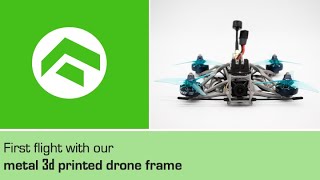
Leveraging metal 3D printing and generative design, this drone project showcases the potential for lightweight, complex structures optimized for performance and manufacturability.
3 minutes read