Featured
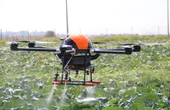
A short guide to the technologies behind the next agricultural revolution.
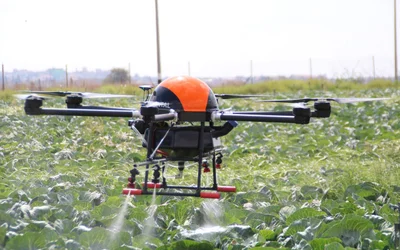
A short guide to the technologies behind the next agricultural revolution.
A short guide to the technologies behind the next agricultural revolution.
This article covers the role of System Integrators in the complex world of Low Power IoT technologies and how they can help innovators launch successful IoT projects.
With Bluetooth 5 specifications containing many optional features, smartphone manufacturers can choose to support these features or not. Still, they may claim that their smartphones are Bluetooth 5 compatible.
How Bluetooth mesh works: managed flooding, node features, provisioning, security keys, Mesh 1.1, measured latency, and how it compares with Zigbee and Thread.
26 minutes read.
15 minutes read.
18 minutes read.
19 minutes read.
18 minutes read.
17 minutes read.


Semiconductors
Nordic Semiconductor is a fabless semiconductor company specializing in wireless technology that powers the IoT.
181 Posts

High Tech
High Tech Campus Eindhoven is Europe's smartest square km and has the ultim...
49 Posts

University for science and technology
Freedom and individual responsibility, entrepreneurial spirit and open-min...
43 Posts

Higher Education
Work together. Create smart machines. Serve society. University of Michiga...
40 Posts
A JFET is a normally-on, voltage-controlled semiconductor device that regulates current through a conductive channel by varying its depletion region using an electric field.
A common-source MOSFET amplifier is a voltage-amplifier circuit with input at the gate, output at the drain, and source as the common reference. It provides voltage gain with an approximately 180 degree phase shift between input and output.
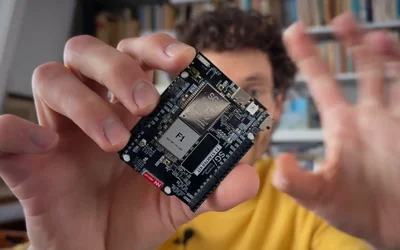
The F1 Starter Kit, built around the F1 Smart Module which supports cellular, LoRa, BLE and WiFi
This guide to robotics programming covers offline, lead-through, and teach pendant methods, key vendor languages, C++ alongside Python, ROS 2 integration, and safety limit implementation.
ROS is not an operating system. It is the open-source middleware and toolset that much of the robotics industry builds on, and this guide explains what is ROS, how it works, what changed in ROS 2, and when you should use it.
Mario Mauerer, maxon's Global Business Development Manager, Robotics, discusses what it takes for robotic deployments to be successful in complex real-world environments.
Join Prof. Fei Chen as he explores advanced bimanual manipulation and teleoperation techniques shaping the future of intelligent human-like robots in this expert-led robotics session.
A short guide to the technologies behind the next agricultural revolution.
This article covers the role of System Integrators in the complex world of Low Power IoT technologies and how they can help innovators launch successful IoT projects.

3 minutes read
With Bluetooth 5 specifications containing many optional features, smartphone manufacturers can choose to support these features or not. Still, they may claim that their smartphones are Bluetooth 5 compatible.

4 minutes read
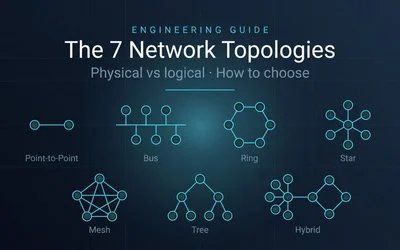
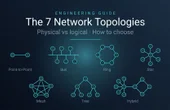
Network topology is the shape of a network: which nodes connect to which, and which paths data can take between them. This guide covers the seven types, how they compare, why the physical and logical views differ, and how to choose one for IoT and industrial systems.
The naming conventions for Bluetooth technologies have changed over the years and still cause confusion to this day. Here is everything you need to know.
3 minutes read
While traditional networks use a small number of wired access points to connect users, a wireless mesh network is spread out among many nodes that connect with one another to share the network connection across a much larger area.
4 minutes read
Smartphone battery life remains a frustration for many users. The same problem also applies to a wide range of IoT devices. Although it’s easy to bury yourself in detail seeking a perfect solution, it’s important not to lose sight of the broader picture.
4 minutes read
Single processor solutions will inevitably have to trade-off the processor's computational power against its efficiency. When that trade-off becomes too great, developers look towards dual-core solutions.
3 minutes read
AI on its own is not a Unique Selling Point but a commodity. Defining your use cases and applying AI in a smart way is what sets you apart from the rest. Your domain knowledge is what distinguishes you from your competitors.

5 minutes read
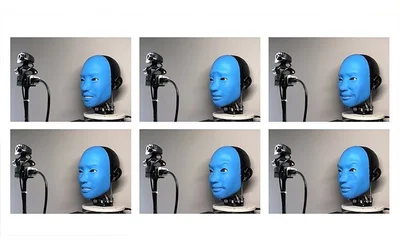
Columbia Engineering researchers use AI to teach robots to make appropriate reactive human facial expressions, an ability that could build trust between humans and their robotic co-workers and care-givers
This article covers everything you need to know about IoT: what it is, how it works, and what are the smart use cases built with IoT.
4 minutes read
New frequency- and protocol-agnostic technology consisting of proprietary software, hardware, and antennas make it easier for developers to incorporate RF-based location finding into their latest products.
3 minutes read
Cobots when combined with Artificial Intelligence(AI), can effectively work alongside humans in the real world on their daily tasks. With an AI technique called Inverse Reinforcement learning (IRL), the robot can observe a human performing the task and learn how to do it quite intuitively.

3 minutes read
Benton Calhoun SM '02 PhD '06 and David Wentzloff SM '02 PhD '07 are co-founders of Everactive, which uses wireless sensing to provide continuous remote monitoring for the industrial internet of things.
Engineers at EPFL have developed a predictive control model that allows swarms of drones to fly in cluttered environments quickly and safely. It works by enabling individual drones to predict their own behavior and that of their neighbors in the swarm.

2 minutes read