Featured
A technical exploration of the photodetectors, lasers, and optical transceivers enabling scalable, low-latency data transmission

A technical exploration of the photodetectors, lasers, and optical transceivers enabling scalable, low-latency data transmission
A technical exploration of the photodetectors, lasers, and optical transceivers enabling scalable, low-latency data transmission
Explore IoT security solutions with insights into the threat landscape, secure architectures, and best practices for engineers building resilient connected systems.
Practical and architectural insights into IoT gateways, including edge versus cloud placement, protocol translation, data aggregation, hardware designs, and deployment patterns for industrial IoT.
Exploring the design, development, connectivity, security, and more aspects of IoT devices
17 minutes read.
23 minutes read.
18 minutes read.
18 minutes read.
21 minutes read.

Electronics
Mouser Electronics is a worldwide leading authorized distributor of semiconductors and electronic components.
219 Posts

Semiconductors
Nordic Semiconductor is a fabless semiconductor company specializing in wir...
181 Posts
Network redundancy is one of the key strategies for achieving resilience, helping your network to provide uninterrupted services at an acceptable level. Such services include the efficient management of factory infrastructures and critical processes.
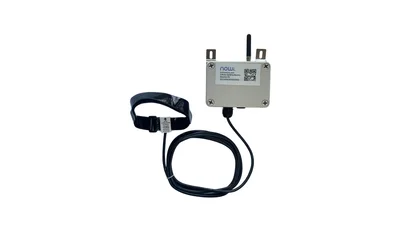
Explore how low-power sensor gateways enable reliable, long-range data collection for remote and distributed industrial IoT assets.
What a programmable automation controller is, how PACs are built and programmed, and how to choose between a PLC and a PAC.
A compact, battery-powered sensing platform that wirelessly brings environmental and equipment-condition data from locations where traditional monitoring is difficult or impossible.
Real-time water monitoring and leak detection just got streamlined thanks to the nRF9151 – Nordic's low-power cellular IoT solution
A Cat 1 bis platform that provides engineers with a practical path for long-term Global connectivity.
The G+D Single Pane of Glass Delivers Secure, Remote, SGP.32-Driven IoT Management
As AI moves from screens into real environments, reliable and always-on connectivity are becoming a safety and scale requirement.
A technical exploration of the photodetectors, lasers, and optical transceivers enabling scalable, low-latency data transmission
Explore IoT security solutions with insights into the threat landscape, secure architectures, and best practices for engineers building resilient connected systems.
Practical and architectural insights into IoT gateways, including edge versus cloud placement, protocol translation, data aggregation, hardware designs, and deployment patterns for industrial IoT.
The First Real-World Remote SIM Provisioning Test

4 minutes read
Learn how XENSIV™ 60 GHz radar by Infineon uses FMCW sensing and on-chip processing to enable precise, low-power presence detection in embedded IoT systems.
This is the real evolution of Edge AI: machines that perceive, reason, and act in the physical world.

Why cellular-first, API-managed connectivity is the key to scaling RPM, wearables, and connected health devices
6 minutes read
Explore the Dead Internet Theory in the age of AI and learn how businesses can preserve trust, authenticity, and meaningful online communities despite the rise of automated content and bots.
for the always-connected world

8 minutes read
Explore how blockchain enhances embedded systems by enabling secure device identity, tamper-proof data logging, trusted firmware updates, and decentralized coordination for IoT and edge devices.
Healthcare systems are actively implementing technologies that enable smarter care delivery, lower operational costs and better patient outcomes.
2 minutes read
Learn how USB 3.2 Gen 2x1 delivers 10Gbps high-speed performance with simpler single-lane routing, lower power consumption, and easier PCB design for embedded, FPGA, and industrial systems.
Explore how Wi-Fi HaLow is scaling for IoT 2.0, why ecosystem structure matters for large deployments, and how the Design Partner Program by Morse Micro improves integration, reliability, and adoption.
Explore why computing is shifting from cloud to edge, how local data processing reduces latency and bandwidth use, and the technologies enabling AI, IoT, and real-time intelligence at the edge.
Recognizing Monogoto for Leadership in AI-Native Connectivity Infrastructure