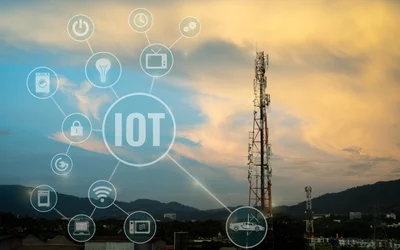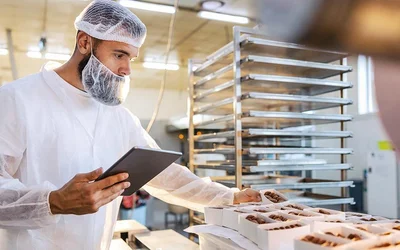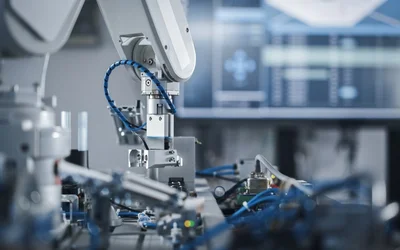
Enterprise IoT is another direction of IoT industry development, which businesses are actively adopting. Embedded technologies for large organizations bring new challenges in terms of connectivity, network stability, and data security.
Ultra-Wideband (UWB) has moved from niche industrial RTLS to mainstream, with easier deployment via enterprise access points and standards. Discover how UWB is transforming asset tracking, logistics, and manufacturing with cost-effective, sub-meter accuracy.
Explore the top 5 use cases of Software-Defined Connectivity (SDC) and learn how SDC reduces costs, improves compliance, and accelerates IoT innovation.
Today almost 30 percent of embedded projects have over 100,000 lines of code, and this increasing complexity is now the number one driver of project delays, and the reason 60 percent of an embedded development project's cost is software.
Integrating Non-Terrestrial Networks (NTN) with cellular IoT delivers seamless global connectivity, powered by the nRF9151 module for hybrid GEO, LEO, and terrestrial communication.
The Industrial Revolution began in Britain sometime around 1760. It ushered in a period where coal-fired steam engines powered increased mechanization and productivity and transformed a largely agrarian society into a manufacturing one.
Sharing the real-world performance metrics of LTE Cat-M1 and LTE Cat 1, allowing you to make a better decision on what technology to use in your application.
The natural resources around us represent the basis for all human activity on Earth. We use these resources to produce food, clean drinking water, clothes, electrical energy, and everything else we need to survive. But these resources are limited.
Investors use ESG (environmental, social, and governance factors) to screen potential investments based on a company’s non-financial performance. IoT can make the collection and reporting of this data more accurate.
The global agricultural and farming industry is facing a perfect storm. Earlier this month, the world population hit eight billion for the first time, in the two weeks since it has grown another 1.5 million. That is a lot of extra mouths to feed when there are already 690 million people going hungry, according to the Food and Agriculture Organization of the United Nations (FAO).
‘Smart Circularity’—the circular economy as it relates to connected technology and the IoT—can help the world shift away from linear consumption to an economy where resources are fed back into a closed loop of recycling, reusing and sharing.
Widely publicised in the media, there are rising concerns both within the agricultural industry and from government policymakers as to whether food production can keep up with unprecedented future demands.
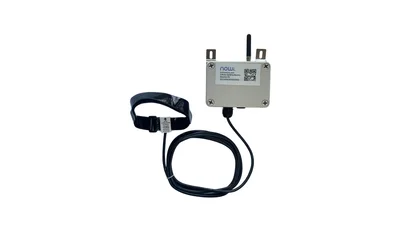
The plethora of different LoRa sensors can be overwhelming for the end user. In this article, we will give you some insights on what to consider when selecting a LoRa device.
Monitoring different industrial quantities, and understanding what this data might represent, is important to many sectors – from manufacturing, transportation, and logistics, to mining, energy and utilities, among others.
Machine-to-machine (M2M) communications date back to the late 1960s. Still, it is only now that new wireless technology allows its adoption at a scale of a million devices per kilometer.
Raspberry Pi is a UK invention, which started out as a small single-board computer (SBC) intended for educational purposes. It was originally developed by the Raspberry Pi Foundation, who wanted to produce a low-cost SBC for teaching basic computer science.