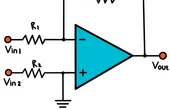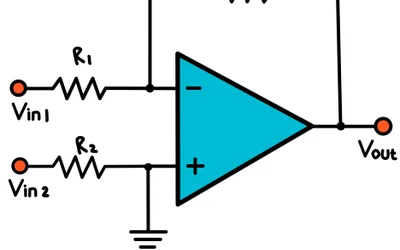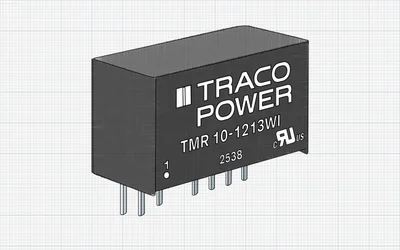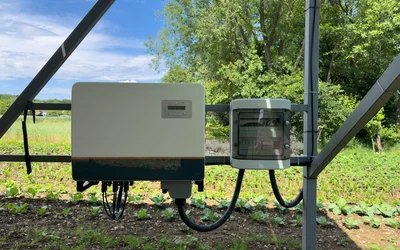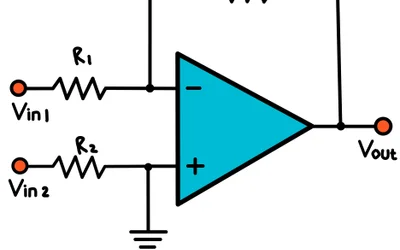
Modern electronics and renewable energy systems depend on DC to AC inverters that convert a DC source into a clean sinusoidal AC output. This technical article explains the theory behind inverter circuits, their types, architectures, and practical design tips.
As lithium-ion batteries power more vehicles and energy systems, the risk of thermal runaway grows. Honeywell's BES LITE detects electrolyte vapors at the first vent stage, enabling rapid intervention to prevent failures, protect assets, and ensure safety compliance.
New technology from Reeja Jayan in the department of mechanical engineering at Carnegie Mellon University extends battery life cycle by 10x, reduces charging time, and improves operating safety.
This article is a detailed exploration of crystalline vs amorphous solids, covering atomic order, materials properties, semiconductors, and how they translate into practical semiconductor, hardware and digital design applications.

These devices could pack three times as much energy per pound as today's best EV batteries, offering a lightweight option for powering trucks, planes, or ships.
Development of technology to enable use of hydrogen as a fuel to power turbines, engines, boilers, etc., safely and efficiently is already underway. This first approach is suitable for applications where comparatively large output is required.
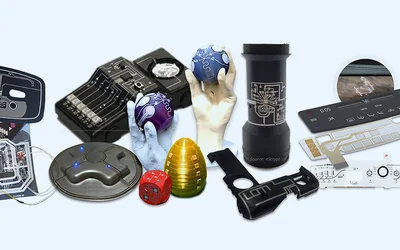
In its quest for new, innovative technology to meet its measurement needs, DURA opted for the Creaform optical CMM MetraSCAN 3D|BLACK Elite and portable CMM HandyPROBE, paired with Polyworks.
Perovskite-based (PSC) and organic photovoltaic (OPV) cells are promising solar technologies. Adhesives play a crucial role offering not only mechanical stability but also environmental protection. This article focuses on the various types of adhesives used in the encapsulation of OPV or PSC cells.
Amphenol Sine Systems' ecomate® Rugged Metal (RM) Shielded Connectors overcome RFI/EMI and withstand harsh environments. Enhance the reliability of your projects with durable, versatile connectors perfect for industrial, off-road, solar, and more applications.
At least 15 billion primary batteries are being disposed of yearly worldwide. The world is getting better at recycling, which is excellent news. However, the bad news is that we are still throwing batteries that are not fully utilized.

Borrowing methods from biology, a team of scientists and engineers designed and tested an electrolyte that keeps battery power delivery high, cycle after cycle.
In many sectors, sensor networks are composed of thousands of individual sensors, many powered by primary batteries. Certain issues related to limited power autonomy need to be taken into consideration before successfully deploying such networks.
A new electrolyte design for lithium metal batteries could significantly boost the range of electric vehicles. Researchers at ETH Zurich have radically reduced the amount of environmentally harmful fluorine required to stabilise these batteries.
Researchers from ITMO University have managed to improve the efficacy of perovskite solar cells with the help of silicon nanoantennas, which increase the concentration of light in the material at certain wavelengths.
In 10 years, solid-state batteries made from rock silicates will be an environmentally friendly, more efficient and safer alternative to the lithium-ion batteries we use today.
Visualizing the energy consumption profile of your embedded IoT device marks the initial step toward achieving low-power design and extended battery life. The subsequent step is analysis, where you can make a significant impact on your energy optimization efforts.
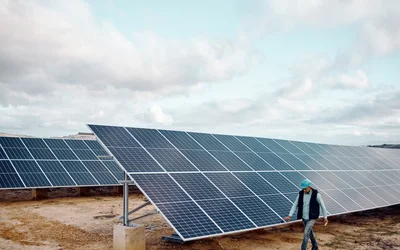
Solar energy, which is both abundant and free, is poised to become the world’s leading power source by 2050. That’s thanks largely to technological advances and the unbridled manufacturing of solar cells, which bodes well for a successful energy transition.