Modern electronics and renewable energy systems depend on DC to AC inverters that convert a DC source into a clean sinusoidal AC output. This technical article explains the theory behind inverter circuits, their types, architectures, and practical design tips.
As lithium-ion batteries power more vehicles and energy systems, the risk of thermal runaway grows. Honeywell's BES LITE detects electrolyte vapors at the first vent stage, enabling rapid intervention to prevent failures, protect assets, and ensure safety compliance.
New technology from Reeja Jayan in the department of mechanical engineering at Carnegie Mellon University extends battery life cycle by 10x, reduces charging time, and improves operating safety.
This article is a detailed exploration of crystalline vs amorphous solids, covering atomic order, materials properties, semiconductors, and how they translate into practical semiconductor, hardware and digital design applications.
These devices could pack three times as much energy per pound as today's best EV batteries, offering a lightweight option for powering trucks, planes, or ships.
Development of technology to enable use of hydrogen as a fuel to power turbines, engines, boilers, etc., safely and efficiently is already underway. This first approach is suitable for applications where comparatively large output is required.
A researcher at Washington University in St. Louis has received a grant of $1.5 million to convert CO2 into carbon nanotubes that could be used in lithium-ion batteries
This is the definitive technical comparison between Junction Field-Effect Transistors and metal-oxide Semiconductor Field-Effect Transistors. This in-depth analysis covers operational physics, performance metrics, and practical implementation guidelines for electronic design engineers.
Explore Voltera's innovative project to create a seven-layer magnesium-zinc battery using printable technology. Developed with Saral Designs and employing the NOVA system, the project focuses on building lightweight, flexible, and environmentally friendly batteries on PET substrates.
We rely so heavily on electricity these days that it’s critical to address potential problems in the supply chain. Domestically, commercially and in industry, this applies not only to power cuts, but also to equally disruptive spikes or surges.

A research team led by Georgia Tech’s Hailong Chen has developed a low-cost iron chloride cathode for lithium-ion batteries, which could significantly reduce costs and improve performance for electric vehicles and large-scale energy storage systems.
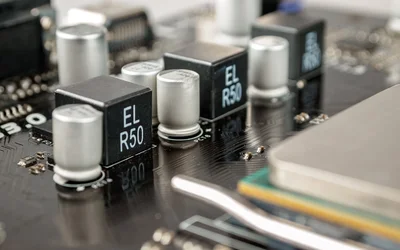
Development of technology to enable use of hydrogen as a fuel to power turbines, engines, boilers, etc., safely and efficiently is already underway. This first approach is suitable for applications where comparatively large output is required.
Why Is Thermal Runaway Protection Important In Manufacturing? Thermal runaway has been in the news lately – mainly due to the devastating consequences of lithium-ion (Li-ion) battery fires.
Researchers at ETH Zurich are using iron to store hydrogen safely and for long periods. In the future, this technology could be used for seasonal energy storage.
Distributed air gap cores, traditionally expensive, enhance efficiency and thermal management in high-power, high-frequency applications by reducing reluctance and fringing flux. Standardization efforts by brands like TDK are making these advanced solutions more accessible and cost-effective.