Featured
In today’s world, continuous connectivity sounds like an everyday given. But delivering it is far from simple.

This white paper explains how precision timing solutions support reliable PNT architectures across aerospace, defense, and industrial systems.
In today’s world, continuous connectivity sounds like an everyday given. But delivering it is far from simple.
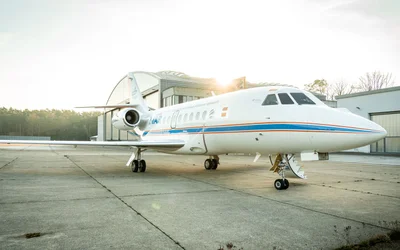
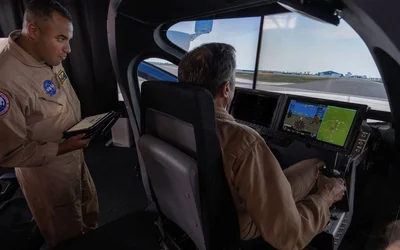
ISTAR flights focus on the flight-mechanical and flight-dynamic characteristics of the modified Dassault Falcon 2000LX. Novel sensors measure how the aircraft behaves during specific flight manoeuvres.
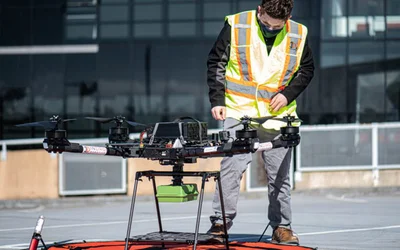
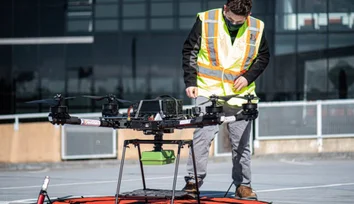
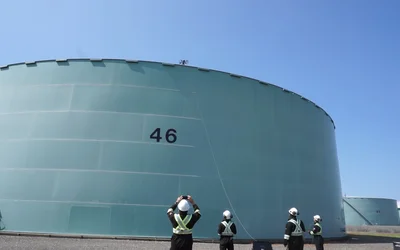
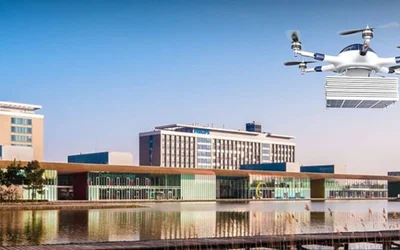
Flying robots have emerged as an innovative solution for conducting ship inspections.
Aerospace CNC machining is the backbone of modern aircraft production. This guide explains the theory and practice behind it.
12 minutes read.
16 minutes read.
16 minutes read.
9 minutes read.

Robotics and Drones
We empower R&D by providing the computational power, ROS packages, payloads...
14 Posts
Learn why growing hardware teams slow down as they scale, and how aligned workflows, parallel collaboration, and real-time design visibility restore speed and momentum.
How standardized electronic identification will enable high-volume, complex drone operations.
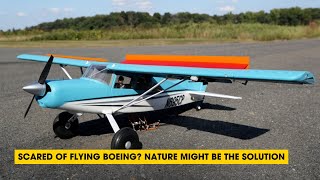
In this episode, we explore how the mechanics of bird wings are inspiring new approaches to prevent airplanes from stalling and learn how bio-mimetic designs from nature are paving the way for innovations in aviation, enhancing stability and safety for future flights.
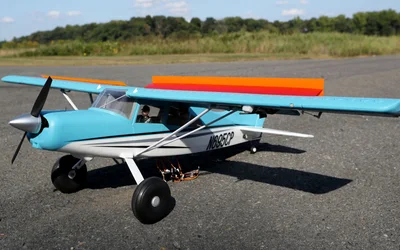
Taking inspiration from bird feathers, Princeton engineers have found that adding rows of flaps to a remote-controlled aircraft’s wings improves flight performance and helps prevent stalling, a condition that can jeopardize a plane’s ability to stay aloft.
In this episode, we explore NASA's successful test of a powerful new lithium-fed electric thruster that could one day power human missions to Mars.
A novel electromagnetic thruster passed an initial test in a specialized chamber at JPL. With further development, these thrusters could support human missions to the Red Planet.
Humanity's drive to explore has taken us across the solar system, with astronaut boots, various landers and rovers' wheels exploring the surfaces of several different planetary bodies.
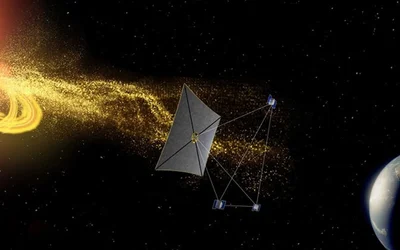
A spacecraft that sails on light could provide new vantage point on solar eruptions that can disrupt modern electrical and navigation systems.
In today’s world, continuous connectivity sounds like an everyday given. But delivering it is far from simple.

2 minutes read
ISTAR flights focus on the flight-mechanical and flight-dynamic characteristics of the modified Dassault Falcon 2000LX. Novel sensors measure how the aircraft behaves during specific flight manoeuvres.

4 minutes read
Flying robots have emerged as an innovative solution for conducting ship inspections.

3 minutes read
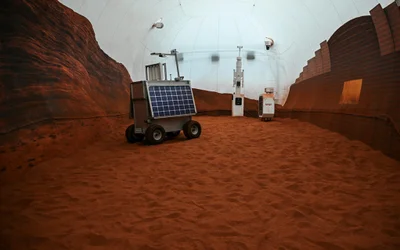
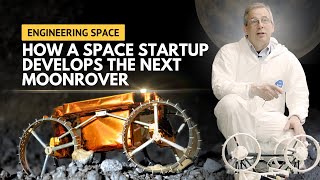
Space startup Astrobotic mimics the moon's surface material and tests various designs of new moon rovers.
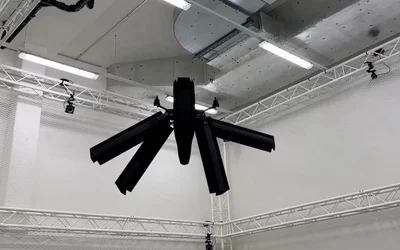
Elythor, an EPFL spin-off, has developed a new drone whose wing shape can adapt to wind conditions and flight position in real time, reducing the drone’s energy consumption. What’s more, the position of the wings can change, allowing the drone to fly vertically or horizontally. These features make it a perfect candidate for inspecting power plants.

4 minutes read
In this article, we will dive deep into the world of simultaneous localization and mapping using Lidar technology. Lidar SLAM has been gaining popularity in recent years, thanks to its versatility and applications across various domains, including autonomous vehicles, mobile robotics, and indoor mapping.
As evidence mounts that gas drilling and sewer systems leak far more greenhouse gases than previously believed, a team of Princeton researchers has developed a method to pinpoint leaks both big and small for speedy repair.
MIT researchers exhibit a new advancement in autonomous drone navigation, using brain-inspired liquid neural networks that excel in out-of-distribution scenarios.
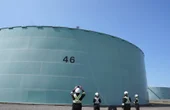
Intelligent flying robots can perform Non-Destructive Testing inspections on various assets across various industries, including tanks, towers, pipes, flare stacks, ships, and more.
In this episode, we talk about a new satellite system from NASA that leverages technologies used in other missions to accomplish the same performance that has been delivered by heritage satellites but smaller and less complex while also being a fraction of the cost.
Refineries are known for operating under harsh conditions of high pressure and temperature, which can cause damage to equipment over time, leading to defects such as internal corrosion, cracking, and erosion.
3 minutes read
Air taxis and flying cars may seem like science fiction, but for Onland, founder of Serendipity, these are real-world technologies he’s helping cities and countries prepare for now.

4 minutes read
In places across the U.S., tree cover is shrinking – forests are burned by wildfires on the West Coast and drowned by rising sea levels along the East. From the ground, it’s hard to assess the scale of the losses and the effects disappearing trees have on atmospheric carbon dioxide levels and climate change.
In a world that runs on data, computer simulations are among our most powerful tools for investigating any scenario. The same is true for NASA Advanced Air Mobility (AAM) researchers as they plan the future of the national airspace. Together with industry partners, these researchers are delivering the data needed to allow self-flying electric air taxis and drones to execute flight paths as easily as your phone maps your car’s route.

3 minutes read
Intelligent Flying Robots have revolutionized NDT inspections by conducting accurate ultrasonic thickness (UT) and visual inspections in challenging conditions.