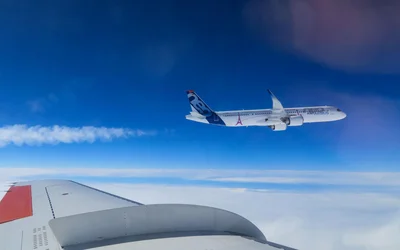
In this episode, we explore how the mechanics of bird wings are inspiring new approaches to prevent airplanes from stalling and learn how bio-mimetic designs from nature are paving the way for innovations in aviation, enhancing stability and safety for future flights.
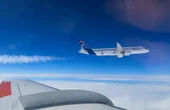
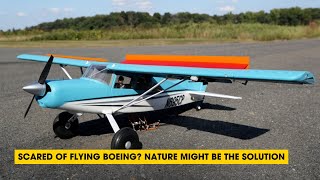
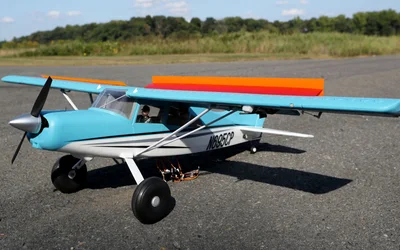
Taking inspiration from bird feathers, Princeton engineers have found that adding rows of flaps to a remote-controlled aircraft’s wings improves flight performance and helps prevent stalling, a condition that can jeopardize a plane’s ability to stay aloft.
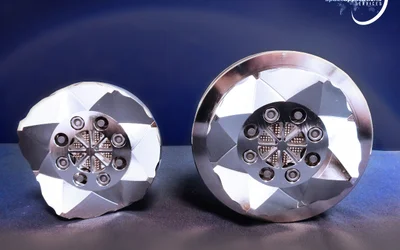
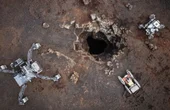
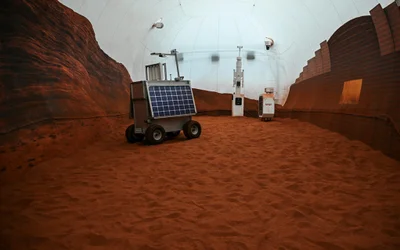
Humanity's drive to explore has taken us across the solar system, with astronaut boots, various landers and rovers' wheels exploring the surfaces of several different planetary bodies.
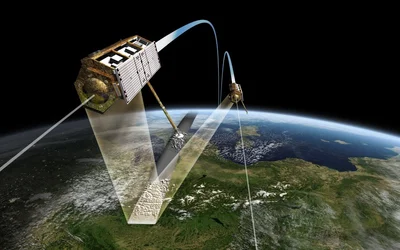
In space, maintenance isn't possible, so satellites must operate reliably for their entire mission. This makes fault detection, isolation, and recovery (FDIR) a critical requirement in satellite design.
Researchers at the German Aerospace Center (Deutsches Zentrum für Luft- und Raumfahrt; DLR) in Göttingen have visualised the main cause of noise from a heavyweight helicopter in flight. To do this, they conducted flight tests with a CH-53G of the German Armed Forces by letting the helicopter 'dance' close to the ground.
Bion Space became one of the finalists in the Stratosphere Satellite research and engineering program. Their project became a part of a research probe sent into the stratosphere on November 19 to analyze the way lower gravity can affect the biomimetic process of bone-like tissue formation.
The origin of Mars’ two moons, Phobos and Deimos, is still unclear. To unravel this mystery, the Japan Aerospace Exploration Agency (JAXA) Martian Moons eXploration (MMX) mission is scheduled to launch in 2024.
Technologies have played a vital role to provide practical solutions to expensive and risky space projects. With the advent of more precise instruments and techniques, observations in more distant space regions are being enabled which could hold the key to understanding the origins of the universe.
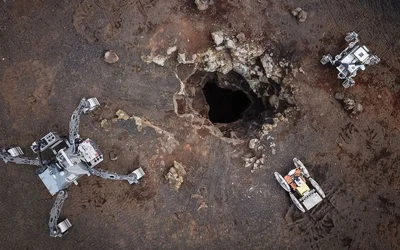
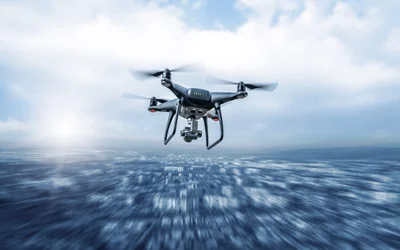
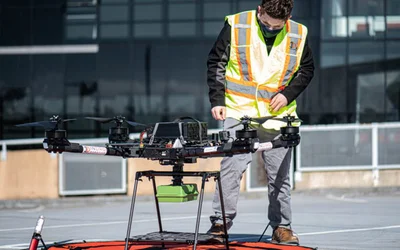
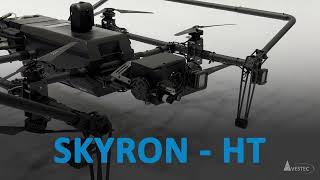
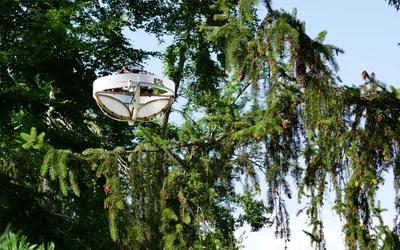
In this episode, we talk about how a team from TUM has developed a system composed of collaborative drones that can create structure in remote and/or disastrous areas.
How an online manufacturer supplied over 50 components for the LUVMI lunar rover, a project of the Space Applications Services that specializes in space technology.