Featured
The need for advancements in education and awareness of computational design thinking.
The need for advancements in education and awareness of computational design thinking.
The need for advancements in education and awareness of computational design thinking.
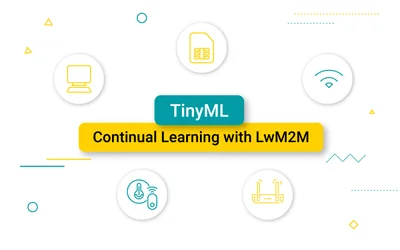
LwM2M may be the missing link to implement continual learning in TinyML projects.
AI capital – the emerging capital resource for businesses and the economy as a whole. With AI capital, it is transforming the nature of work and creating new opportunities and challenges for businesses and workers. The future of work will be characterized by the increasing use of AI technologies to augment human capabilities and drive innovation. However, to fully realize the potential of AI capital, it is important to democratize access to AI and ensure that they are developed and deployed in a responsible and ethical manner.
Artificial intelligence (AI) is a wide-ranging tool that enables people to rethink how we integrate information, analyze data, and use the resulting insights to improve decision making
15 minutes read.
20 minutes read.
13 minutes read.
17 minutes read.
25 minutes read.
11 minutes read.


Entertainment
The Next Byte Podcast is hosted by two young engineers - Daniel and Farbod - who select the most interesting tech/engineering cont...
165 Posts

High Tech
High Tech Campus Eindhoven is Europe's smartest square km and has the ultim...
49 Posts

University for science and technology
Freedom and individual responsibility, entrepreneurial spirit and open-min...
43 Posts
From leading experts at the CDFAM Computational Design Symposium
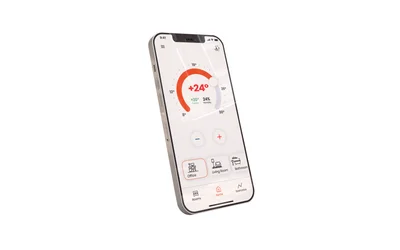
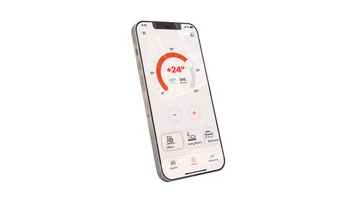
eCozy 2.0 system addresses the limitations of traditional thermostats for water heating radiators, delivering efficiency, convenience and sustainability benefits to households
Protect the cloud by securing the edge with hardware-based security, TPMs, HSMs, and resilient edge computing architectures.
Explore the rise of intelligent EV hardware and how real-time processing, ML acceleration, and hardware virtualization are enabling safer, smarter, software-defined electric vehicles.
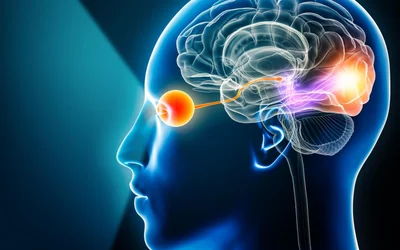
EPFL researchers are developing AI models that could one day enable vision prosthetics able to restore meaningful, object-level sight for the blind.
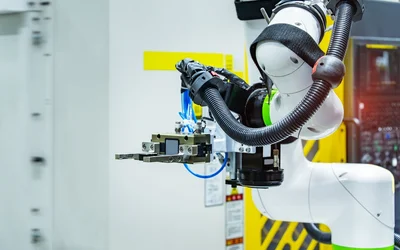
A deep-dive listicle guiding controls, automation, and quality engineers toward the best vision systems for manufacturing applications in 2026.
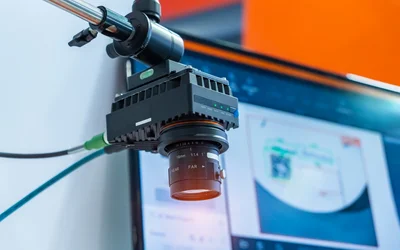
Understanding industrial vision systems by examining their components, imaging fundamentals, AI integration since 2020, and how to choose the right solution for every application.
The AI-powered tool could inform the design of better sensors and cameras for robots or autonomous vehicles.
The need for advancements in education and awareness of computational design thinking.

3 minutes read
LwM2M may be the missing link to implement continual learning in TinyML projects.

4 minutes read
AI capital – the emerging capital resource for businesses and the economy as a whole. With AI capital, it is transforming the nature of work and creating new opportunities and challenges for businesses and workers. The future of work will be characterized by the increasing use of AI technologies to augment human capabilities and drive innovation. However, to fully realize the potential of AI capital, it is important to democratize access to AI and ensure that they are developed and deployed in a responsible and ethical manner.

6 minutes read
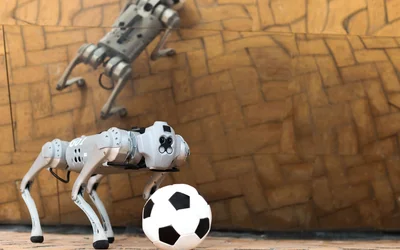
“DribbleBot” can maneuver a soccer ball on landscapes such as sand, gravel, mud, and snow, using reinforcement learning to adapt to varying ball dynamics.
The overall goals are to minimise the environmental damage caused by industrial production, and, more specifically, to do our best to reduce our industrial carbon footprint.
Innovations such as biomimicry, software inspired by insect brains, smart skin, neuromorphic computing, and other emerging technologies further expand robots' capabilities and push the boundaries of robotics hardware.
Now wireless-enhanced personal transport solutions are riding their way into the mainstream transport picture, creating new business opportunities in the process.

4 minutes read
Over the next decade, we can expect to see exponential gains in performance and power efficiency of embedded computer systems.

5 minutes read
Unsupervised domain adaptation is the solution to overcome the challenge of limited training data effectively.
4 minutes read
As a result of the development of various machines and robots, we have become able to effortlessly handle jobs that humans could not perform with muscle strength and motor skills. Moreover, owing to advances in sensors, AI, and other information processing technologies, we have also become able to use perceptual abilities that exceed the five human senses.

6 minutes read
This article explores the role of robotics and Artificial Intelligence (AI) in sheet metal forming. The utilization of AI and automation has accelerated and enhanced the speed and accuracy of centuries-old manufacturing processes.
At the recent AI+Education Summit, Stanford researchers, students, and industry leaders discussed both the potential of AI to transform education for the better and the risks at play.

6 minutes read
AI chatbot ChatGPT exploded onto the scene in November 2022. It can write essays, WordPress plugins and even pass an MBA exam – yet scientists still don’t fully understand how these general artificial intelligence programs work. New EPFL research aims to change this paradigm. This article is an excerpt from : Artificial intelligence: friend or foe?

4 minutes read
ABI Research forecasts that TinyML unit volumes will explode from 15 million units in 2020 to 2.5 billion units in 2030. Find out about this machine-learning technique now.

3 minutes read
Today, the IoT has enabled the amount of data we collect to grow by many orders of magnitude. We can sense almost anything, anywhere, and then wirelessly transmit the data to powerful remote Cloud servers. This has opened up opportunities for new applications that previously would not have been possible.
4 minutes read