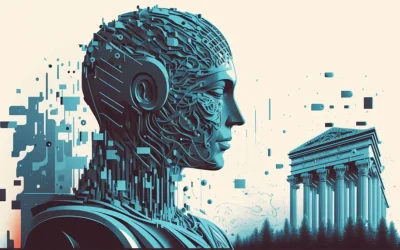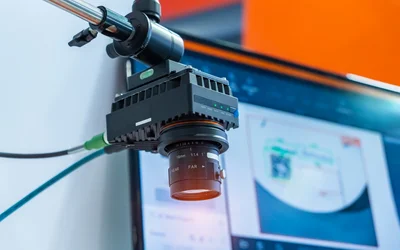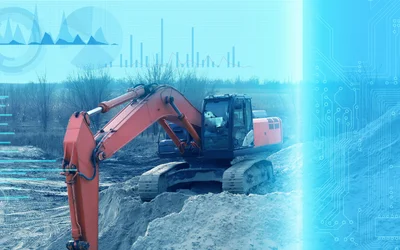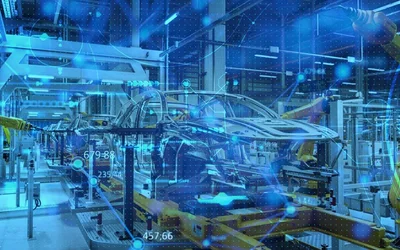
Artificial intelligence (AI) is a wide-ranging tool that enables people to rethink how we integrate information, analyze data, and use the resulting insights to improve decision making
In large-scale warehousing and distribution operations, conveyor belts are an essential infrastructure that must operate with near-zero downtime to ensure the timely delivery of products. The presence of loose or foreign items on a conveyor belt can pose a serious risk to these operations.
To reduce waste, the Refashion program helps users create outlines for adaptable clothing, such as pants that can be reconfigured into a dress. Each component of these pieces can be replaced, rearranged, or restyled.
Smart eyewear promises to transform how we see and interact with the world. Among its many potential advantages, the technology offers hands-free access to information, vision enhancement, and accessibility tools.
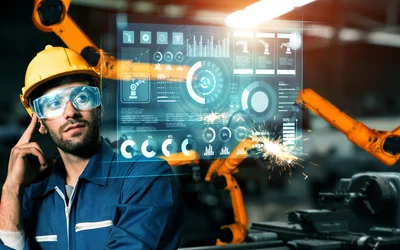
Matroid builds no-code computer-vision detectors that can spot everything from microscopic material defects to real-time safety hazards on a factory floor.
In large-scale warehousing and distribution operations, conveyor belts are an essential infrastructure that must operate with near-zero downtime to ensure the timely delivery of products. The presence of loose or foreign items on a conveyor belt can pose a serious risk to these operations.
In this post, we'll walk through how to evaluate that progress using the same metrics our platform provides automatically, so you can build detectors that get smarter, sharper, and more reliable over time.
The no-code platform from Matroid trains ordinary cameras to act like expert inspectors, turning simple footage into a pixel-level defect checklist. Even a handheld GoPro can spot issues human eyes miss—using remarkably small datasets.
According to research from analyst GWI, while consumers still consider fitness tracking the leading reason for owning a wearable, nearly half of all owners also expect their wearable to monitor their health.
Engineers at EPFL and the University of Geneva believe they hold the key to automated drone mapping. By combining artificial intelligence with a new algorithm, their method promises to considerably reduce the time and resources needed to accurately scan complex landscapes.
Researchers have developed a new material for an electronic component that can be used in a wider range of applications than its predecessors. Such components will help create electronic circuits that emulate the human brain and that are more efficient at performing machine-learning tasks.
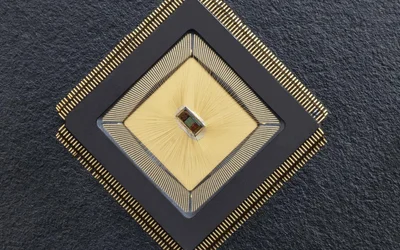
Axelera has recently joined the AI Innovation Center at High Tech Campus Eindhoven. The company is designing chips for AI on the edge with the aim to revolutionise the field and make AI accessible to everyone. They picked up an impressive 10 million euros in their seed investment round.
In this episode, we talk about how an app leveraging 3 sets of machine learning algorithms aims to reduce waste and emissions by creating 3D models of feet and the hoverfly inspired AI that will be keeping airfields safe from small drones via acoustic mapping and filtering.
Snapfeet is a new mobile phone app that shows how well shoes will fit based on the 3D shape of the user’s foot. It also offers a simple augmented reality (AR) visualisation of what the shoes will look like on the feet.
The fourth industrial revolution has the potential to fundamentally transform the way humans and machines work today. Will it lead to an improvement in the quality of life? Or will it be a cause of widespread job losses and unrest?
While the concept of a hugging robot may sound bizarre, the researchers behind the project — now in its third generation — believe that such a device could have a major impact on everything from social telepresence to elder care.
Imagine you could create thousands of options for a single design the push of a button and then you just pick the best option! Generative design makes this possible.