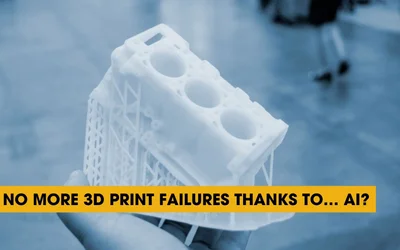

When we choose what to buy, we usually look at the expiration date, brand, quality seals, ingredients, and price. But how do you know if the manufacturer is fully honest – or that the product was properly stored during shipping or while on the shelf?
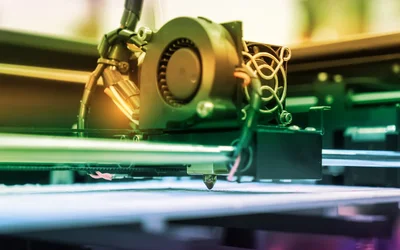
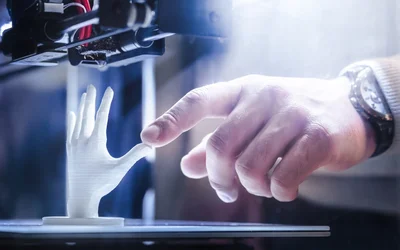
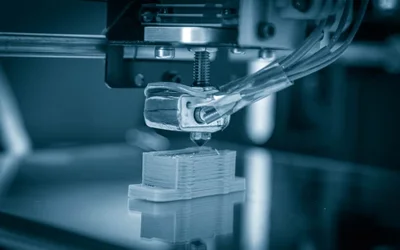
3D printing works with a wide variety of 3D printing materials, among which we can find plastics, resins, metals… and even food! In FDM printing, thermoplastics are used, a type of 3D printer material that at high temperatures becomes liquid allowing it to flow, and when it cools down enough (below its glass transition temperature) it becomes solid.
What is 3D printing? This article goes over the basics of 3D printing, otherwise known as additive manufacturing, covering its engineering principles and applications.
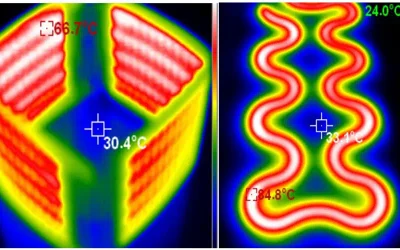
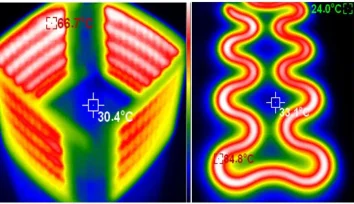
E2IP Technologies manufactures Flexible Heaters using Screen Printing Technology. This is one of the most important segments of printed and additive electronics with applications in cars, homes, and industrial settings.
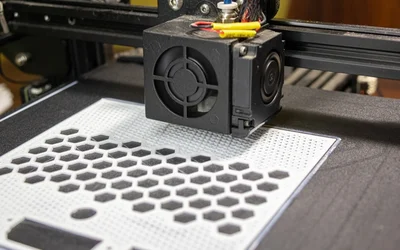
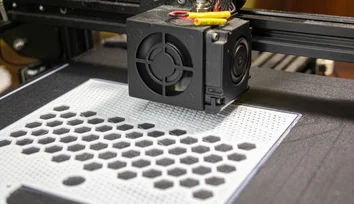
Here’s what to do if you notice clicking noises, under-extrusion, or other print quality issues caused by extruder skipping on the Ender 3 by Creality.
Unwanted lines in 3D prints can show up for many reasons and take different forms. Here we look at the most common types of lines in 3D prints and how to eliminate them.
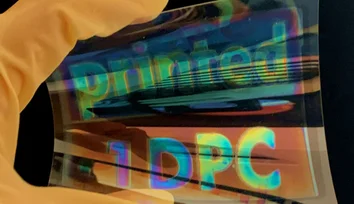
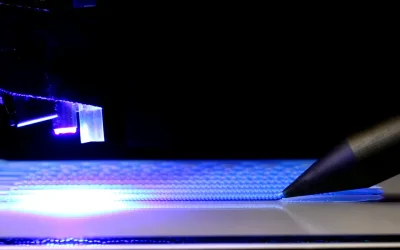
KIT researchers are developing a process with which, for the first time, mirrors with a reflection of more than 99 percent can be printed in variable sizes
A deep dive into the physics, properties, and practical applications of 3D printing filaments, from everyday polylactic acid to performance composites.
Using a fleet of printers including an UltiMaker S3 and a MakerBot Method X, the team at Ocean Alliance was able to design, prototype, and build a sophisticated drone-based tagging system from the ground up.
This guide explores how to leverage infill to balance structural integrity with efficiency, ensuring your 3D prints meet specific performance needs while minimizing waste and production time.
When we choose what to buy, we usually look at the expiration date, brand, quality seals, ingredients, and price. But how do you know if the manufacturer is fully honest – or that the product was properly stored during shipping or while on the shelf?
3D printing works with a wide variety of 3D printing materials, among which we can find plastics, resins, metals… and even food! In FDM printing, thermoplastics are used, a type of 3D printer material that at high temperatures becomes liquid allowing it to flow, and when it cools down enough (below its glass transition temperature) it becomes solid.
One of the biggest advantages of ABS is its ability to be smoothed with acetone, an organic solvent. But how does the smoothing process work and how can you do it safely?
KIT researchers are developing a process with which, for the first time, mirrors with a reflection of more than 99 percent can be printed in variable sizes
The Creality Ender 3 is a reliable 3D printer, but it can still suffer from issues like oozing and stringing. Adjusting your Ender 3 retraction settings can help solve these problems.
Caracol has introduced thermal monitoring and Infrared (IR) cameras on our #LFAM technology, to deliver zero-defect production and the best properties on final printed parts.
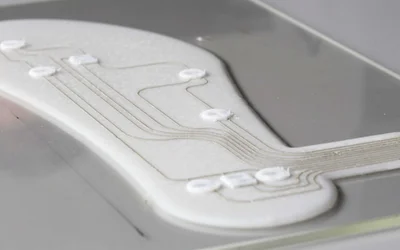
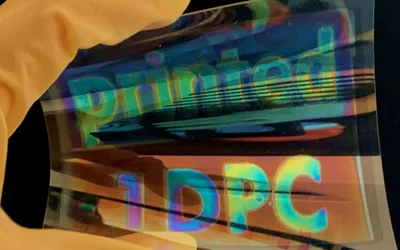
Flexible electronics have enabled the design of sensors, actuators, microfluidics and electronics on flexible, conformal and/or stretchable sublayers for wearable, implantable or ingestible applications.
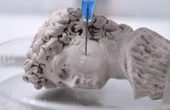
In this episode, we talk about how researchers devised a new approach for manufacturing precise microfluidic channels for medical devices using 3D printed ice and a novel approach for embedding sensors into architected materials therefore making them viable for motorized soft robotic applications.
Painting is a great way to take your PLA 3D prints to the next level. Here’s what it takes to prepare your prints for painting and a guide to different painting techniques for 3D printed parts.
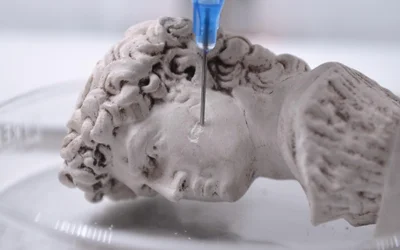
Carnegie Mellon engineering researchers develop a groundbreaking process to 3D print tiny microscale ice structures for applications in biomedical engineering, advanced manufacturing, and possibly in art.