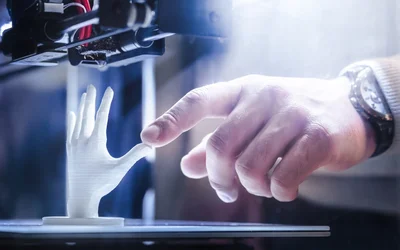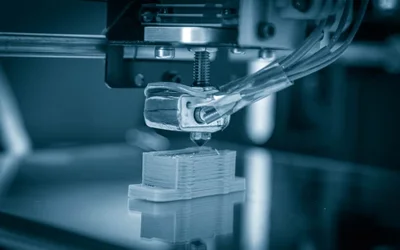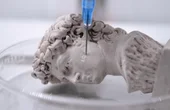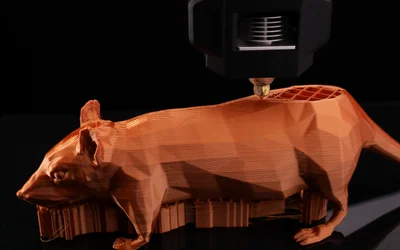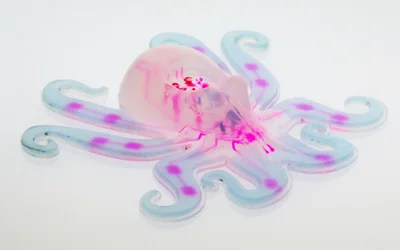
What is 3D printing? This article goes over the basics of 3D printing, otherwise known as additive manufacturing, covering its engineering principles and applications.
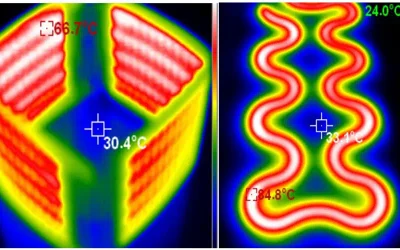
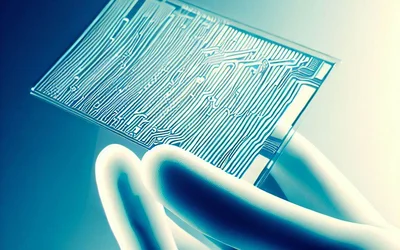
E2IP Technologies manufactures Flexible Heaters using Screen Printing Technology. This is one of the most important segments of printed and additive electronics with applications in cars, homes, and industrial settings.
Here’s what to do if you notice clicking noises, under-extrusion, or other print quality issues caused by extruder skipping on the Ender 3 by Creality.
Unwanted lines in 3D prints can show up for many reasons and take different forms. Here we look at the most common types of lines in 3D prints and how to eliminate them.
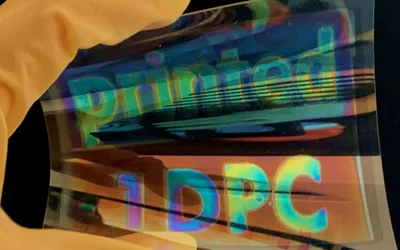
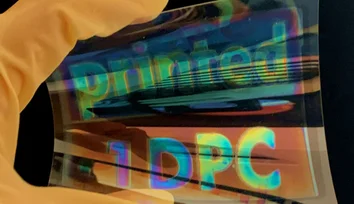
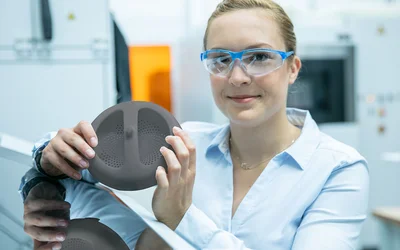
KIT researchers are developing a process with which, for the first time, mirrors with a reflection of more than 99 percent can be printed in variable sizes
Whether you’re using the classic, V2, or Pro model, the Creality Ender 3 is a reliable entry-level 3D printer. Here we take a look at the various Ender 3 nozzle sizes you can use.
"How strong are 3D printed parts?"
That’s the question most engineers ask when they consider 3D printing.
After all, it’s crucial to know what’s possible with the tools at your disposal.
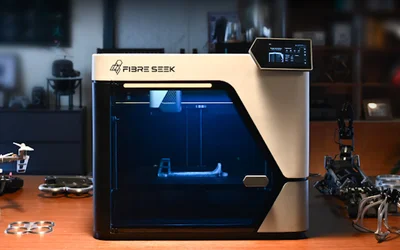
When we think of 3D Printing, perhaps the first thing that comes to mind is a plastic component that is not quite strong enough to be used for industrial applications. However, carbon fiber filament is changing the history of 3D Printing with its reliable and highly strong mechanical properties.
Conveyor belt 3D printers promise ultra-long parts and effortless batch printing. But are these hybrid FDM machines reliable enough for serious printing projects?
In this episode, we talk about how a team from TUM has developed a system composed of collaborative drones that can create structure in remote and/or disastrous areas.

One of the great plus points of 3D printing is that you can design pretty much any shape or geometry that you want, and Nylon is a great general-purpose material to use. But there are some key considerations to keep in mind when designing nylon parts to make sure you get the parts you want.

When we choose what to buy, we usually look at the expiration date, brand, quality seals, ingredients, and price. But how do you know if the manufacturer is fully honest – or that the product was properly stored during shipping or while on the shelf?
3D printing works with a wide variety of 3D printing materials, among which we can find plastics, resins, metals… and even food! In FDM printing, thermoplastics are used, a type of 3D printer material that at high temperatures becomes liquid allowing it to flow, and when it cools down enough (below its glass transition temperature) it becomes solid.
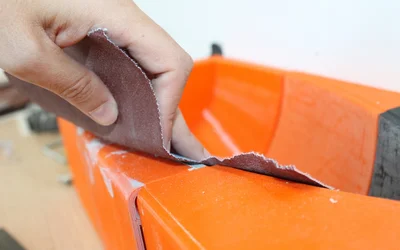
One of the biggest advantages of ABS is its ability to be smoothed with acetone, an organic solvent. But how does the smoothing process work and how can you do it safely?
KIT researchers are developing a process with which, for the first time, mirrors with a reflection of more than 99 percent can be printed in variable sizes
The Creality Ender 3 is a reliable 3D printer, but it can still suffer from issues like oozing and stringing. Adjusting your Ender 3 retraction settings can help solve these problems.