Be the first to know.
Get our Robotics Software  weekly email digest.

Robotics Software

featured
0.ul9tjo5qyklaser g97e65b8b6 1280

Ultra-precise lasers can be used for optical atomic clocks, quantum computers, power cable monitoring, and much more. But all lasers make noise, which researchers from DTU Fotonik want to minimize using machine learning.

Featured

Ultra-precise lasers can be used for optical atomic clocks, quantum computers, power cable monitoring, and much more. But all lasers make noise, which researchers from DTU Fotonik want to minimize using machine learning.

Closer to the perfect laser

ORGANIZATIONS. SHAPING THE INDUSTRY.

0.cde3ecwrv1screenshots brandmovie 14
0.1h98g0foh7enord

Nordic Semiconductor

Semiconductors

Nordic Semiconductor is a fabless semiconductor company specializing in wireless technology that powers the IoT.

181 Posts

0.x2mzlvogv9jepfl

EPFL

University

Located in Switzerland, EPFL is one of Europe’s most vibrant and cosmopolit...

56 Posts

0.xmvluk5q0xdHTCE Logo

High Tech Campus Eindhoven

High Tech

High Tech Campus Eindhoven is Europe's smartest square km and has the ultim...

49 Posts

0.ixjjkho0v19eth 1

ETH Zurich

University for science and technology

Freedom and individual responsibility, entrepreneurial spirit and open-​min...

43 Posts

0.gsbfqnphhmrobotics social blue

University of Michigan

Higher Education

Work together. Create smart machines. Serve society. University of Michiga...

40 Posts

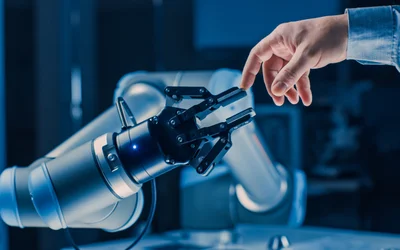
The ETH spin-off Flink Robotics wants to revolutionize the handling of packages. Its founders Moritz Geilinger and Simon Huber have developed software that allows robots to work together and quickly take on new tasks.

Readying robots for new tasks

Latest Posts

Ultra-precise lasers can be used for optical atomic clocks, quantum computers, power cable monitoring, and much more. But all lasers make noise, which researchers from DTU Fotonik want to minimize using machine learning.

Closer to the perfect laser

In this episode, we talk about how a breakthrough with compact laser nano-printers can make them more accessible for researchers and how leveraging 3D printing technology and machine learning will provide essential insight for developing next-gen cochlear implants.

Podcast: 3D Printed Cochlear Implants

In this article, we take a look at two tinyML projects that have the potential to make contributions towards sustainable development goals. While the first project is about revolutionising precision farming, the second one aims to create a network of low-cost sensors for mapping carbon emissions.

TinyML unlocks new possibilities for sustainable development technologies