Featured
At the end of the day, it’s all about the business

At the end of the day, it’s all about the business
At the end of the day, it’s all about the business
DECT NR+ (NR+) is a wireless connectivity standard and the world's first operator-free 5G technology specifically engineered from the ground up to address the previously unmet needs of the industrial IoT.
The method could help communities visualize and prepare for approaching storms.
What a programmable automation controller is, how PACs are built and programmed, and how to choose between a PLC and a PAC.
15 minutes read.
13 minutes read.
17 minutes read.
16 minutes read.
14 minutes read.

Semiconductors
Nordic Semiconductor is a fabless semiconductor company specializing in wireless technology that powers the IoT.
181 Posts

High Tech
High Tech Campus Eindhoven is Europe's smartest square km and has the ultim...
49 Posts

University for science and technology
Freedom and individual responsibility, entrepreneurial spirit and open-min...
43 Posts

Higher Education
Work together. Create smart machines. Serve society. University of Michiga...
40 Posts
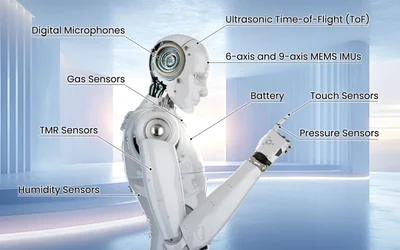
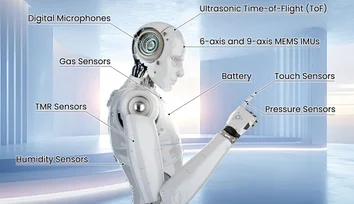
How Embedded Systems, AI, and Human-Centered Design Are Driving the Future of Robotics
Learn why teams still lose half their development time to test and fix, and what changes when you get real visibility into the target.
From simple sensor control to connected, intelligent devices, embedded systems often outgrow a single MCU. Pairing an MCU with Linux adds power and flexibility, but also introduces communication challenges, dual development workflows, and increasing software complexity.
This article explores how automated CI/CD pipelines replace fragile manual build processes with reproducible, auditable workflows that improve compliance, reduce defects, and accelerate development in regulated embedded systems
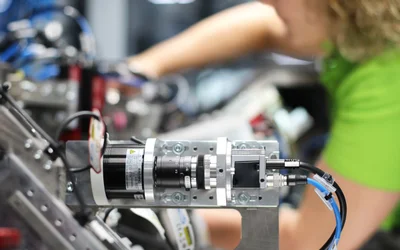
Mario Mauerer, maxon's Global Business Development Manager, Robotics, discusses what it takes for robotic deployments to be successful in complex real-world environments.
Join Prof. Fei Chen as he explores advanced bimanual manipulation and teleoperation techniques shaping the future of intelligent human-like robots in this expert-led robotics session.
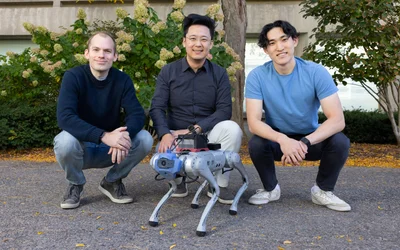
'Link-bots' can move, explore, cooperate without sensing or computation
This article is part 4 of a 4-part article series on TDK's advanced robotics.
At the end of the day, it’s all about the business

3 minutes read
DECT NR+ (NR+) is a wireless connectivity standard and the world's first operator-free 5G technology specifically engineered from the ground up to address the previously unmet needs of the industrial IoT.

3 minutes read
The method could help communities visualize and prepare for approaching storms.
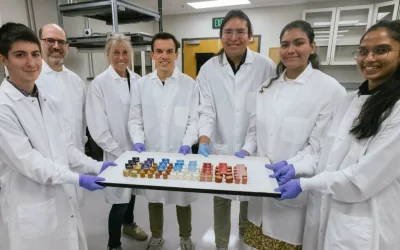
Stanford engineers are testing foods using an approach that combines a three-dimensional mechanical technique and AI to mimic our sensory experience.

4 minutes read
Artificial intelligence (AI) is rapidly transforming healthcare by leveraging machine learning techniques to analyze medical images, patient data, and genetic information with unprecedented speed and accuracy, significantly improving early disease detection and enhancing diagnostic precision.
Optical sensors are the “eyes” of industrial systems, relying on robust peripherals for reliable image processing. As sensors grow more powerful, challenges like data management, mechanical stress, and thermal issues in compact designs demand innovative solutions.
The Internet of Things (IoT) is revolutionizing industries through connectivity and automation, but underestimated battery life costs can significantly inflate the total cost of ownership (TCO) over time.

4 minutes read
Efficient antenna technology is critical for IoT, smart metering, and industrial connectivity. This article explores how omnidirectional antennas are now in demand to simplify designs and enhance performance.
Large language models (LLMs) are increasingly automating tasks like translation, text classification and customer service. But tapping into an LLM’s power typically requires users to send their requests to a centralized server — a process that’s expensive, energy-intensive and often slow.

4 minutes read
Fine-tuning large language models adapts pre-trained models to specific tasks or domains using tailored datasets, while Retrieval-Augmented Generation (RAG) combines retrieval systems with generative models to dynamically incorporate external, up-to-date knowledge into outputs.
Many IoT devices are battery-powered and one of the most important operating parameters is how long those batteries last in normal service. Maximizing battery life improves the user experience, lowers maintenance costs, and reduces wastage.
4 minutes read
A team of MIT CSAIL researchers have developed a novel approach to robot training that could significantly accelerate the deployment of adaptable, intelligent machines in real-world environments.
The Internet of Things (IoT) is revolutionizing how businesses operate, connecting billions of devices for smarter, faster decisions. However, scaling IoT solutions demands more than plugging devices into a network; it requires mastering IoT connectivity architectures. Let’s unleash its potential.
Smarter use of processor speeds saves energy without compromising training speed and performance.

3 minutes read
In this episode, we explore how AI co-pilots are equipping doctors with powerful tools to enhance decision-making and patient care and discuss how it could impact you - a potential patient - in the not distant future.

17 minutes read