This article explores TPU vs GPU differences in architecture, performance, energy efficiency, cost, and practical implementation, helping engineers and designers choose the right accelerator for AI workloads today!
The landscape of IoT development is evolving rapidly, and staying ahead requires more than just technical know-how, it demands a strategic shift in how we approach building connected devices.
Discover how no-code/low-code platforms are transforming embedded development by enabling rapid prototyping and deployment with minimal coding. Explore tools like LabVIEW, Node-RED, and XOD that simplify IoT, automation, and industrial system design.

Teams that are looking at alternative programming languages have two options today: Ada and Rust. Both languages raise the bar in terms of safety and security
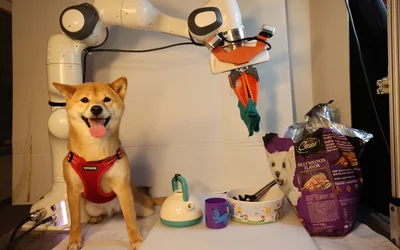
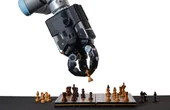
Join Prof. Fei Chen as he explores advanced bimanual manipulation and teleoperation techniques shaping the future of intelligent human-like robots in this expert-led robotics session.
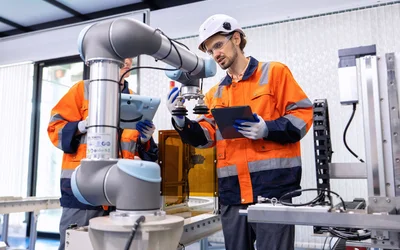
The ETH spin-off Flink Robotics wants to revolutionize the handling of packages. Its founders Moritz Geilinger and Simon Huber have developed software that allows robots to work together and quickly take on new tasks.
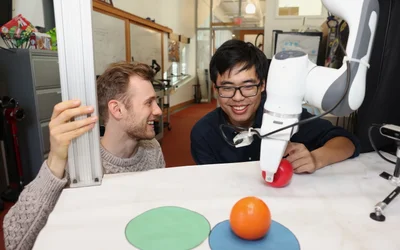
Someday, you may want your home robot to carry a load of dirty clothes downstairs and deposit them in the washing machine in the far-left corner of the basement. The robot will need to combine your instructions with its visual observations to determine the steps it should take to complete this task.
Visualizing the energy consumption profile of your embedded IoT device marks the initial step toward achieving low-power design and extended battery life. The subsequent step is analysis, where you can make a significant impact on your energy optimization efforts.
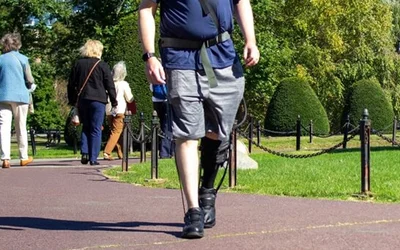
Scientists from ITMO have come up with a three-step algorithm for the development of manipulators and walking or wearable robots. Compared to the usual methods, the new approach results in lighter, more efficient, affordable, and compact mechanisms.
Yiannis Kantaros will enable teams of robots to interact collaboratively, perceive and respond to their environment with a CAREER Award from the National Science Foundation
Standard data communication protocols like BACnet & Modbus have revolutionized and simplified industrial automation, helping devices to efficiently exchange data. Choosing the best one requires - understanding their key differences, challenges, and advancements, as we discuss in this article.
To strengthen the case for noninvasive BCIs, Carnegie Mellon researchers have demonstrated that through precision neuromodulation using focused ultrasound, the performance of a BCI could be improved for communication.
In this episode, we discuss how MIT researchers are making great strides in developing better robotic hands by focusing on an often overlooked component: the palm.
A new study that integrates machine learning, optimization, 3D printing and stress experiments allowed engineers to gain insight into these natural wonders by developing a material that replicates the functionalities of human bone for orthopedic femur restoration.
The future of data, Edge Data Center, is equivalent to a mini data centre. Its proximity to enterprises eliminates latency and other limitations, giving access to real-time data. In this article, we will delve into its core concepts, advancements, operational challenges, and real-time applications.
The increasing importance of environmental monitoring and disaster response in the face of climate change and natural disasters has been significantly enhanced by the revolutionary impact of cutting-edge technologies like the Internet of Things (IoT).