Featured
Using this model, researchers may be able to identify antibody drugs that can target a variety of infectious diseases.

Using this model, researchers may be able to identify antibody drugs that can target a variety of infectious diseases.
Using this model, researchers may be able to identify antibody drugs that can target a variety of infectious diseases.
The nRF54L series from Nordic Semiconductor provides a versatile, ultra-low-power SoC toolkit for IoT developers, enabling enhanced battery life, seamless connectivity, and faster prototyping, positioning it as the foundation for next-generation IoT development.
GPUs excel in parallel processing for graphics and AI training with scalability, while NPUs focus on low-latency AI inference on edge devices, enhancing privacy by processing data locally. Together, they complement each other in addressing different stages of AI workloads efficiently.
What a programmable automation controller is, how PACs are built and programmed, and how to choose between a PLC and a PAC.
15 minutes read.
13 minutes read.
17 minutes read.
16 minutes read.
14 minutes read.

Semiconductors
Nordic Semiconductor is a fabless semiconductor company specializing in wireless technology that powers the IoT.
181 Posts

High Tech
High Tech Campus Eindhoven is Europe's smartest square km and has the ultim...
49 Posts

University for science and technology
Freedom and individual responsibility, entrepreneurial spirit and open-min...
43 Posts

Higher Education
Work together. Create smart machines. Serve society. University of Michiga...
40 Posts
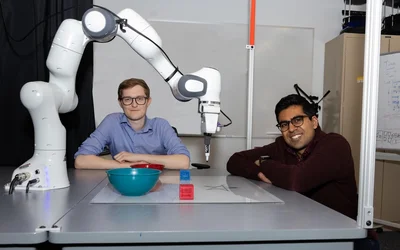
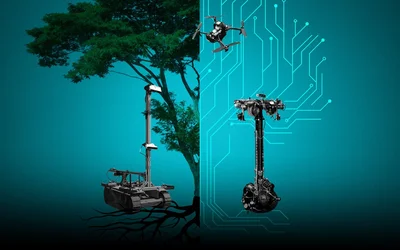
How Embedded Systems, AI, and Human-Centered Design Are Driving the Future of Robotics
Learn why teams still lose half their development time to test and fix, and what changes when you get real visibility into the target.
From simple sensor control to connected, intelligent devices, embedded systems often outgrow a single MCU. Pairing an MCU with Linux adds power and flexibility, but also introduces communication challenges, dual development workflows, and increasing software complexity.
This article explores how automated CI/CD pipelines replace fragile manual build processes with reproducible, auditable workflows that improve compliance, reduce defects, and accelerate development in regulated embedded systems
Mario Mauerer, maxon's Global Business Development Manager, Robotics, discusses what it takes for robotic deployments to be successful in complex real-world environments.
Join Prof. Fei Chen as he explores advanced bimanual manipulation and teleoperation techniques shaping the future of intelligent human-like robots in this expert-led robotics session.
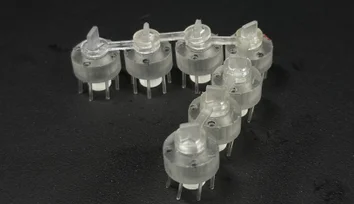
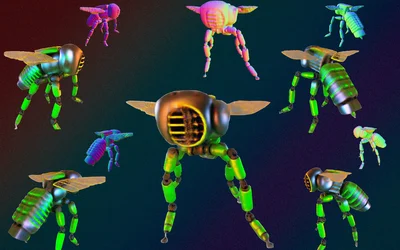
'Link-bots' can move, explore, cooperate without sensing or computation
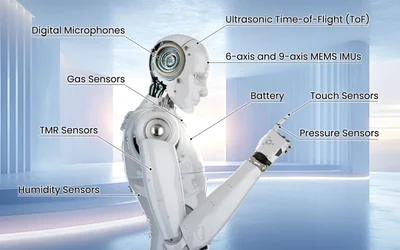
This article is part 4 of a 4-part article series on TDK's advanced robotics.
Using this model, researchers may be able to identify antibody drugs that can target a variety of infectious diseases.
The nRF54L series from Nordic Semiconductor provides a versatile, ultra-low-power SoC toolkit for IoT developers, enabling enhanced battery life, seamless connectivity, and faster prototyping, positioning it as the foundation for next-generation IoT development.
GPUs excel in parallel processing for graphics and AI training with scalability, while NPUs focus on low-latency AI inference on edge devices, enhancing privacy by processing data locally. Together, they complement each other in addressing different stages of AI workloads efficiently.
A new technique identifies and removes the training examples that contribute most to a machine-learning model’s failures.
The “PRoC3S” method helps an LLM create a viable action plan by testing each step in a simulation. This strategy could eventually aid in-home robots to complete more ambiguous chore requests.
Researchers at Stanford Engineering have developed an AI-trained model to accurately recreate the hand movements of elite-level pianists and the physical stresses they endure while playing.

4 minutes read
According to , the global AI robotics market will reach $17 billion in 2024 and will keep growing by 24% annually. Today, robots deliver packages, conduct geological surveys, and entertain visitors of parks and exhibitions – however, that’s not the limit of their abilities.

5 minutes read
Brain–machine interfaces (BMIs) have enabled a handful of test participants who are unable to move or speak to communicate simply by thinking.

4 minutes read
A team of Caltech researchers has developed an analogous algorithm for autonomous robots—a planning and decision-making control system that helps freely moving robots determine the best movements to make as they navigate the real world.
4 minutes read
AI in the IoT also needs to be performed as close to the sensors as possible, all the way to the edge, on increasingly capable devices in terms of compute power.

4 minutes read
In this episode, we discuss how on board diagnostic (OBD) ports came to be in modern cars and how they are being leveraged today for bring internet of things (IoT) to the automotive realm.

15 minutes read
Creating realistic 3D models for applications like virtual reality, filmmaking, and engineering design can be a cumbersome process requiring lots of manual trial and error.
This new device uses light to perform the key operations of a deep neural network on a chip, opening the door to high-speed processors that can learn in real-time.
EPFL research investigating the potential impact on education of AI assistants has found that systems like GPT-4 can answer up to 85% of university assessment questions correctly.

4 minutes read
Columbia Engineering computer scientists introduce a novel system that mimics human tactile sensing capabilities in robots.

3 minutes read