What is 3D printer filament made of? This guide examines polymers, additives, and composites, offering practical tips for digital design and hardware engineers.
Discover how to print with high-performance filaments like PEEK, PEKK, and ULTEM. Learn about their properties, hardware needs, challenges, and best practices for industrial-grade 3D printing.
Explore how 3D-Fuel's Pro PCTG filament advances additive manufacturing, offering higher impact strength, improved environmental resistance, and reliable printability for functional and industrial 3D printing applications.
3devo's next-generation desktop extruder combines industrial precision with lab-scale simplicity enabling more controlled, higher-performance and data-driven 3D printing material workflows.
Lightweighting materials play a crucial role in offering the potential for improved fuel efficiency, enhanced performance, and reduced emissions in the automotive industry. It is anticipated that the lighter and more efficient automotive materials and components will revolutionize the industry in the coming years.
Soft lithography creates three-dimensional patterns and structures at the microscale and nanoscale levels. Unlike photolithography, a fabrication technique used by the semiconductor industry, soft lithography produces microfluidic devices, microarrays, and microelectromechanical systems (MEMS).
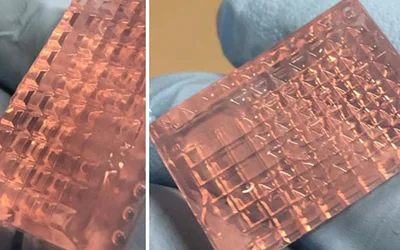
The legacy of microscale robotics at Cornell continues to unfold – and refold and unfold itself again. The latest addition is a robot less than 1 millimeter in size that is printed as a 2D hexagonal “metasheet” but, with a jolt of electricity, morphs into preprogrammed 3D shapes and crawls.
Soft polymers with the combined properties of electrolytes and traditional polymers offer some unique and desirable properties that can be drastically changed on demand.
The ASA glass transition temperature is around 100°C. This makes it slightly easier to print than ABS, while it is also better for outdoor applications due to its good UV resistance.
Using a combination of machine learning and powerful X-rays, Cornell researchers have solved a mystery behind the unusual behavior seen in a class of materials with potential for thermoelectric energy conversion and other applications.
Henkel Adhesive Technologies holds leading market positions worldwide in the industrial and consumer business. As a global leader in the adhesives, sealants, and functional coatings markets, Henkel has developed a large material portfolio of LOCTITE® conductive inks ...
EPFL scientists have developed an AI-based technique to improve chemical analysis of nanomaterials, overcoming challenges of noisy data and mixed signals.
Composite metal foam could make aircraft wings or armor simultaneously stronger and lighter. An advanced material, the properties of composite metal foam (CMF) indeed make it attractive for a wide range of applications.
Electronic waste is a rapidly growing problem, but this degradable material could allow the recycling of parts from many single-use and wearable devices.
Automation concepts cover a range of increasingly complex machine initiatives that enhance all areas of 21st century life, and are especially useful for streamlining commercial and production processes.