The world is aging; according to the World Health Organization (WHO), between 2015 and 2050, the proportion of the population over 60 will double from 12 percent to 22 percent.
Wearable wildlife tracking solutions using cellular IoT, and Bluetooth LE can revolutionize environmental research and contribute significantly to the preservation of ecosystems and biodiversity.
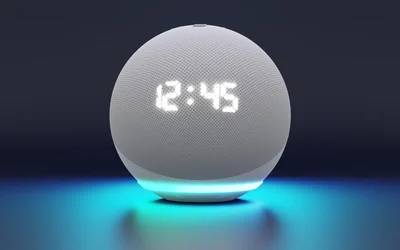
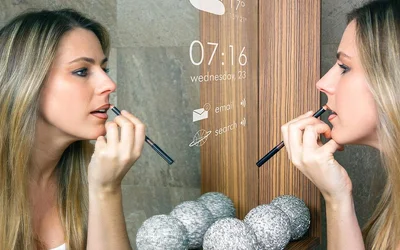
The smart home network continues to expand. Homeowners are now using wireless technology to operate the lights, window shades and HVAC, as well as entertain, manage energy consumption and make sure the house is secure. And this is just the start.
Barcodes play a key role across industries for tasks like inventory management, asset tracking, and quality control, where traceability is required. OMRONs VHV5-F enables accurate barcode reading on every surface, from curved metals to glossy packaging, even in the harshest environments.
Understanding the signal names, numbering schemes, electrical limits and software control of the Raspberry Pi 5 general purpose input/output (GPIO) header empowers hardware and digital design engineers to build robust embedded solutions.
The world is aging; according to the World Health Organization (WHO), between 2015 and 2050, the proportion of the population over 60 will double from 12 percent to 22 percent.
Wearable wildlife tracking solutions using cellular IoT, and Bluetooth LE can revolutionize environmental research and contribute significantly to the preservation of ecosystems and biodiversity.
The smart home network continues to expand. Homeowners are now using wireless technology to operate the lights, window shades and HVAC, as well as entertain, manage energy consumption and make sure the house is secure. And this is just the start.
To determine whether solar energy harvesting is better than battery power for your IoT solution, it is important to evaluate its economics. There are three best practices to find the right economics and IoT solar panel for your device.
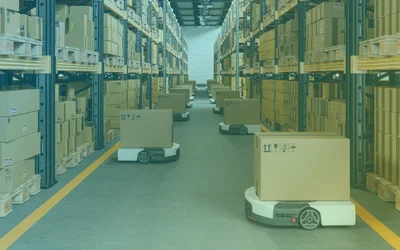
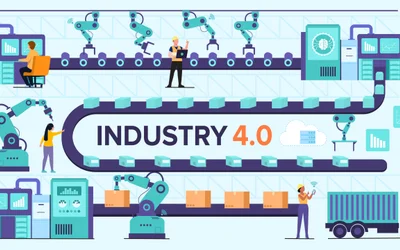
Article #3 of Transforming Industrial Manufacturing with Industry 4.0 Series: Manufacturing has an adoption rate of 85% for IoT, the highest among businesses. Driving the move toward smart factories, some challenges must be overcome to reap the benefits of this disruptive shift.
Regarding the terahertz waves used in Beyond 5G/6G, the Federal Communications Commission, which manages communication radio waves in the US, has opened up a wide band from 95GHz to 3THz for research and experimental use. However, it is presumed that space development and other special applications are being considered as with the 94-GHz-milliwave frequency.
Cellular Vehicle-to-Everything (C-V2X) technology is transforming the transportation industry by enabling advanced communication between vehicles, infrastructure, and other road users. This breakthrough technology has the potential to improve road safety, reduce traffic congestion, and support the development of autonomous vehicles.
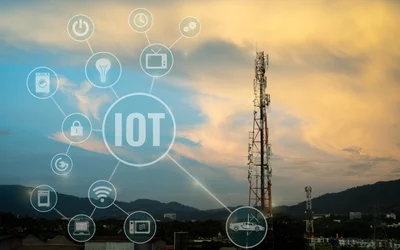
For over a decade, the Internet of Things (IoT) has been disrupting business operations in different sectors of the economy. It enables enterprises to deploy pervasive applications that leverage information from the physical world to drive automation and data-driven intelligence.
In today's interconnected world, network topologies play a crucial role in determining the efficiency and reliability of communication between devices. One such network topology is the bus topology, known for its simplicity and cost-effectiveness. In this comprehensive guide, we will delve deeper into bus topology, exploring its advantages, disadvantages, applications, and the future of this network design.

Proper monitoring and maintenance are essential to extend the structural lifetime of cultural heritage. In this article, we look at how IoT brings a modern-day solution to conserve tangible heritage.

Introducing the Transforming Industrial Manufacturing with Industry 4.0 Series: Explore the transformative power of Industry 4.0 as it makes real changes in manufacturing and automation.