In this episode, we talk about how a group of researchers were inspired by the adaptive immune system found in humans to fortify vulnerable neural networks and a joint effort between universities to create electric skin with unmatched performance.


This article explains what is a PLC, what's inside it, how the scan cycle works, which programming languages the current IEC standard defines, and how to choose the right controller for your application.
Researchers at ETH Zurich have, for the first time, created certifiably perfect random numbers using a quantum experiment. These can be used, for instance, for encrypting messages.
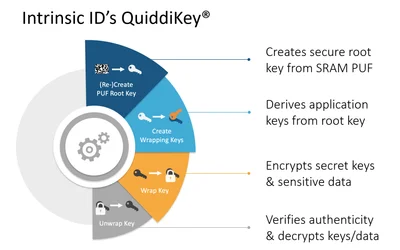
A critical flaw in random number generators puts the security of billions of low-cost IoT devices at risk. This means a new approach for generating random numbers is needed, which can be found in extracting entropy from SRAM behaviour.
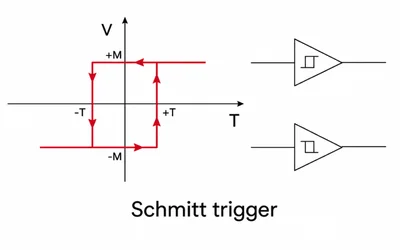
A Schmitt trigger is a circuit that converts slow or noisy inputs into clean digital signals using two switching thresholds. This guide explains hysteresis, op-amp and transistor designs, equations, real 74HC14, CD40106B, and 555 timer examples, and common design mistakes.
In this episode, Oscar Lovera, COO International at Xometry, explains how AI and digital marketplaces are simplifying custom manufacturing, making it as easy as booking travel online while connecting engineers with manufacturers worldwide.
In this episode, we talk about how a group of researchers were inspired by the adaptive immune system found in humans to fortify vulnerable neural networks and a joint effort between universities to create electric skin with unmatched performance.

Rutgers researchers have published the first work examining how hackers could use popular virtual reality headsets to steal sensitive information communicated via voice-command, including credit card data and passwords.
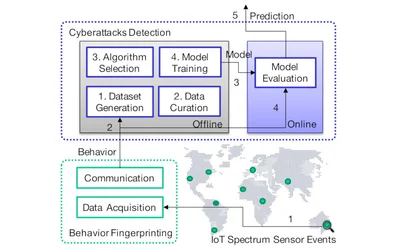
The CyberSpec framework is designed to detect anomalous behavior linked to cyber-attacks against crowd-sensing spectrum sensors, even when said sensors are running on lightweight resource-constrained hardware like a Raspberry Pi.
Article #5 of the IoT Foundation Series. Internet-connected security devices provide a fast and easy way to create a home security system. But are they also creating opportunities for security weakness?
LaserShark: KIT researchers investigate hidden communication via optical channels - data can be transmitted to light-emitting diodes already built into devices
A critical flaw in random number generators puts the security of billions of low-cost IoT devices at risk. This means a new approach for generating random numbers is needed, which can be found in extracting entropy from SRAM behaviour.
The future seems rosy for smart manufacturing, but there is a downside. Cybercrime is on the rise, and though it might not seem as though industry presents a particularly valuable target, hackers think otherwise.

In this episode, we talk about NASA’s new packable solar sail for deep space travel, how to prevent cyber attacks by fixing memory vulnerabilities, and how flying robots could be the solution to our space trash problem.
With some modern vehicles having more than 100 electronic control units, along with the rise of wired and wireless communication protocols, automotive cybersecurity is now a critical concern.
To secure the billions of devices that are being connected to the Internet of Things, every device needs to have the capability to protect sensitive data and secure communications.