Featured
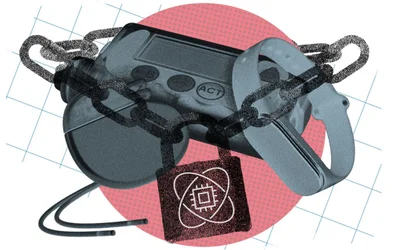
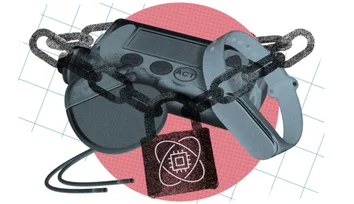
The future seems rosy for smart manufacturing, but there is a downside. Cybercrime is on the rise, and though it might not seem as though industry presents a particularly valuable target, hackers think otherwise.

The future seems rosy for smart manufacturing, but there is a downside. Cybercrime is on the rise, and though it might not seem as though industry presents a particularly valuable target, hackers think otherwise.
The future seems rosy for smart manufacturing, but there is a downside. Cybercrime is on the rise, and though it might not seem as though industry presents a particularly valuable target, hackers think otherwise.
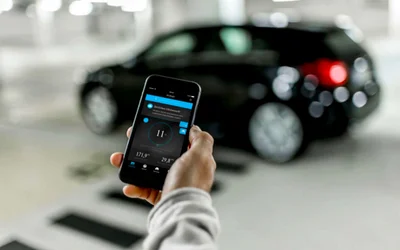
With some modern vehicles having more than 100 electronic control units, along with the rise of wired and wireless communication protocols, automotive cybersecurity is now a critical concern.
In this episode, we talk about NASA’s new packable solar sail for deep space travel, how to prevent cyber attacks by fixing memory vulnerabilities, and how flying robots could be the solution to our space trash problem.
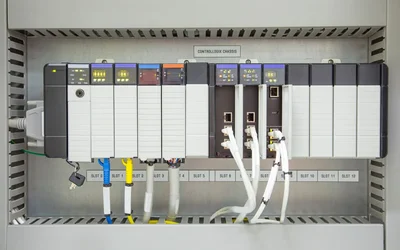
This article explains what is a PLC, what's inside it, how the scan cycle works, which programming languages the current IEC standard defines, and how to choose the right controller for your application.
17 minutes read.
17 minutes read.
28 minutes read.
13 minutes read.


Semiconductor
Securing the IoT with the World's Top PUF Technology. Authenticate Everything.
16 Posts


Embedded Security
We provide embedded software security for manufacturers, OEMs, developers a...

Aerospace & Defense, Automotive, Energy, Hi-Tech, MedTech & Healthcare, Rail, Semi-conductor & Communications
We believe engineering has the unique opportunity to solve the problems of ...
Researchers at ETH Zurich have, for the first time, created certifiably perfect random numbers using a quantum experiment. These can be used, for instance, for encrypting messages.
Ultra-efficient chip design enables extremely strong cryptography algorithms to run on energy-constrained edge devices.
Platform Integrity must be an essential design priority to ensure data protection.
A critical flaw in random number generators puts the security of billions of low-cost IoT devices at risk. This means a new approach for generating random numbers is needed, which can be found in extracting entropy from SRAM behaviour.
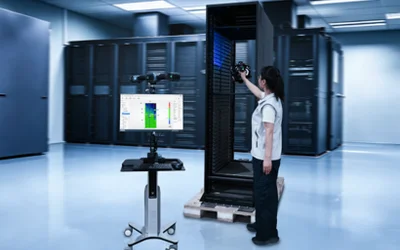
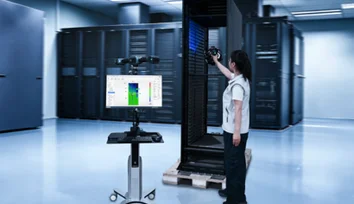
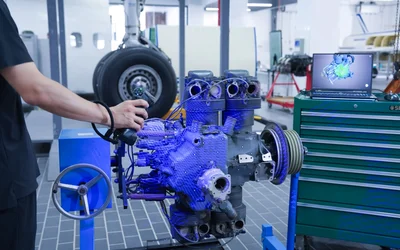
SHINING 3D launches FreeScan Trak ProW+, a wireless tracking and scanning system with ultra-large tracking range, marker-free scanning, and flexible large-scale inspection.
SHINING 3D Metrology introduces FreeScan Trak Nova+, the upgraded generation of its popular wireless dynamic tracking and scanning system. Building on the proven performance of FreeScan Trak Nova, it delivers faster scanning, enhanced efficiency, and greater productivity.
SHINING 3D proudly introduces FreeScan Combo+ Wireless, the latest evolution of our combo family. Building on the proven FreeScan Combo Series platform, it delivers greater freedom of movement, a streamlined scanning experience, and enhanced flexibility for demanding inspection workflows.
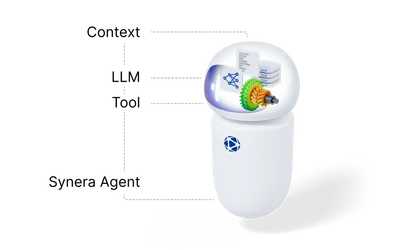
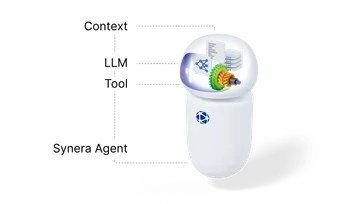
From Single Models to Scalable Agentic Systems
The future seems rosy for smart manufacturing, but there is a downside. Cybercrime is on the rise, and though it might not seem as though industry presents a particularly valuable target, hackers think otherwise.
With some modern vehicles having more than 100 electronic control units, along with the rise of wired and wireless communication protocols, automotive cybersecurity is now a critical concern.

7 minutes read
In this episode, we talk about NASA’s new packable solar sail for deep space travel, how to prevent cyber attacks by fixing memory vulnerabilities, and how flying robots could be the solution to our space trash problem.

Intrinsic ID and the Rise of Hardware-Based Security

To secure the billions of devices that are being connected to the Internet of Things, every device needs to have the capability to protect sensitive data and secure communications.
3 minutes read
How “Acronym Soup” Serves Up Big Security Advantages.
3 minutes read
What may have started as a technology to have fun with, may very well change the way we tackle data protection and identity frauds.
Secure key storage is essential for internet-of-things (IoT) devices. Most IoT devices utilize multiple application-specific keys from diverse suppliers to enable applications such as authentication, message encryption, software/firmware encryption, to name just a few.
2 minutes read
Applying multi-factor authentication to connected devices is tricky, but it can and should be done, especially on the administrative side of things.

3 minutes read
Connecting devices to a network requires many kinds of keys for protecting data at rest as well as the device’s communications. So, the implementation of the security system of an IoT device requires more than a single cryptographic key.
4 minutes read
Aerospace and government defense program users have unique needs when it comes to FPGA (field-programmable gate array) devices, both in terms of security and in terms of long-term deployments. Increasing use of unmanned systems and other autonomous assets has created new security challenges.
2 minutes read
In this podcast we talk with Pim Tuyls, CEO of Intrinsic ID, about the different criteria to consider when choosing a PUF or Physical Unclonable Function and why PUFs are preferred over other approaches to get identities or cryptographic keys into chips or devices and to build a secure key vault.
7 minutes read
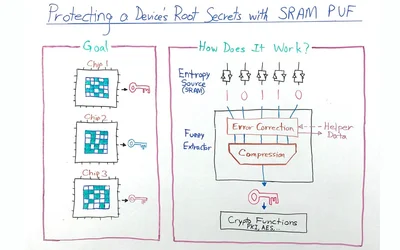
Geert-Jan Schrijen, CTO of Intrinsic ID, takes us back to basics and looks at how to protect a device’s most important secret, its cryptographic root key, with SRAM PUF technology.
2 minutes read
No need to worry, AI based cybersecurity can help you!

5 minutes read
This article discusses a technology called physical unclonable functions (PUFs) and shows how this technology can help chip vendors and device manufacturers to generate and securely store cryptographic keys that will keep their devices, data, IP, and systems safe from attackers.
11 minutes read