Featured
Are you an EE looking for a new podcast? Here's a list of MacroFab Circuit Break episodes to get you started.

Are you an EE looking for a new podcast? Here's a list of MacroFab Circuit Break episodes to get you started.
Are you an EE looking for a new podcast? Here's a list of MacroFab Circuit Break episodes to get you started.
Hackers can access sensitive data and disrupt device operations by activating embedded malware or hardware trojans in counterfeit components. How can you avoid these issues?
Silicon-level security is crucial in protecting the hardware of computing devices, serving as a foundational layer for data integrity and system reliability in our increasingly digital world.
A practical engineering guide to spine-leaf data center fabrics: how every leaf connects to every spine, why the design replaced the three-tier network, how to size oversubscription and port counts, and which routing, cabling, and optics choices follow from it.
18 minutes read.
17 minutes read.
17 minutes read.
28 minutes read.


Semiconductor
Securing the IoT with the World's Top PUF Technology. Authenticate Everything.
16 Posts


Embedded Security
We provide embedded software security for manufacturers, OEMs, developers a...

Aerospace & Defense, Automotive, Energy, Hi-Tech, MedTech & Healthcare, Rail, Semi-conductor & Communications
We believe engineering has the unique opportunity to solve the problems of ...
Researchers at ETH Zurich have, for the first time, created certifiably perfect random numbers using a quantum experiment. These can be used, for instance, for encrypting messages.
Ultra-efficient chip design enables extremely strong cryptography algorithms to run on energy-constrained edge devices.
Platform Integrity must be an essential design priority to ensure data protection.
A critical flaw in random number generators puts the security of billions of low-cost IoT devices at risk. This means a new approach for generating random numbers is needed, which can be found in extracting entropy from SRAM behaviour.
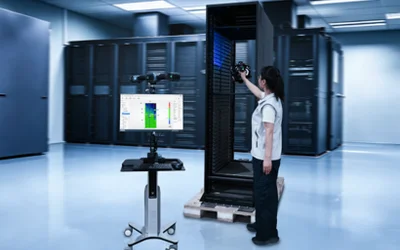
When you are manufacturing components for mining, power stations, and heavy industry, getting the dimensions right is only part of the job. The bigger question is whether a new component will actually fit where it needs to go.
For a racing team competing at the Nürburgring Nordschleife, vehicle preparation is a continuous engineering process. Components need to be checked, repairs need to be verified, and the car needs to be set up with a high level of consistency before it returns to the track.
SHINING 3D launches FreeScan Trak ProW+, a wireless tracking and scanning system with ultra-large tracking range, marker-free scanning, and flexible large-scale inspection.
SHINING 3D Metrology introduces FreeScan Trak Nova+, the upgraded generation of its popular wireless dynamic tracking and scanning system. Building on the proven performance of FreeScan Trak Nova, it delivers faster scanning, enhanced efficiency, and greater productivity.
Are you an EE looking for a new podcast? Here's a list of MacroFab Circuit Break episodes to get you started.

12 minutes read
Hackers can access sensitive data and disrupt device operations by activating embedded malware or hardware trojans in counterfeit components. How can you avoid these issues?
7 minutes read
Silicon-level security is crucial in protecting the hardware of computing devices, serving as a foundational layer for data integrity and system reliability in our increasingly digital world.
Dive into our comprehensive guide on defense in depth layers, unravelling the complexities of multi-tiered security strategies for robust protection.
Many IoT products need to be adequately secured and, as such, represent vulnerable entry points for attacks on critical infrastructure. Or the IoT device itself can be the specific target due to the data it hosts – for example, video from security cameras and patient information from medical wearables.

4 minutes read
GraphQL is a query language that provides a more efficient, powerful, and flexible alternative to RESTful APIs (GraphQL, 2023). A RESTful API is an architectural style for an application program interface (API) that employs HTTP requests to access and use data.
This article provides a detailed overview of the Modbus TCP protocol fundamentals, communication, data representation, security, daily life applications, and integration.
Exploring the design, development, connectivity, security, and more aspects of IoT devices
Learn why Secure Boot, a process for authenticating IoT device firmware, is critical for building safer connected products.

7 minutes read
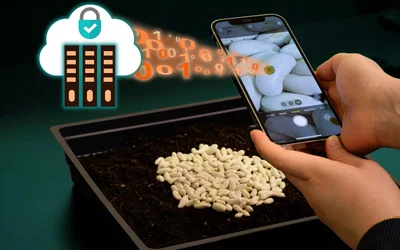
In this episode, we discuss how MIT researchers tackle the problem of counterfeit seeds by using unclonable labels made of silk nanoparticles.

Understanding the differences between Modbus RTU and Modbus TCP/IP is essential for designing reliable and scalable control systems. This indepth guide compares the serial and Ethernet variants of the Modbus protocol, explains their strengths and weaknesses, and provides practical advice for engine
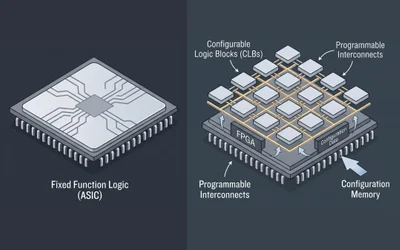
Discover what is an FPGA and how field-programmable gate arrays empower engineers to create custom digital hardware. This guide combines a beginner-friendly definition with architectural insights, process technology, and design methodologies.
With more IoT devices performing mission-critical tasks - security is essential. To achieve the potential of smart devices that implement ML and AI in their applications, we must protect the critical intellectual property that represents the majority of the solution’s value.
Alif Semiconductor’s™ microcontrollers meet the market need for low-power, AI-enabled embedded solutions with unmatched levels of multi-layered security, and a fully integrated secure element.
Researchers at DTU have set out to create novel tools to identify internet-of-things gadgets that leave the door open to hacker attacks. Knowing where these devices are and making them secure is a powerful weapon in the fight against attackers.

3 minutes read