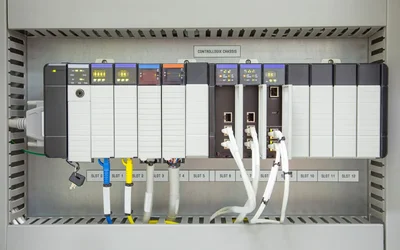
This article explains what is a PLC, what's inside it, how the scan cycle works, which programming languages the current IEC standard defines, and how to choose the right controller for your application.
Be the first to know.
Get our communication infrastructure weekly email digest.
Tagged with
Communication Infrastructure
Latest Posts

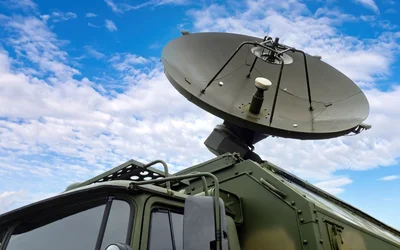
Military Satellite Communications (Mil SATCOM) is a specialised system where satellites transmit signals back and forth for long-distance, secure communication.


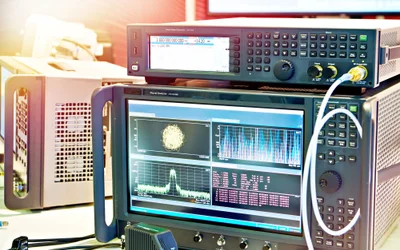
How engineers measure jitter, crosstalk, impedance, eye margin, and BER for reliable PCB designs


Learn why zero trust architecture is the new cybersecurity standard for securing users, devices, applications, and connected systems.


Learn why industrial cybersecurity and NIS2 compliance are critical for protecting connected OT systems, infrastructure, and public safety.


Learn how connected infrastructure is shaping smarter cities and what is still holding it back

4 minutes read

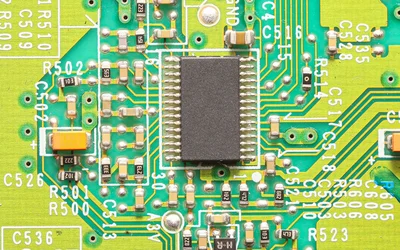
Maximizing signal integrity (SI) is fundamental for modern digital design engineers. As data rates soar and geometries shrink, ensuring that signals arrive at their destinations with correct timing and amplitude is paramount. This article discusses signal integirty essentials for designers.

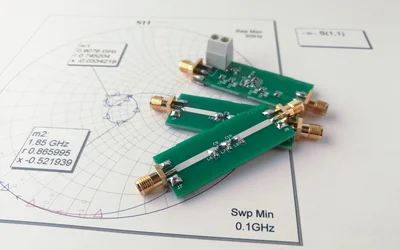
A guide covering the full radio-frequency design workflow, starting from setting specifications and choosing topologies to matching, simulation, layout, and verification, to help antenna engineers.


A technical exploration of the photodetectors, lasers, and optical transceivers enabling scalable, low-latency data transmission


Explore how Wi-Fi HaLow is scaling for IoT 2.0, why ecosystem structure matters for large deployments, and how the Design Partner Program by Morse Micro improves integration, reliability, and adoption.

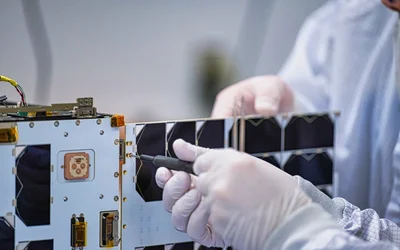
Explore how next-generation connectors enable reliable power and data transmission in satellites and spacecraft, overcoming extreme temperature, vacuum, radiation, and launch stresses.


As AI moves from screens into real environments, reliable and always-on connectivity are becoming essential for operations and achieving scale.


M2M Communication via Mobile Radio: What You Should Consider When Selecting SIM Cards and M2M Plans?
Learn how to choose the right M2M SIM cards and data plans for IoT projects, avoid roaming and cost traps, and ensure reliable, scalable mobile connectivity.


Introducing HaLowLink 2 — Wi-Fi HaLow Access Point by Morse Micro for Reliable, Long-Range, and Low-Power IoT Connectivity.

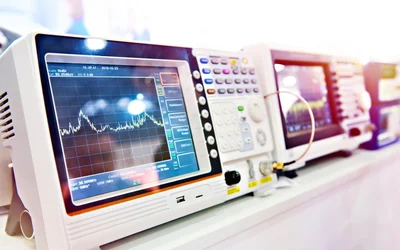
Article #7 of Mastering RF Engineering: RF testing and measurement are essential to achieving accuracy and reliability in wireless systems. They ensure that every component and signal path performs as intended across varying frequencies, environments, and applications.