Featured
Understanding the signal names, numbering schemes, electrical limits and software control of the Raspberry Pi 5 general purpose input/output (GPIO) header empowers hardware and digital design engineers to build robust embedded solutions.
Understanding the signal names, numbering schemes, electrical limits and software control of the Raspberry Pi 5 general purpose input/output (GPIO) header empowers hardware and digital design engineers to build robust embedded solutions.
Understanding the signal names, numbering schemes, electrical limits and software control of the Raspberry Pi 5 general purpose input/output (GPIO) header empowers hardware and digital design engineers to build robust embedded solutions.
Introducing HaLowLink 2 — Wi-Fi HaLow Access Point by Morse Micro for Reliable, Long-Range, and Low-Power IoT Connectivity.
Hey Tuya showcases how agentic Physical AI evolves assistants from isolated commands into systems that learn context, coordinate devices, and act reliably across real-world environments.
A practical engineering guide to spine-leaf data center fabrics: how every leaf connects to every spine, why the design replaced the three-tier network, how to size oversubscription and port counts, and which routing, cabling, and optics choices follow from it.
18 minutes read.
17 minutes read.
17 minutes read.
28 minutes read.


Semiconductor
Securing the IoT with the World's Top PUF Technology. Authenticate Everything.
16 Posts


Embedded Security
We provide embedded software security for manufacturers, OEMs, developers a...

Aerospace & Defense, Automotive, Energy, Hi-Tech, MedTech & Healthcare, Rail, Semi-conductor & Communications
We believe engineering has the unique opportunity to solve the problems of ...
Researchers at ETH Zurich have, for the first time, created certifiably perfect random numbers using a quantum experiment. These can be used, for instance, for encrypting messages.
Ultra-efficient chip design enables extremely strong cryptography algorithms to run on energy-constrained edge devices.
Platform Integrity must be an essential design priority to ensure data protection.
A critical flaw in random number generators puts the security of billions of low-cost IoT devices at risk. This means a new approach for generating random numbers is needed, which can be found in extracting entropy from SRAM behaviour.
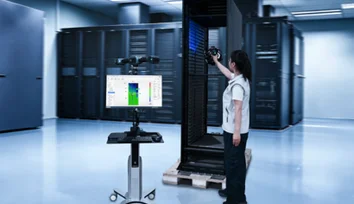
When you are manufacturing components for mining, power stations, and heavy industry, getting the dimensions right is only part of the job. The bigger question is whether a new component will actually fit where it needs to go.
For a racing team competing at the Nürburgring Nordschleife, vehicle preparation is a continuous engineering process. Components need to be checked, repairs need to be verified, and the car needs to be set up with a high level of consistency before it returns to the track.
SHINING 3D launches FreeScan Trak ProW+, a wireless tracking and scanning system with ultra-large tracking range, marker-free scanning, and flexible large-scale inspection.
SHINING 3D Metrology introduces FreeScan Trak Nova+, the upgraded generation of its popular wireless dynamic tracking and scanning system. Building on the proven performance of FreeScan Trak Nova, it delivers faster scanning, enhanced efficiency, and greater productivity.
Understanding the signal names, numbering schemes, electrical limits and software control of the Raspberry Pi 5 general purpose input/output (GPIO) header empowers hardware and digital design engineers to build robust embedded solutions.
Introducing HaLowLink 2 — Wi-Fi HaLow Access Point by Morse Micro for Reliable, Long-Range, and Low-Power IoT Connectivity.
Hey Tuya showcases how agentic Physical AI evolves assistants from isolated commands into systems that learn context, coordinate devices, and act reliably across real-world environments.
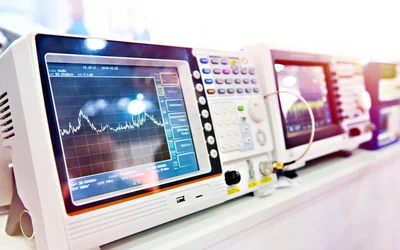
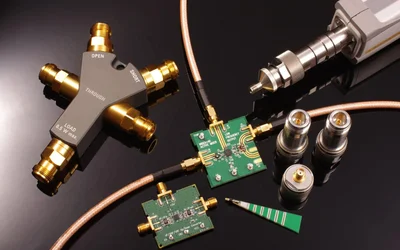
Article #7 of Mastering RF Engineering: RF testing and measurement are essential to achieving accuracy and reliability in wireless systems. They ensure that every component and signal path performs as intended across varying frequencies, environments, and applications.
Article #6 of Mastering RF Engineering: RF technology powers everything from Wi-Fi and Bluetooth to radar, sensing, geolocation, and directed energy systems. This article explores the most essential RF applications, how they work, and their growing impact on modern technology and infrastructure.
Article #4 of Mastering RF Engineering: High-frequency performance in RF systems depends on more than just components, it begins with the circuit itself. Advances in materials, fabrication, and interconnect design are redefining how modern RF systems achieve unmatched performance and reliability.
Article #5 of Mastering RF Engineering: Digital RF technology merges signal processing with high-frequency design, using DSP, ADCs, and DACs to enable advanced capabilities like beamforming, MIMO, and software-defined flexibility in compact modern systems.
NR+ is the first non-cellular 5G standard enabling massive IoT with low latency, long range, and operator-free private networks — powered by Nordic and Wirepas for scalable, resilient deployments.
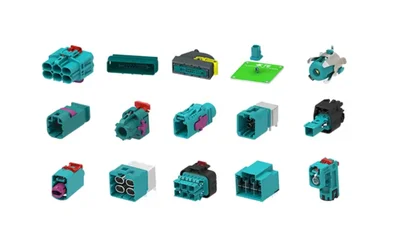
Building the Data Backbone of Vehicles with GEMnet Solutions by TE Connectivity — combining Multi-Gigabit Bandwidth, Robust EMI Shielding, and Automotive-Grade Durability
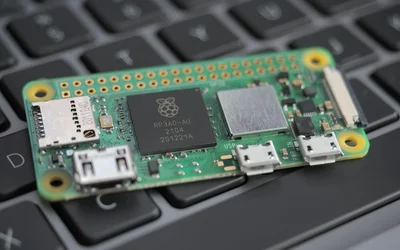
The Raspberry Pi Zero 2W features a quadcore 64 bit processor and builtin wireless in a tiny footprint. Its 40 pin header provides engineers with a flexible interface for embedded applications. This guide explores the theory behind the pinout and offers practical guidance for learners.
Article #2 of Mastering RF Engineering: RF signal chains are key to wireless systems. Learn how components like amplifiers, filters, and mixers help plan RF designs, balance performance needs, and decide between custom-built or pre-made modules.
Article #1 of Mastering RF Engineering: RF technology powers everything from wireless communication to radar and circuit design. It involves spectrum behavior, key components, interconnects, and system design that together define how modern wireless and high-frequency systems operate and evolve.
A comprehensive guide to half adder circuits for engineers and technical learners. Learn the theory behind half adders, explore truth tables, logic expressions, K maps, implementations with Logic gates, TTL/CMOS ICs, Verilog modelling, propagation delays, design strategies, and applications.
Texas A&M researchers have developed a new cyber defense system to improve the safety of critical infrastructure.

2 minutes read
Researchers from NC State University have identified the first hardware vulnerability that allows attackers to compromise the data privacy of artificial intelligence (AI) users by exploiting the physical hardware on which AI is run.

5 minutes read