
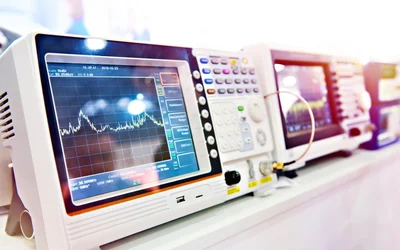
The Silicon Photomultiplier (SiPM) is transforming optical sensing and LiDAR technology by providing high photon detection efficiency, low noise, and fast response times, enabling greater accuracy and resolution in applications such as autonomous navigation, environmental mapping, and 3D imaging.
Designing efficient data center cooling systems requires a deep understanding of thermodynamics, energy metrics, airflow management, and emerging liquid cooling technologies. This article explains these concepts and provides practical guidance on implementing sustainable cooling solutions
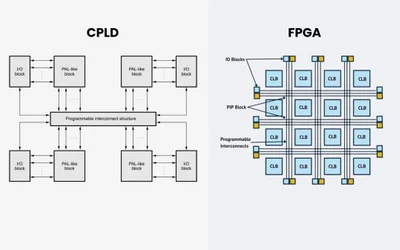
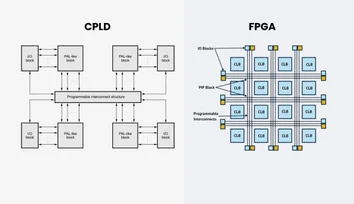
This article presents a comprehensive technical analysis of CPLD vs FPGA, focusing on their architectural distinctions, performance metrics, design flows, and implementation methodologies.
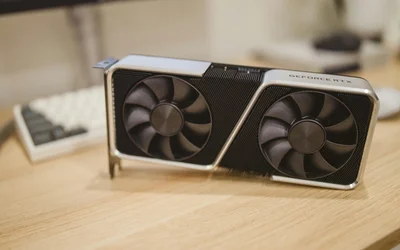
CUDA Cores and Tensor Cores are specialized units within NVIDIA GPUs; the former are designed for a wide range of general GPU tasks, while the latter are specifically optimized to accelerate AI and deep learning through efficient matrix operations.
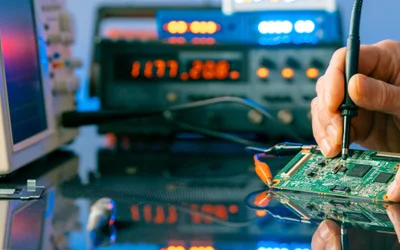
Discover the critical role of in-circuit testing in modern engineering, exploring its foundational principles, technological advancements, and real-world applications.

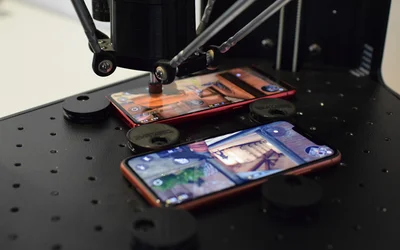
Measured in milliseconds, the response time to a tap on a smartphone’s screen might not be a “show stopping” issue, but a delay between an action and its reaction in the mobile gaming industry can make an important difference.
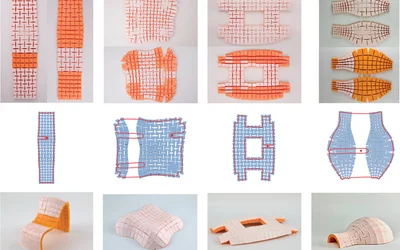
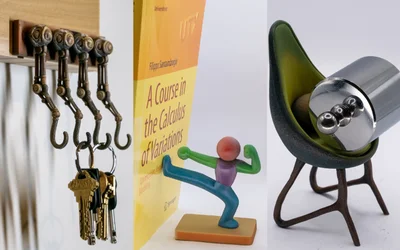
To help generative AI models create durable, real-world accessories and decor, the PhysiOpt system runs physics simulations and makes subtle tweaks to its 3D blueprints.
Fabricated as a single chip, the new implant is orders of magnitude faster and smaller than today's state-of-the-art brain-computer interfaces, offering an opportunity for more efficacious treatment of a number of neurological conditions.
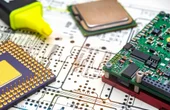
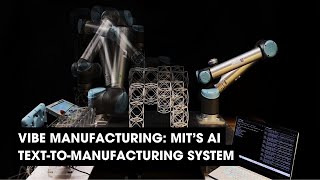
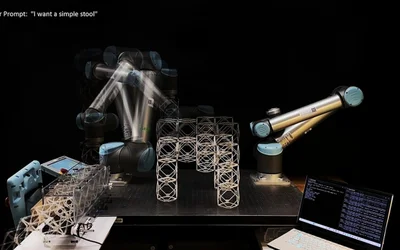
In this episode, we explore MIT's new system that turns spoken ideas into physical assemblies by linking speech-to-text, text-to-CAD, CAD-to-assembly, and robotic fabrication - pointing to a future where making hardware could be as easy as prompting an AI with your voice.
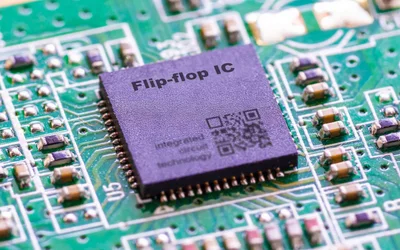
The Silicon Photomultiplier (SiPM) is transforming optical sensing and LiDAR technology by providing high photon detection efficiency, low noise, and fast response times, enabling greater accuracy and resolution in applications such as autonomous navigation, environmental mapping, and 3D imaging.
What’s particularly exciting is not just that Gen AI can write code – it’s that it’s beginning to understand context, reduce time spent on boilerplate, and support developers where they work best: in the flow of creation.
“InteRecon” enables users to capture items in a mobile app and reconstruct their interactive features in mixed reality. The tool could assist in education, medical environments, museums, and more.
Join Altair's global virtual event on May 15, 2025, and discover how to design faster, smarter, and more sustainably.
Keynotes, live demos, expert insights - all in one day.
Altair’s Future.Industry 2025, a premier global virtual event, united professionals, innovators, and technology enthusiasts to explore the convergence of advanced technologies and sustainability.
Scientists at EPFL and IBM Research have developed a compact optical amplifier based on a photonic chip that vastly outperforms traditional optical amplifiers in both bandwidth and efficiency. This breakthrough could reshape data center interconnects, AI accelerators, and high-performance computing.
Imagine a world where devices respond instantly to your voice commands without relying on cloud processing—that's now possible with keyword spotting. Read more to discover how it is revolutionizing voice-enabled technology.