This guide offers engineers an in-depth understanding of H Bridge motor control, explaining its basics, topologies, switching strategies, design, optimization, and practical considerations for next-generation engineering projects.
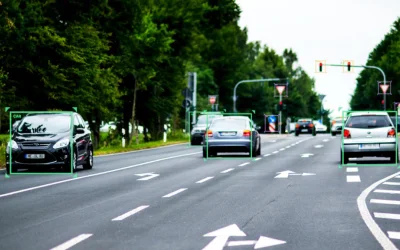
Discover how radar sensors enhance building safety, traffic control, and asset management with reliable vehicle detection solutions for docks, parking, drive-thrus, and toll applications.
Modular high-voltage PDU architectures enable scalable power
distribution using standardized components. This approach
reduces tooling requirements, supports platform reuse, improves
serviceability, and accelerates integration in EV systems.
This guide offers engineers an in-depth understanding of H Bridge motor control, explaining its basics, topologies, switching strategies, design, optimization, and practical considerations for next-generation engineering projects.
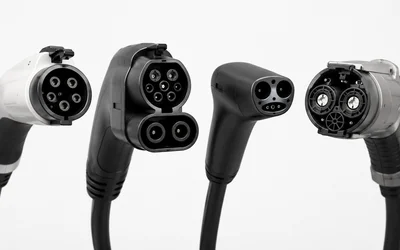
Electric vehicles face significant barriers to their adoption. Harwin delivers connectors to help designers create the next phase of charging infrastructure.
The automotive industry undergoes a profound transformation through the IoT's power. Vehicle connectivity and autonomous driving redefine transportation, offering innovative opportunities. Embracing IoT's potential, our daily lives are poised for a significant shift in the automotive sector.
In this episode, we delve into a game-changing approach developed by the University of Michigan, where 'simulated terrible drivers' in a mixed reality environment are used to drastically cut the time and cost of Autonomous Vehicle (AV) safety testing.
The CeCaS research project creates processors, interfaces and system architectures for highly automated networked vehicles - KIT develops hardware accelerators and benchmarking software
In this article, we will dive deep into the world of simultaneous localization and mapping using Lidar technology. Lidar SLAM has been gaining popularity in recent years, thanks to its versatility and applications across various domains, including autonomous vehicles, mobile robotics, and indoor mapping.
Cellular Vehicle-to-Everything (C-V2X) technology is transforming the transportation industry by enabling advanced communication between vehicles, infrastructure, and other road users. This breakthrough technology has the potential to improve road safety, reduce traffic congestion, and support the development of autonomous vehicles.
CGConnect, its cellular micro-modem that uses 4G/5G networks to link any drone or robotic vehicle to Cloud Ground Control’s cloud-based drone fleet management platform, enabling live-streaming, command and control from a web browser.
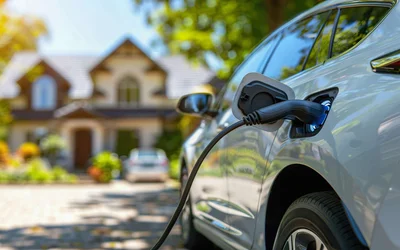
To help meet climate targets, the world is transitioning from internal combustion engine (ICE) vehicles to electric vehicles (EVs). The move to EVs, particularly if they can be recharged with renewable resources, eliminates emissions at the tailpipe and those associated with extracting and refining the fuel for conventional engines. In short, EVs promise a greener future.

Single-board computers (SBCs) are the brain of an EV charger. With the EV charging market taking off, SBCs are at the centre of the electrification movement. But what are the challenges that lay ahead? And what do cutting-edge SBCs bring forth?
Alauda Aeronautics today unveils the Airspeeder Mk4, the first crewed version of its flying racing car. Designed and built in Adelaide, South Australia, the Airspeeder Mk4 is the world's fastest hydrogen electric Vertical Take-Off and Landing (eVTOL) aircraft.
Article #8 of Innovations in Electric and Autonomous Vehicles Series: Advancements in voice recognition, touch displays, and other HMI technologies of next-gen vehicles are all set to transform the way we interact with our rides. Car dashboards will be safer, non-distracting, and highly intuitive.