Featured
New technologies in life sciences and health are transforming healthcare from a labor-intensive industry to a data-driven, innovation-intensive industry.

New technologies in life sciences and health are transforming healthcare from a labor-intensive industry to a data-driven, innovation-intensive industry.
New technologies in life sciences and health are transforming healthcare from a labor-intensive industry to a data-driven, innovation-intensive industry.
Spectra is the IoT conference for Particle’s connected ecosystems. From enterprise customers, partners, and advocates, to builders, developers, and users, Spectra is your opportunity to learn and discuss IoT market trends, industry opportunities, and challenges.
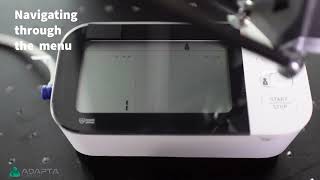
Medical device testing & certification require methods defined by reliability and precision, critical characteristics while validating that medical devices safely & accurately perform while being used.
Artificial intelligence (AI) is a wide-ranging tool that enables people to rethink how we integrate information, analyze data, and use the resulting insights to improve decision making
15 minutes read.
20 minutes read.
13 minutes read.
17 minutes read.
25 minutes read.
11 minutes read.


Entertainment
The Next Byte Podcast is hosted by two young engineers - Daniel and Farbod - who select the most interesting tech/engineering cont...
165 Posts

High Tech
High Tech Campus Eindhoven is Europe's smartest square km and has the ultim...
49 Posts

University for science and technology
Freedom and individual responsibility, entrepreneurial spirit and open-min...
43 Posts
From leading experts at the CDFAM Computational Design Symposium
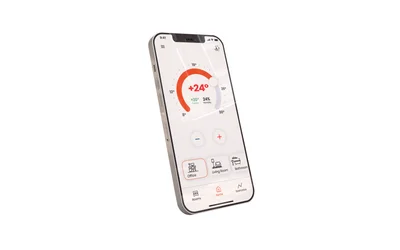
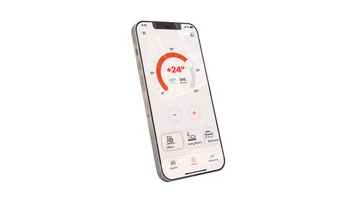
eCozy 2.0 system addresses the limitations of traditional thermostats for water heating radiators, delivering efficiency, convenience and sustainability benefits to households
Protect the cloud by securing the edge with hardware-based security, TPMs, HSMs, and resilient edge computing architectures.
Explore the rise of intelligent EV hardware and how real-time processing, ML acceleration, and hardware virtualization are enabling safer, smarter, software-defined electric vehicles.
EPFL researchers are developing AI models that could one day enable vision prosthetics able to restore meaningful, object-level sight for the blind.
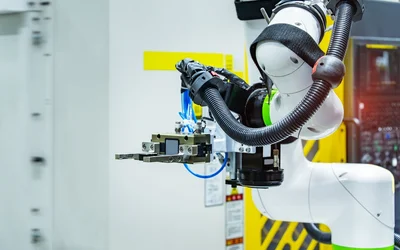
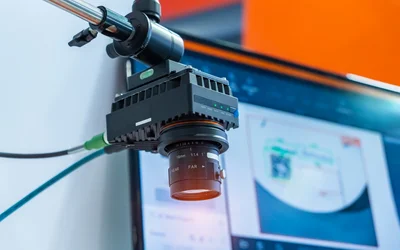
A deep-dive listicle guiding controls, automation, and quality engineers toward the best vision systems for manufacturing applications in 2026.
Understanding industrial vision systems by examining their components, imaging fundamentals, AI integration since 2020, and how to choose the right solution for every application.
The AI-powered tool could inform the design of better sensors and cameras for robots or autonomous vehicles.
New technologies in life sciences and health are transforming healthcare from a labor-intensive industry to a data-driven, innovation-intensive industry.

Spectra is the IoT conference for Particle’s connected ecosystems. From enterprise customers, partners, and advocates, to builders, developers, and users, Spectra is your opportunity to learn and discuss IoT market trends, industry opportunities, and challenges.
Medical device testing & certification require methods defined by reliability and precision, critical characteristics while validating that medical devices safely & accurately perform while being used.
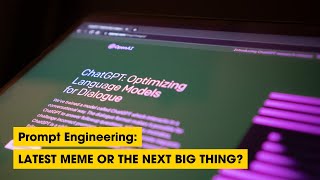
In this episode, we discuss how the popularity of generative AI has led to the emergence of prompt engineering which begs the question: what is prompt engineering?

20 minutes read
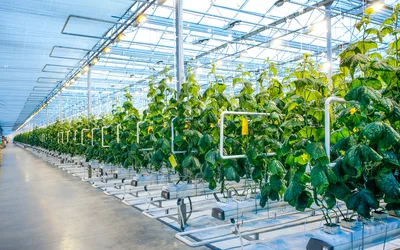
Single Board Computers are radically improving indoor agriculture by optimizing environmental conditions, enabling IoT applications, and integrating AI for sustainable, efficient farming.
Researchers create a new simulation tool for robots to manipulate complex fluids in a step toward helping them more effortlessly assist with daily tasks.
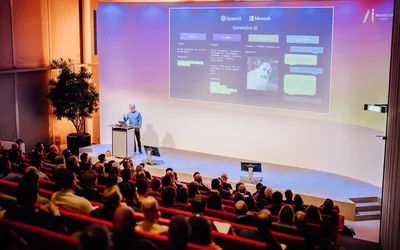
The event at High Tech Campus Eindhoven had us thinking about Marc Andreessen’s quote that “Software is eating the world.”
2 minutes read
Vision, Robotics & Motion is a highly anticipated event in the manufacturing industry that will take place in the Netherlands on the 7th and 8th of June, 2023. It will celebrate its 20th edition in 2023.
Article #5 of Transforming Industrial Manufacturing with Industry 4.0 Series: The next evolution of AR in manufacturing comes by pairing it with AI, allowing for seamless information access and tracking of specific surfaces/points of interest in real-time.
This machine-learning method could assist with robotic scene understanding, image editing, or online recommendation systems.
Show the world how innovation can move from prompt to silicon in record time!
A new machine-learning model makes more accurate predictions about ocean currents, which could help with tracking plastic pollution and oil spills, and aid in search and rescue.
And the Challenges of Meaningful Training Data

6 minutes read
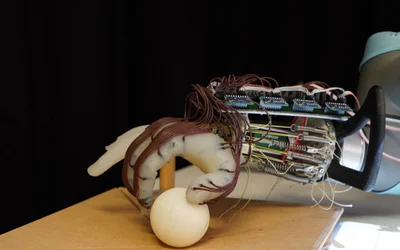
Researchers have designed a low-cost, energy-efficient robotic hand that can grasp a range of objects – and not drop them – using just the movement of its wrist and the feeling in its ‘skin’.
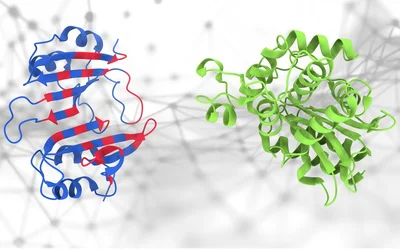
Scientists at EPFL have developed PeSTo, an AI model that can predict, with high confidence, the binding interfaces of proteins when they bind other proteins, nucleic acids, lipids, ions, and small molecules. The model's low computational cost enables the processing of large amounts of structural data, opening up opportunities for new biological discoveries.

3 minutes read