A.I.

The Challenges Ahead of Edge AI and How to Solve Them.





Engineers Wiki. Most Asked Questions.

Artificial intelligence (AI) is a wide-ranging tool that enables people to rethink how we integrate information, analyze data, and use the resulting insights to improve decision making
What Is Unsupervised Learning? Types, Algorithms, and Examples (2026)
15 minutes read.
Understanding Nvidia CUDA Cores: A Comprehensive Guide
20 minutes read.
NPU vs GPU: Understanding the Key Differences and Use Cases
13 minutes read.
TPU vs GPU: Comprehensive Technical Comparison
17 minutes read.
Understanding Nvidia CUDA Cores: A Comprehensive Guide for 2026
25 minutes read.
Top Vision Systems for Manufacturing in 2026
11 minutes read.
ORGANIZATIONS. SHAPING THE INDUSTRY.


The Next Byte
Entertainment
The Next Byte Podcast is hosted by two young engineers - Daniel and Farbod - who select the most interesting tech/engineering cont...
165 Posts



High Tech Campus Eindhoven
High Tech
High Tech Campus Eindhoven is Europe's smartest square km and has the ultim...
49 Posts

ETH Zurich
University for science and technology
Freedom and individual responsibility, entrepreneurial spirit and open-min...
43 Posts
TAGGED WITH machine learning

From leading experts at the CDFAM Computational Design Symposium

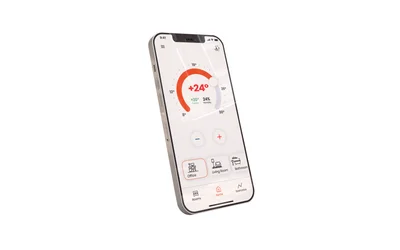
eCozy 2.0 system addresses the limitations of traditional thermostats for water heating radiators, delivering efficiency, convenience and sustainability benefits to households


Protect the cloud by securing the edge with hardware-based security, TPMs, HSMs, and resilient edge computing architectures.

Explore the rise of intelligent EV hardware and how real-time processing, ML acceleration, and hardware virtualization are enabling safer, smarter, software-defined electric vehicles.
TAGGED WITH computer vision

EPFL researchers are developing AI models that could one day enable vision prosthetics able to restore meaningful, object-level sight for the blind.

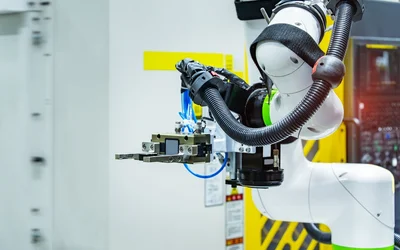
A deep-dive listicle guiding controls, automation, and quality engineers toward the best vision systems for manufacturing applications in 2026.
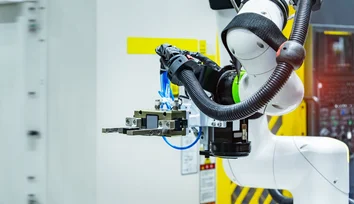
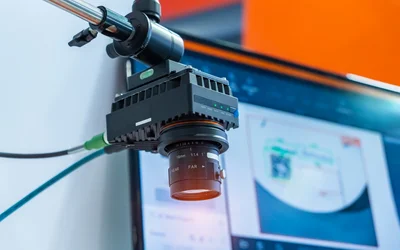
Understanding industrial vision systems by examining their components, imaging fundamentals, AI integration since 2020, and how to choose the right solution for every application.

The AI-powered tool could inform the design of better sensors and cameras for robots or autonomous vehicles.

Latest Posts
The Challenges Ahead of Edge AI and How to Solve Them.
Inspiring Examples of Edge AI in Action.
How Edge AI Senses the World for Situational Awareness.

What to Consider When Selecting Your Edge AI Hardware and Software.


A Deep Dive Into Edge AI in Energy-Constrained Environments


What to Consider When Selecting Your Edge AI Hardware and Software.


An Overview of the Different Edge AI Platforms.


Benefits, Utilities, and Hybrid Deployment of Edge AI.


How Edge AI is Transforming Industries and Application Areas.

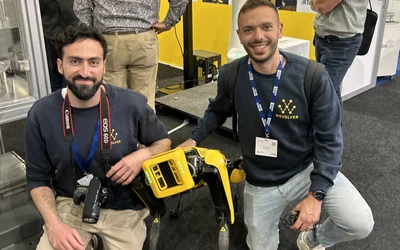
The 2023 trade show brought together technological innovations, industry experts, and future talents in the field of automation.


The greater the amount of high-quality data you have, the better your machine learning model will be. This post looks at the challenges (and solutions) involved in creating and organizing a dataset when you’re starting from scratch.

5 minutes read


Choosing between computing on the cloud or on the edge is a decision that can impact things like your device’s cost or efficiency. Here’s how you can ensure you make the right decision early on in your product development roadmap.
5 minutes read

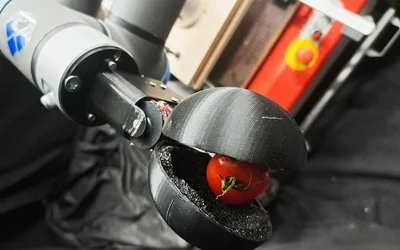
EPFL researchers have used Chat-GPT-3 to develop a robotic gripper for harvesting tomatoes, in a first demonstration of the artificial intelligence tool’s potential for collaborating with humans on robot design.

3 minutes read


After 20 years of calling me to fix their email and antivirus settings, my parents started calling my 13-year-old daughter for help instead. Technology seems to have been nagging rather than helping grandparents, but the advent of cheap computing gives fundamental reasons to change this balance.

6 minutes read

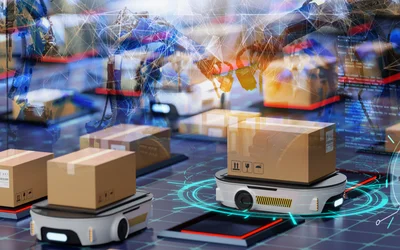
Automated Guided Vehicles (AGV) Have Evolved into Smart Autonomous Mobile Robots (AMR) and Are Improving the Efficiency of Operations in Factories

5 minutes read