Featuredcase study
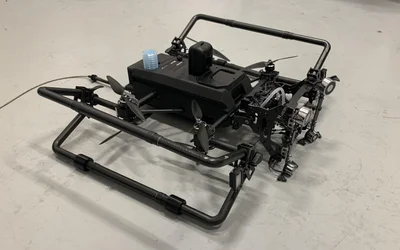
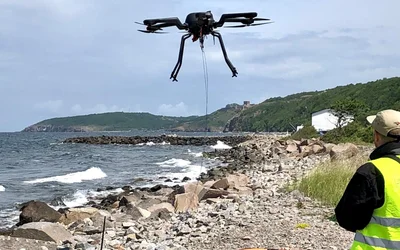
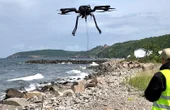
Using an Intelligent Flying Robot, inspectors can safely perform measurements and inspections without exposure to potential hazards.
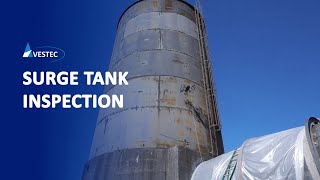
Using an Intelligent Flying Robot, inspectors can safely perform measurements and inspections without exposure to potential hazards.
Using an Intelligent Flying Robot, inspectors can safely perform measurements and inspections without exposure to potential hazards.
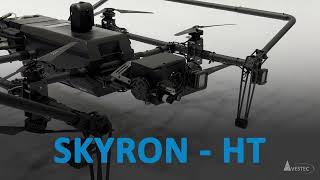
The world's first high-temperature aerial platform for Close and General Visual Inspection performs a job at 65°C on an offshore platform.
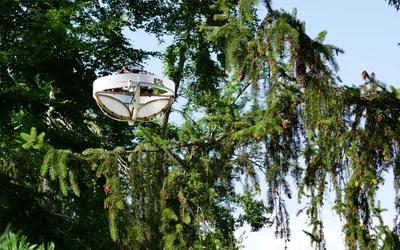
Researchers at ETH Zurich and the Swiss Federal research institute WSL have developed a flying device that can land on tree branches to take samples. This opens up a new dimension for scientists previously reserved for biodiversity researchers.
Unveiling the Duel of Digital Design - A Comprehensive Exploration of History, Syntax, and Applications of the two popular hardware description languages
16 minutes read.

Robotics and Drones
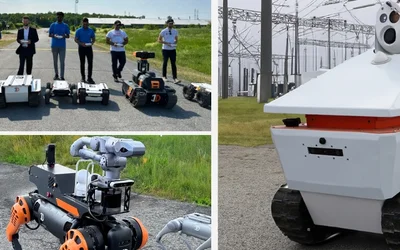
We empower R&D by providing the computational power, ROS packages, payloads & functionality for your unique use case.
14 Posts

Drone Fleet Management Software
Cloud Ground Control is a cloud based command and control solution for oper...
7 Posts
Launched by MIT Sea Grant, SeaPerch and SeaPerch II have had a big impact on young learners interested in ocean science and engineering.
How to Maximize Your Robot Without Blowing Your Budget
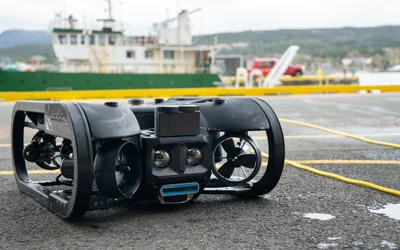
Discover how Deep Trekker rigorously tests and evaluates IMU technologies, comparing MEMS and FOG systems to ensure precise underwater navigation for ROVs.
Learn about Deep Trekker’s proprietary BRIDGE technology and how it enables you to control your Deep Trekker ROV from any device, and so much more.
Everything you need to know about Dead Reckoning for underwater navigation.
Learn more about what sonar is and its many uses. Read about its applications, technologies, principles, and more.
In this episode, we discuss how CalTech researchers have created bionic jellyfish to help us explore the oceans and better understand the impacts of climate change.
Using an Intelligent Flying Robot, inspectors can safely perform measurements and inspections without exposure to potential hazards.

The world's first high-temperature aerial platform for Close and General Visual Inspection performs a job at 65°C on an offshore platform.
Researchers at ETH Zurich and the Swiss Federal research institute WSL have developed a flying device that can land on tree branches to take samples. This opens up a new dimension for scientists previously reserved for biodiversity researchers.

3 minutes read
On January 20, Team POLAR showcases its first vehicle for independent climate research in icy, inhospitable regions such as the North and South Poles.
Hummingbirds have extreme aerial agility and flight forms, which is why many drones and other aerial vehicles are designed to mimic hummingbird movement. Using a novel modeling method, researchers gained new insights into how hummingbirds produce wing movement, which could lead to design improvements in flying robots.

3 minutes read
Earlier this year, SKYRON was the first flying robot to perform contact-based NDT inspection on an offshore platform.
2 minutes read
The origin of Mars’ two moons, Phobos and Deimos, is still unclear. To unravel this mystery, the Japan Aerospace Exploration Agency (JAXA) Martian Moons eXploration (MMX) mission is scheduled to launch in 2024.

7 minutes read
End-to-end recycling solutions deliver the benefits of carbon fiber composites with a more circular approach.
In this episode, we talk about how a team from TUM has developed a system composed of collaborative drones that can create structure in remote and/or disastrous areas.

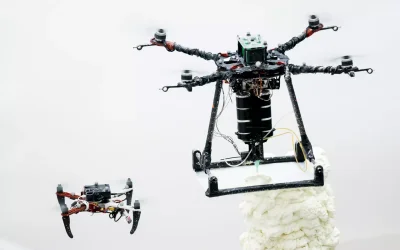
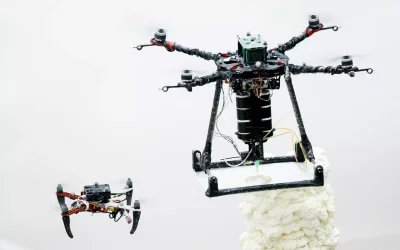
An international team of researchers have created a fleet of bee-inspired flying 3D printers for building and repairing structures in-flight.
Researchers from DTU Space have developed a new type of high-resolution radar that looks in many directions concurrently.

4 minutes read
For real-time geo-registration, Oversight uses a physical engine and digital twins to make image matching algorithms more agnostic to variations.

2 minutes read
Flightmare is an open-source simulator for quadrotors that moves away from rigid paradigms and proposes a flexible modular structure that empowers the users or automated algorithms to fine-tune the simulator to the task at hand.
In this episode, we talk about how researchers are developing tools to keep us safe using technology that ranges from ultra-heat resistant tents for fighters to drones capable of discovering hidden landmines.
DTU spinout solves mine clearance tasks for the Danish Defence and the offshore wind turbine industry.
3 minutes read