Featured
In this video, we're delving into the dynamic world of forwarding data to Kafka.
In this video, we're delving into the dynamic world of forwarding data to Kafka.
In this video, we're delving into the dynamic world of forwarding data to Kafka.
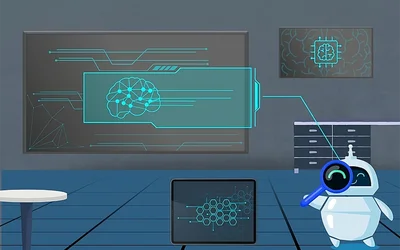
In this episode, we talk about MIT researchers making a smart tool (like a robot scientist) that uses AI to understand and explain how other AI brains (neural networks) work.
Managing data in IoT is a tough task. With varied data types and huge volumes, connecting devices to the cloud becomes complex and expensive. But it doesn't have to be that way.
How Bluetooth mesh works: managed flooding, node features, provisioning, security keys, Mesh 1.1, measured latency, and how it compares with Zigbee and Thread.
26 minutes read.
15 minutes read.
18 minutes read.
19 minutes read.
18 minutes read.
17 minutes read.


Semiconductors
Nordic Semiconductor is a fabless semiconductor company specializing in wireless technology that powers the IoT.
181 Posts

High Tech
High Tech Campus Eindhoven is Europe's smartest square km and has the ultim...
49 Posts

University for science and technology
Freedom and individual responsibility, entrepreneurial spirit and open-min...
43 Posts

Higher Education
Work together. Create smart machines. Serve society. University of Michiga...
40 Posts
A JFET is a normally-on, voltage-controlled semiconductor device that regulates current through a conductive channel by varying its depletion region using an electric field.
A common-source MOSFET amplifier is a voltage-amplifier circuit with input at the gate, output at the drain, and source as the common reference. It provides voltage gain with an approximately 180 degree phase shift between input and output.
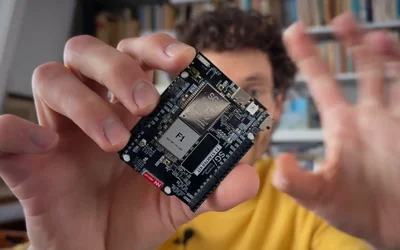
The F1 Starter Kit, built around the F1 Smart Module which supports cellular, LoRa, BLE and WiFi
This guide to robotics programming covers offline, lead-through, and teach pendant methods, key vendor languages, C++ alongside Python, ROS 2 integration, and safety limit implementation.
ROS is not an operating system. It is the open-source middleware and toolset that much of the robotics industry builds on, and this guide explains what is ROS, how it works, what changed in ROS 2, and when you should use it.
Mario Mauerer, maxon's Global Business Development Manager, Robotics, discusses what it takes for robotic deployments to be successful in complex real-world environments.
Join Prof. Fei Chen as he explores advanced bimanual manipulation and teleoperation techniques shaping the future of intelligent human-like robots in this expert-led robotics session.
In this video, we're delving into the dynamic world of forwarding data to Kafka.

In this episode, we talk about MIT researchers making a smart tool (like a robot scientist) that uses AI to understand and explain how other AI brains (neural networks) work.

14 minutes read
Managing data in IoT is a tough task. With varied data types and huge volumes, connecting devices to the cloud becomes complex and expensive. But it doesn't have to be that way.
4 minutes read
Imagine a task that used to take 11 minutes now taking less time than the blink of an eye. Couple that speed increase with 97% accuracy, and these are the results researchers achieved when combining ML, neural networks and novel compression in a new project advancing reservoir production forecasts.

4 minutes read
Bluetooth LE, Wi-Fi 6, and cellular IoT bring connectivity to low power IoT devices. The Nordic SoCs, companion ICs, and SiPs running these protocols are among the most power efficient wireless solutions on the market, extending devices’ battery life.

4 minutes read
If you have ever found yourself facing challenges when it comes to forwarding data to an HTTP endpoint, you're in the right place.
Columbia engineers have built a new AI that shatters a long-held belief in forensics–that fingerprints from different fingers of the same person are unique. It turns out they are similar, only we’ve been comparing fingerprints the wrong way!

4 minutes read
As the world of business continues to shift and evolve, one of the most important factors for success is asset tracking. It involves keeping track of valuable company assets to optimize their usage, prevent loss, and ensure that they are properly maintained.

3 minutes read
With Coiote IoT Device Management Platform, you can effortlessly monitor and troubleshoot all your IoT devices from one central location.
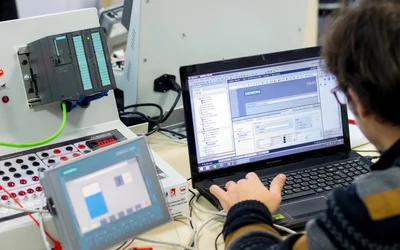
This article is a practical PLC programming guide covering the five IEC 61131-3 languages, the scan cycle that governs how your code actually runs, ladder and structured text examples, and the mistakes that cost engineers the most commissioning time.
Every day, the average person inhales a staggering 11,000 liters of air, amounting to more than 300 million liters over a lifetime (as reported by TheWorldCounts).
4 minutes read
The Coiote IoT Device Management Platform enables you to gather diverse data types through the standardized data model offered by the LwM2M protocol.
Navigating Emerging Trends in Robotics Research

2 minutes read
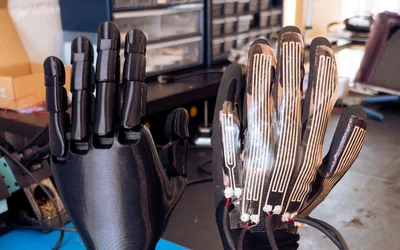
Dawson Martian — a second-year undergrad at the University of Waterloo — came up with a project idea that would put both the V-One and NOVA to the test: Designing and building a robot hand that would mimic the movements of an operator wearing a control glove.

4 minutes read
MIT researchers introduce a method that uses artificial intelligence to automate the explanation of complex neural networks.